The sports instructor faces risks such as overexertion, falls, and climate stress in every session. 3D technology offers a precise tool for analyzing forced postures and repetitive movements. Through biomechanical models and virtual environments, it is possible to visualize the physical impact before an injury occurs. This article explores how three-dimensional simulation transforms risk prevention in sports training.
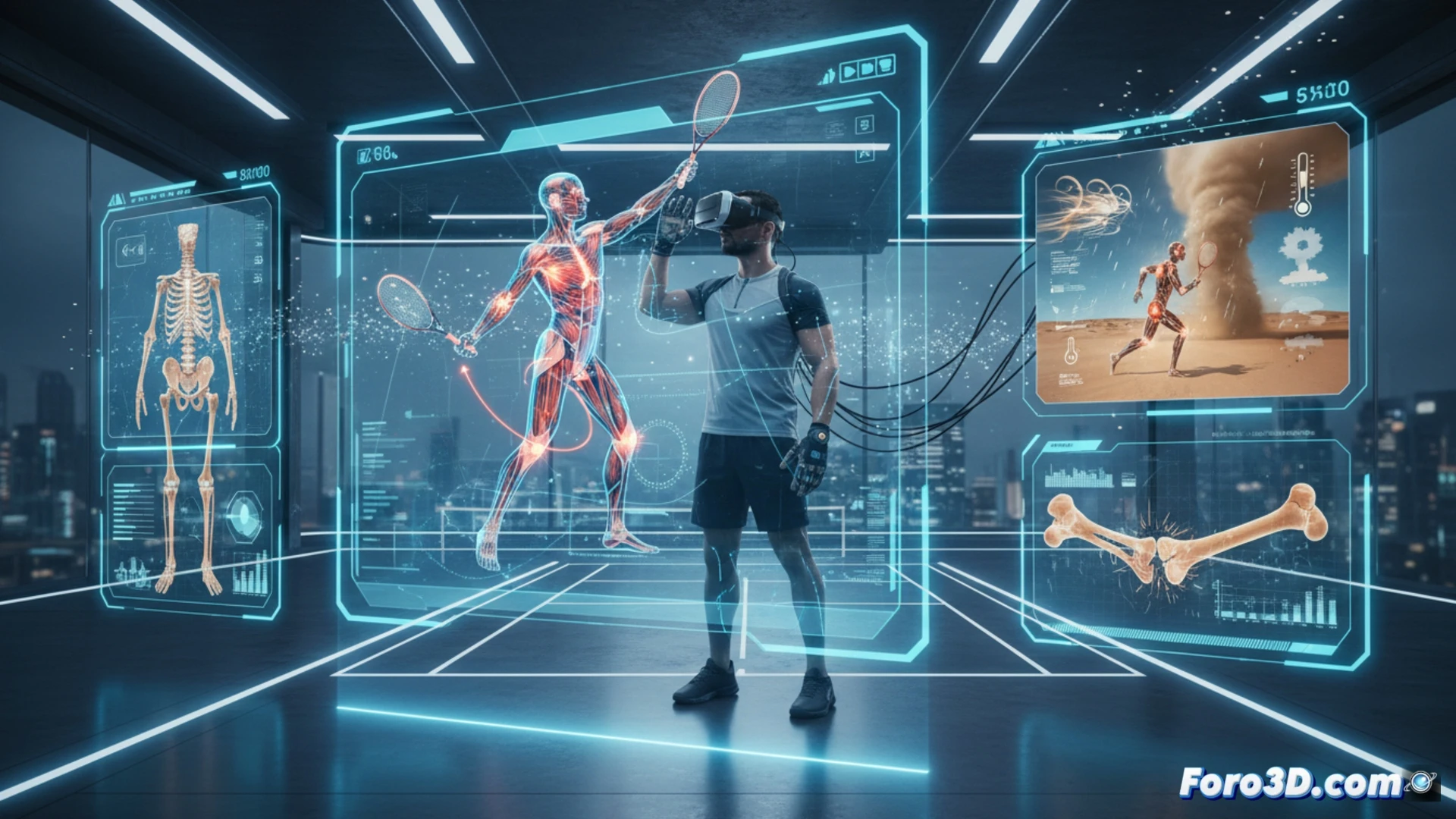
Biomechanical modeling and analysis of forced postures 🏋️
3D motion capture systems allow recording the instructor's kinematics during exercise demonstrations. By importing this data into simulation software, dangerous joint angles and excessive loads on the lumbar spine are identified. For example, a digital model can predict the risk of injury by correcting weightlifting technique or adjusting jump height. Additionally, virtual reality recreates extreme weather conditions (heat, cold, or UV radiation) to train the instructor in group management without exposing them to real danger. This methodology reduces falls and impacts by simulating unstable terrain or wet surfaces.
Postural stress and prevention in aquatic environments 🌊
3D simulation also addresses the risk of drowning in water sports through digital twins of pools or beaches. These models calculate currents, depths, and the instructor's reaction times during an emergency. Likewise, 3D postural analysis reveals how muscle fatigue accumulated during hours of instruction leads to stress and poor decision-making. Implementing these tools not only protects the instructor's health but also elevates training quality by anticipating critical scenarios. 3D technology thus consolidates itself as an indispensable ally in sports occupational safety.
As a sports instructor, what specific risks of overexertion or falls can be modeled and prevented with a 3D simulation before each training session?
(PS: reconstructing a goal in 3D is easy; the hard part is making it not look like it was scored with a Lego figure's leg)