The job of a recycling technician exposes the worker to a lethal combination of hazards: chemical, biological, and sharps waste, entrapment in presses, falls on uneven surfaces, and overexertion from loads. This cocktail of risks makes traditional manual-based training insufficient. 3D process simulation allows these scenarios to be modeled with precision, offering a virtual environment where the technician can identify critical points without being exposed to real danger.
Modeling risks and material flows in the virtual plant 🏭
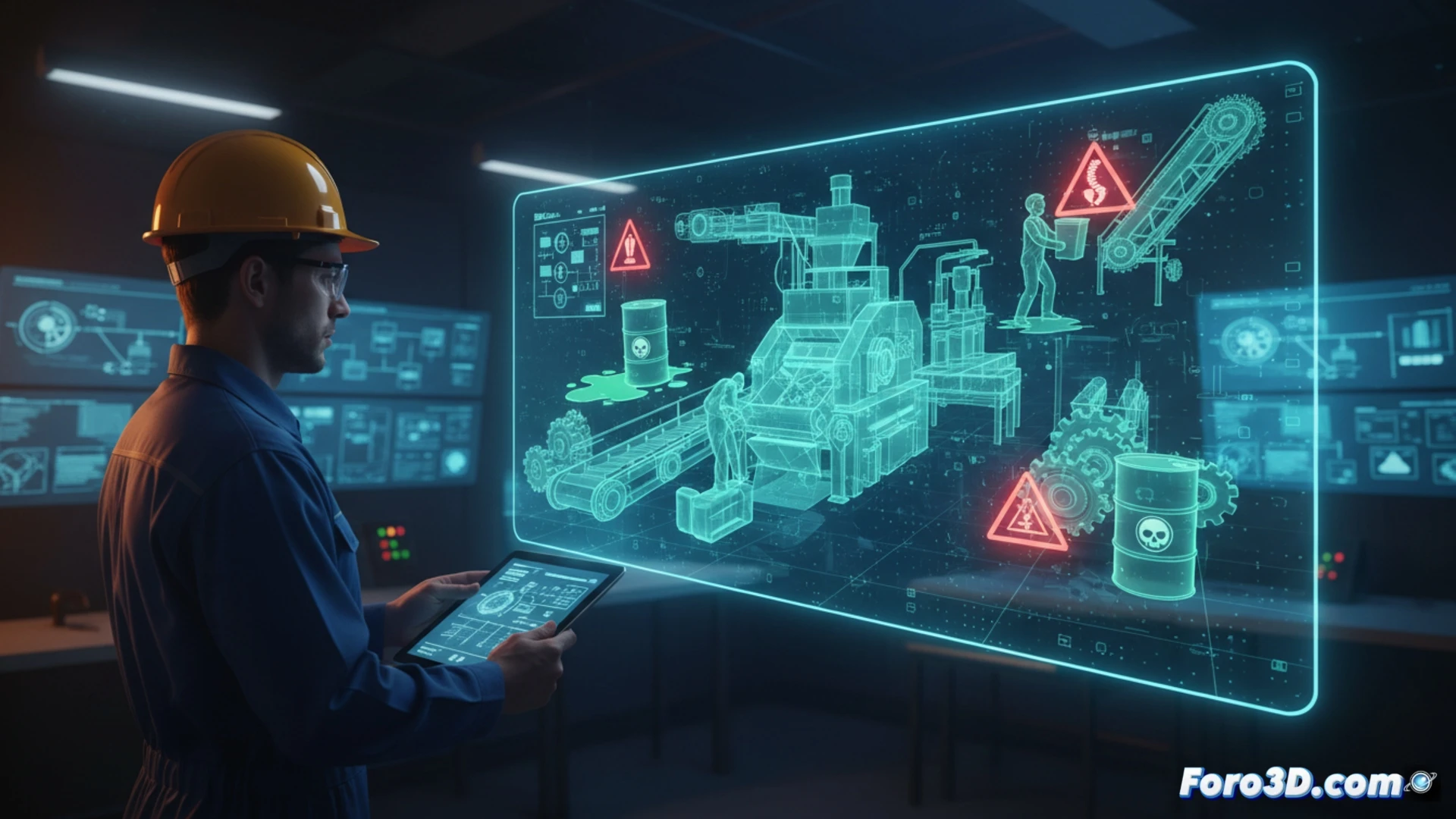
To address the issue, a digital twin of a recycling plant is proposed. The 3D model must include sorting areas with conveyor belts and hydraulic presses, where entrapments due to loose clothing or poor posture are simulated. Particle clouds and dust are visualized in the crushing areas, as well as hot zones indicating fire risk from material accumulation. The simulation allows the user to navigate the plant, activate safety protocols (such as machinery lockout), and see the flow of hazardous waste, marked in red, to train in identifying chemical and biological exposures. Additionally, uneven floors and narrow aisles are modeled to practice fall prevention.
Towards an immersive and efficient prevention culture 🛡️
Beyond graphic realism, the value of this simulation lies in the safe repetition of high-risk situations. A technician can practice the correct maneuver for a press jam or chemical spill management hundreds of times without suffering a single accident. This transforms workplace safety from a regulatory obligation into a trained competency. The visualization of danger zones and immediate feedback on postural or procedural errors make 3D simulation the ultimate tool for reducing accident rates in the recycling sector.
How can 3D simulation anticipate exposure to chemical and biological waste to train technicians in identifying risks before entering a recycling plant
(PS: Simulating industrial processes is like watching an ant in a maze, but more expensive.)