The CNC operator position presents critical risks such as entrapment in moving parts, chip projection, and exposure to coolants. Analyzing these hazards in a real environment is complex and costly. 3D process simulation allows for digitally recreating the workflow, visualizing each machine movement and operator interaction, identifying safety blind spots before an accident occurs.
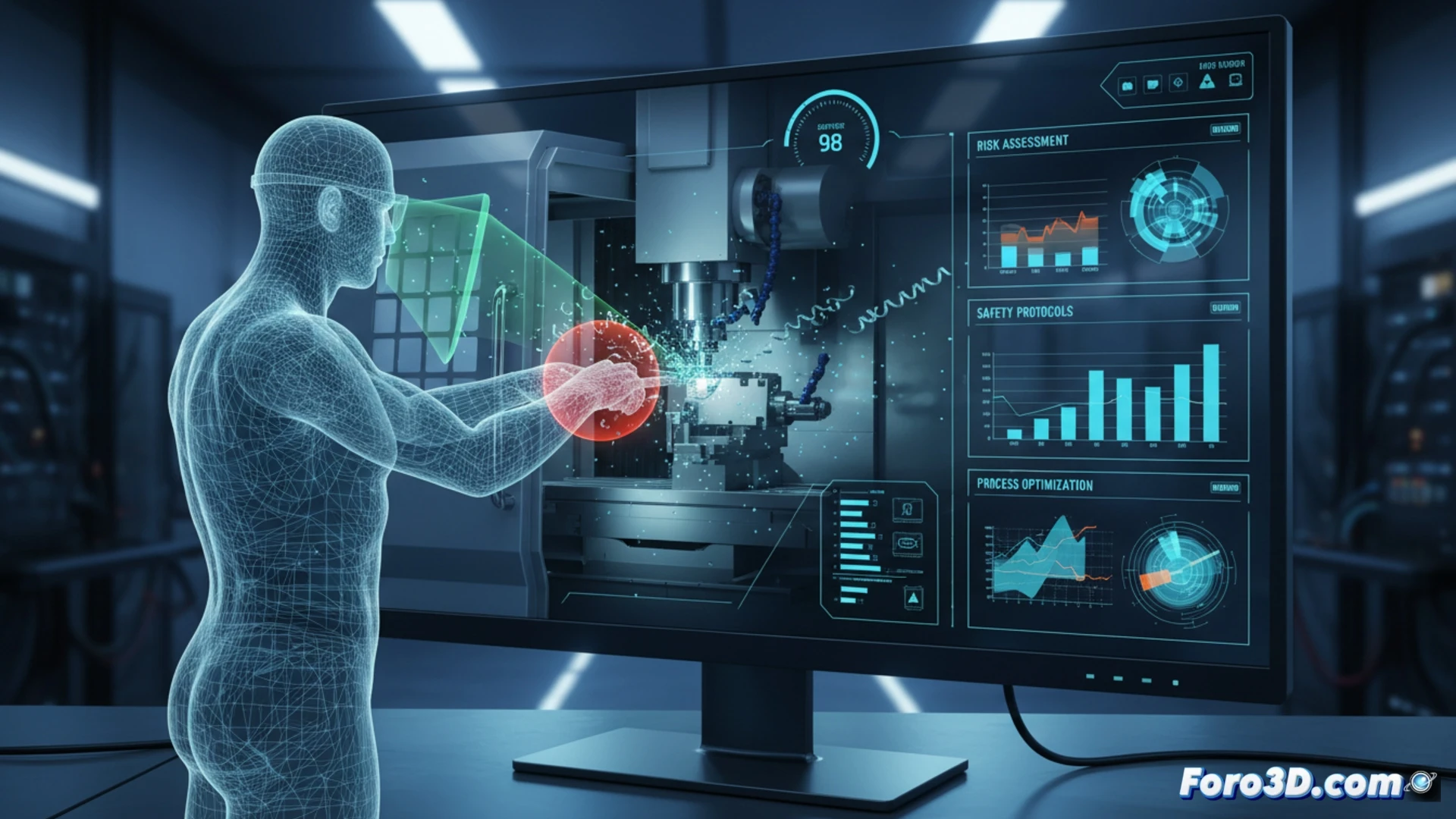
Virtual modeling of critical points and safety protocols 🛡️
Using a digital twin of the machining center, we can simulate high-risk scenarios: manual tool changes where the operator's hand approaches the spindle, the hot chip ejection zone, and oil mist accumulation. The animation allows slowing down these events to detect dangerous trajectories. Additionally, virtual barriers such as light curtains and door interlocks are modeled, testing their effectiveness before physical implementation. The simulation also evaluates the operator's response to a programming error causing an unexpected head movement, enabling the design of more efficient emergency stop protocols.
From reactive prevention to predictive safety 🔮
Process simulation not only documents risks but transforms workplace safety into quantifiable data. By integrating virtual sensors and time analysis, we can predict operator fatigue in repetitive tasks or the likelihood of entrapment during maintenance. This predictive approach allows redesigning plant layout and work procedures, reducing accident rates and improving ergonomics. The future of prevention lies in visualizing danger before it exists.
How the interaction between the CNC operator and the machine can be modeled in 3D to predict and avoid entrapments in risk zones not visible during standard simulation.
(PS: Simulating industrial processes is like watching an ant in a maze, but more expensive.)