Operating heavy machinery exposes workers to critical hazards such as rollovers, entrapment, whole-body vibrations, and falls. In the process simulation sector, these high-risk scenarios can be digitally recreated to train operators without putting them in real danger. This article analyzes how virtual twins and trajectory analysis allow for anticipating accidents, reducing workplace incidents.
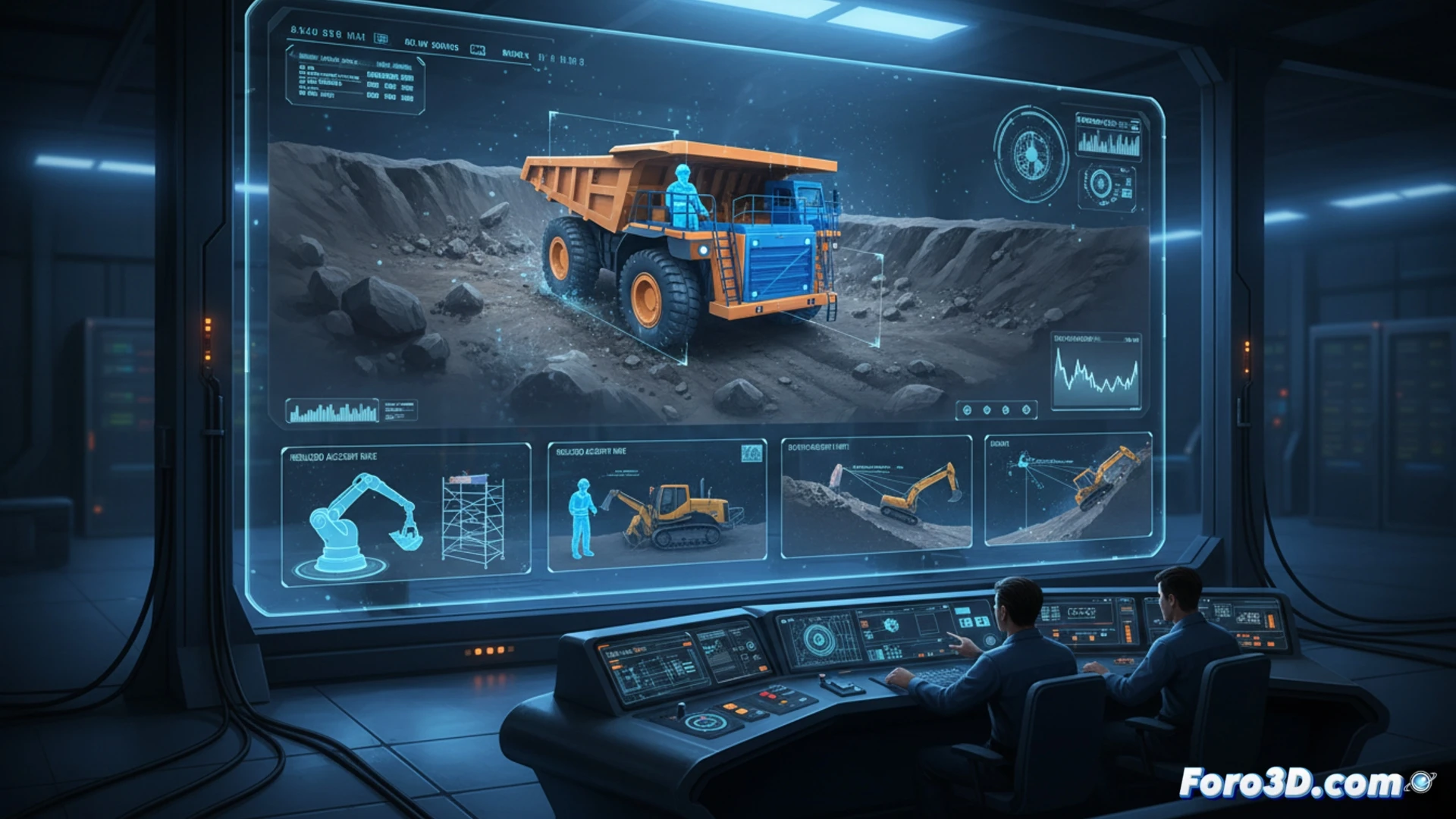
Digital twins and modeling critical scenarios 🚜
3D process simulation allows for building digital twins of excavators, bulldozers, and mobile cranes. In these virtual environments, conditions such as ground instability, hydraulic failures, or material fatigue in the machine's arms can be modeled. The operator interacts with an exact clone of the real controls, experiencing lateral rollover or entrapment situations without suffering harm. Additionally, the software calculates vibrations transmitted to the body and noise levels, helping to redesign workstations to minimize effects on operator health.
Active prevention through trajectory analysis 🛡️
Beyond training, simulation allows for executing virtual trajectory analyses to avoid collisions and runovers in work zones. Algorithms detect blind spots and simulate the machine's response to sudden maneuvers. Fires caused by engine overheating or fuel spills are also recreated. This proactive approach transforms workplace safety from a reactive concept to a predictive one, where each risk identified in the digital twin translates into a concrete improvement in the operating manual.
How can 3D process simulation accurately anticipate whole-body vibration patterns in heavy machinery operators to prevent chronic injuries before they occur in the real field?
(PS: Simulating industrial processes is like watching an ant in a maze, but more expensive.)