The figure of the plasterer, essential in construction, faces severe occupational risks that are often underestimated. Constant exposure to plaster dust, falls from heights, cuts during molding, and forced postures make this trade a vulnerable group. Applying 3D technology not only allows visualizing these dangers but also offers concrete tools to mitigate them before they occur.
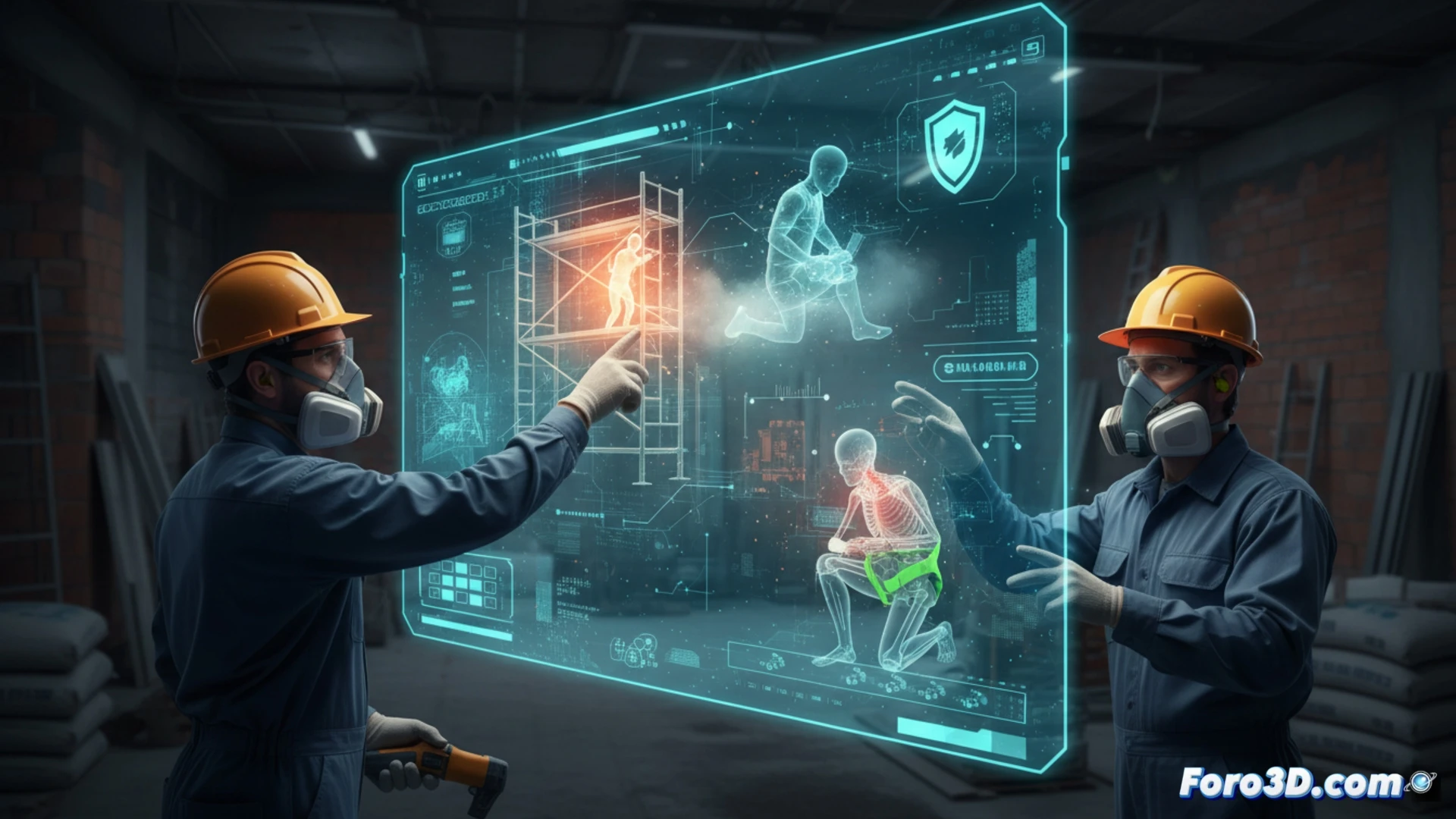
Particle modeling and work environments 🏗️
The main threat to a plasterer is the inhalation of fine dust, a risk that 3D simulation can quantify with precision. Using fluid dynamics software, it is possible to model the dispersion of suspended particles during mixing or sanding, identifying areas of high concentration. Additionally, the virtual recreation of scaffolding and work surfaces allows detecting blind spots or unevenness that cause falls. These simulations, combined with IoT sensors, can activate early warning systems that alert the operator to dangerous dust levels or structural instability in real time.
Preventive ergonomics through digital twins 🦾
The physical effort of carrying 25 kg bags and awkward postures when molding ceilings cause chronic musculoskeletal injuries. Creating digital twins of the human body allows analyzing the strain on the spine and limbs during these tasks. By virtually adjusting the height of the work platform or the design of cutting tools, movements are optimized to reduce fatigue. This approach not only protects the plasterer's health but elevates their status from vulnerable to a professional backed by technical innovation.
How can 3D simulation of construction environments with plaster projection anticipate the blind spots of ergonomic and respiratory risk for the plasterer to design more effective safety protocols than current ones?
(PS: warning systems are like coffee: if they don't go off when they should, the day goes wrong)