The rise of renewable energy has created an urgent demand for specialists in the installation and maintenance of wind farms and photovoltaic plants. However, these professionals face critical risks such as falls from height on wind turbines, electrocution from handling active panels, overexertion when moving heavy equipment, and traffic accidents during commutes. Process simulation in 3D environments offers an effective solution to mitigate these hazards before they occur in reality.
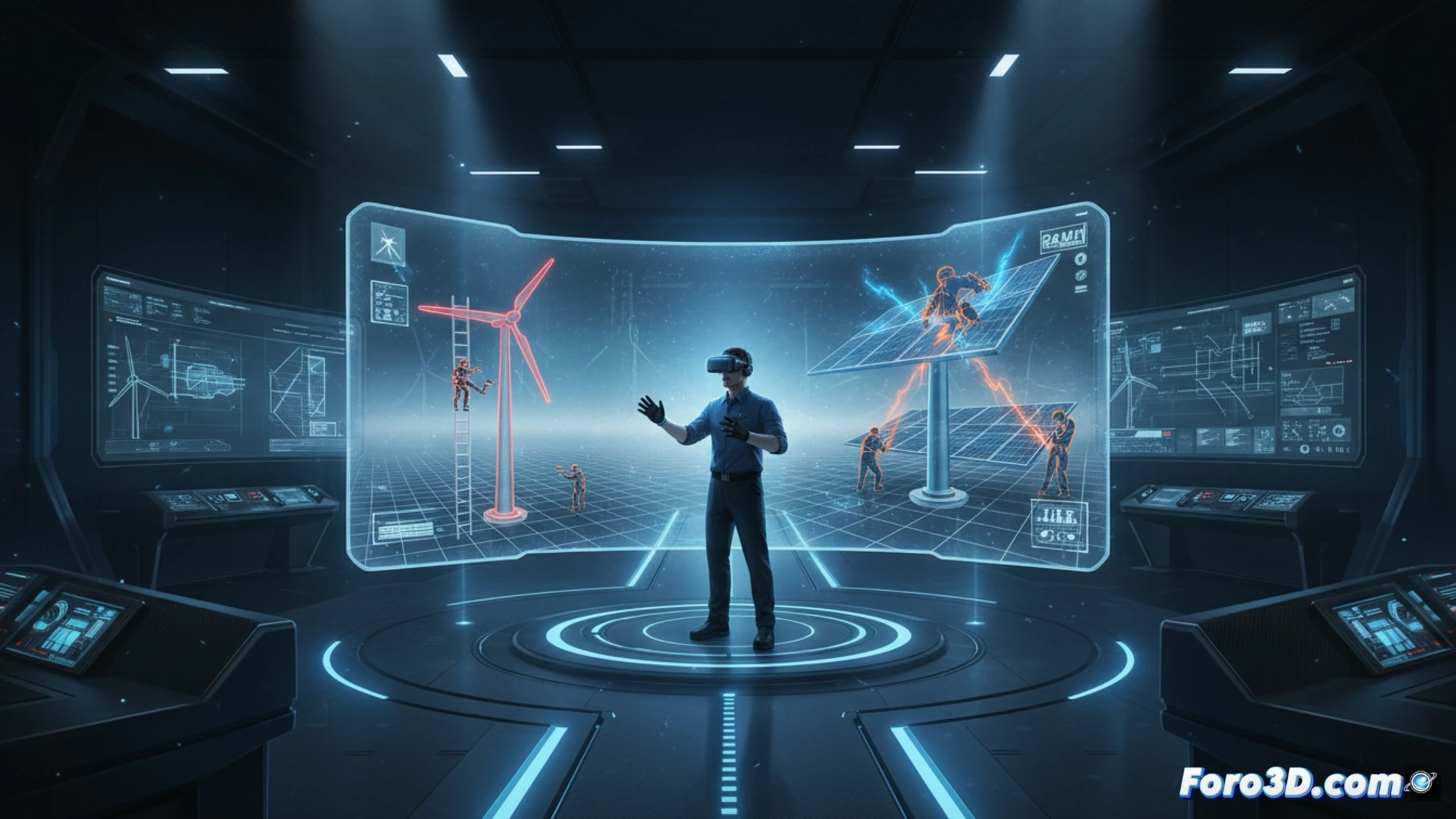
Virtual recreation of high-risk scenarios ⚠️
Simulation technology allows for precise modeling of situations such as installing panels on sloped roofs or maintaining wind turbines tens of meters high. Workers can practice safety protocols, harness handling, and tool use in a controlled virtual environment. Additionally, adverse weather conditions (wind, rain, ice) that directly affect stability and fall risk can be simulated. It is also possible to train in the safe disconnection of electrical circuits to prevent electrocution, and in ergonomic techniques to avoid overexertion injuries when moving heavy panels or batteries.
Immersive training to reduce real-world accident rates 🎯
Process simulation not only replicates physical dangers but also helps manage stress from project deadlines, a psychological factor that increases the likelihood of error. By repeatedly facing virtual emergency scenarios, specialists develop safe reflexes and automatic responses. This methodology allows renewable energy companies to certify their personnel in risk prevention without exposing them to real dangers, significantly reducing workplace accident rates and improving operational efficiency in the field.
How can 3D process simulation anticipate catastrophic failures in wind turbines during extreme weather conditions, overcoming the limitations of traditional predictive maintenance methods?
(PS: Simulating industrial processes is like watching an ant in a maze, but more expensive.)