The profession of interior decorating, although creative, carries significant physical risks that are often underestimated. From falls from ladders to exposure to solvents in paints and adhesives, as well as forced postures and overexertion when moving furniture, the worker faces an environment of everyday hazards. Process simulation allows these variables to be modeled in a controlled virtual environment, offering a precise tool for prevention and training.
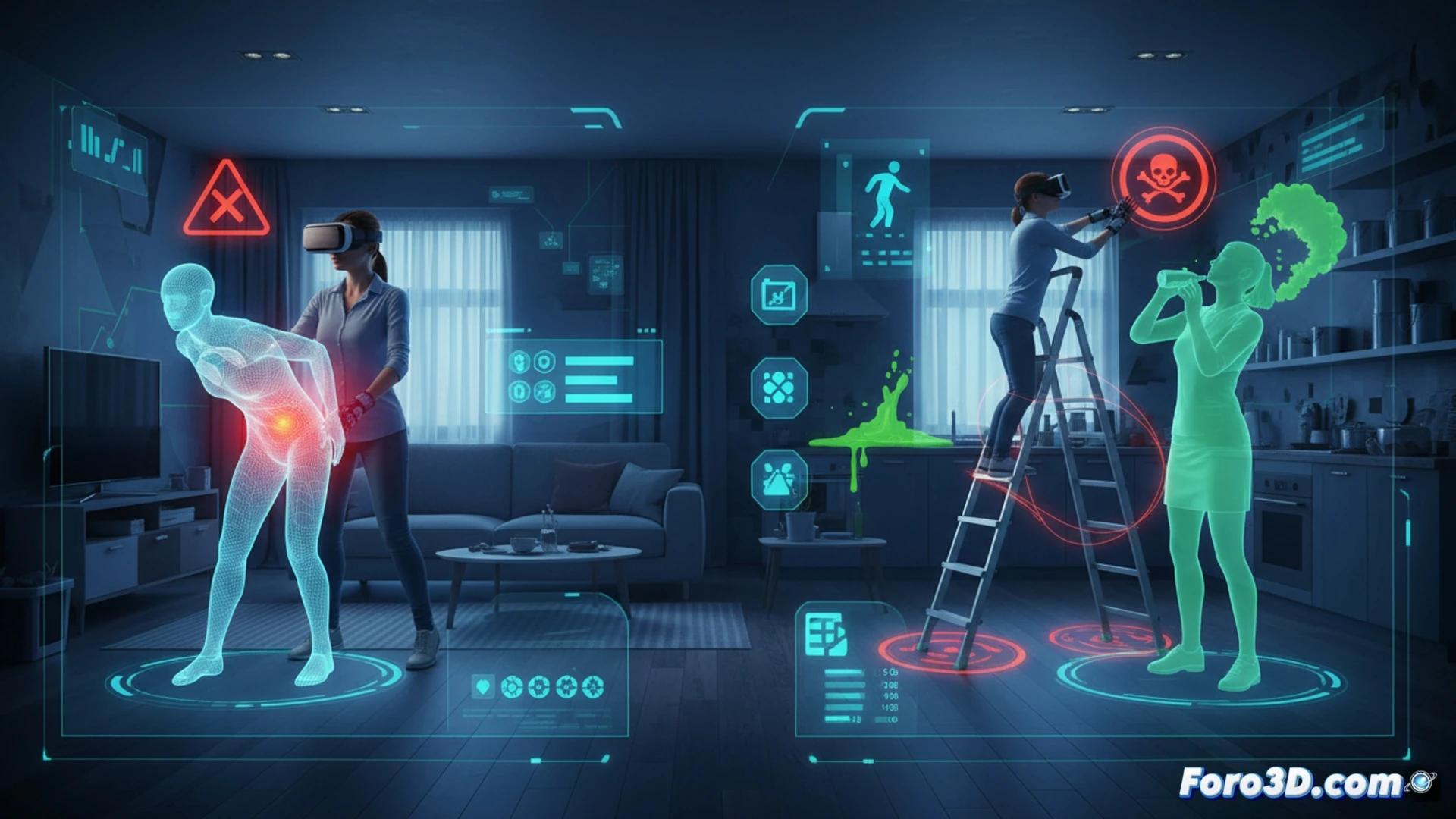
Virtual recreation of scenarios and ergonomic analysis 🛠️
Using 3D simulation software, it is possible to recreate the decorator's critical tasks with high fidelity. The conditions of a ladder on an uneven surface are modeled to anticipate the tipping point, or the dispersion of solvent vapors in a poorly ventilated room is simulated. Additionally, digital ergonomic analysis allows for the evaluation of forced postures when painting ceilings or hanging heavy pictures, calculating the strain on the lumbar spine. These models make it possible to adjust work methods and protective equipment before real exposure.
Safe training and process optimization 🎯
The greatest value of simulation is eliminating risk during the learning phase. Decorators can practice balance maneuvers at height or furniture lifting techniques in a virtual environment where mistakes have no physical consequences. By integrating biomechanical and toxicological data, the simulator not only trains but also redesigns the work process to minimize cuts and overexertion, transforming safety into another parameter of the trade's design.
How can 3D simulation help identify and mitigate the risks of falls and injuries when installing heavy or elevated decorative elements during an interior decoration project
(PS: Simulating industrial processes is like watching an ant in a maze, but more expensive.)