The automation specialist faces critical risks in industrial environments: entrapment in machinery, electric shocks, exposure to noise and vibrations, falls from height when installing sensors, and stress during line commissioning. 3D simulation of digital twins allows modeling each risk scenario before physically intervening, offering a precise tool for occupational prevention.
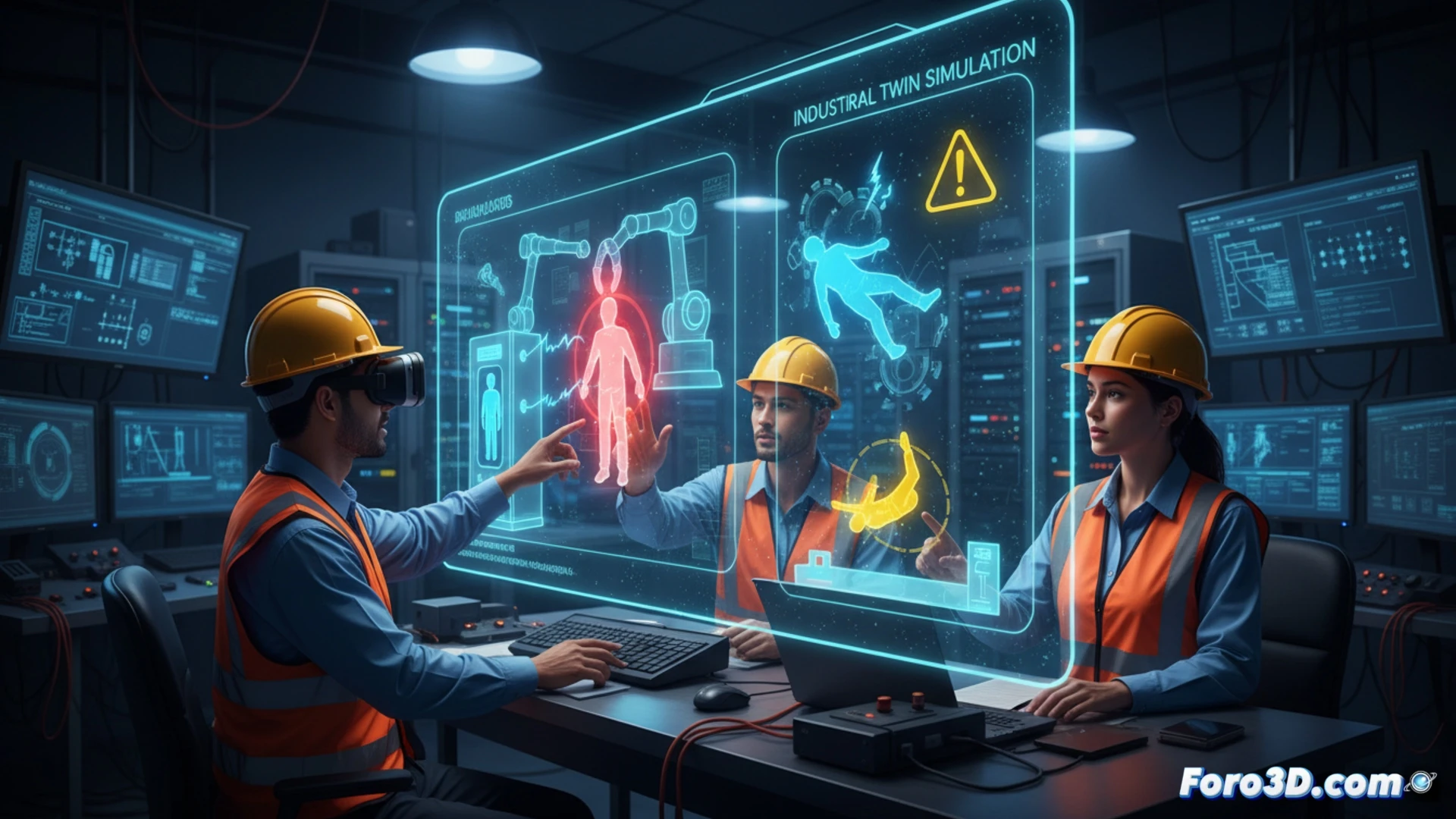
Digital twins and ergonomic evaluation in robotic environments 🤖
Through the virtual recreation of robotic cells and production lines, the engineer can identify blind spots where entrapments occur, validate safety distances against robotic arm movements, and simulate forced postures or overexertion when handling equipment. The simulation also allows training personnel in installing sensors at height without the risk of falls, and calibrating response times to electrical failures. This approach significantly reduces tool punctures and chemical exposure by optimizing maintenance procedures in a safe virtual environment.
Prevention of operational stress through anticipatory simulation 🧠
The stress from commissioning automated lines, often underestimated, can be mitigated with simulations that reproduce extreme production conditions. By visualizing the behavior of machinery and potential interferences in 3D, the specialist gains confidence and reduces psychological pressure. Integrating vibration and noise analysis into the digital model completes a holistic assessment of the workstation, transforming occupational safety into a proactive and measurable process.
How 3D simulation allows predicting and mitigating entrapment in machinery or electric shocks before implementing an industrial automation system
(PS: Simulating robots is fun, until they decide not to follow your orders.)