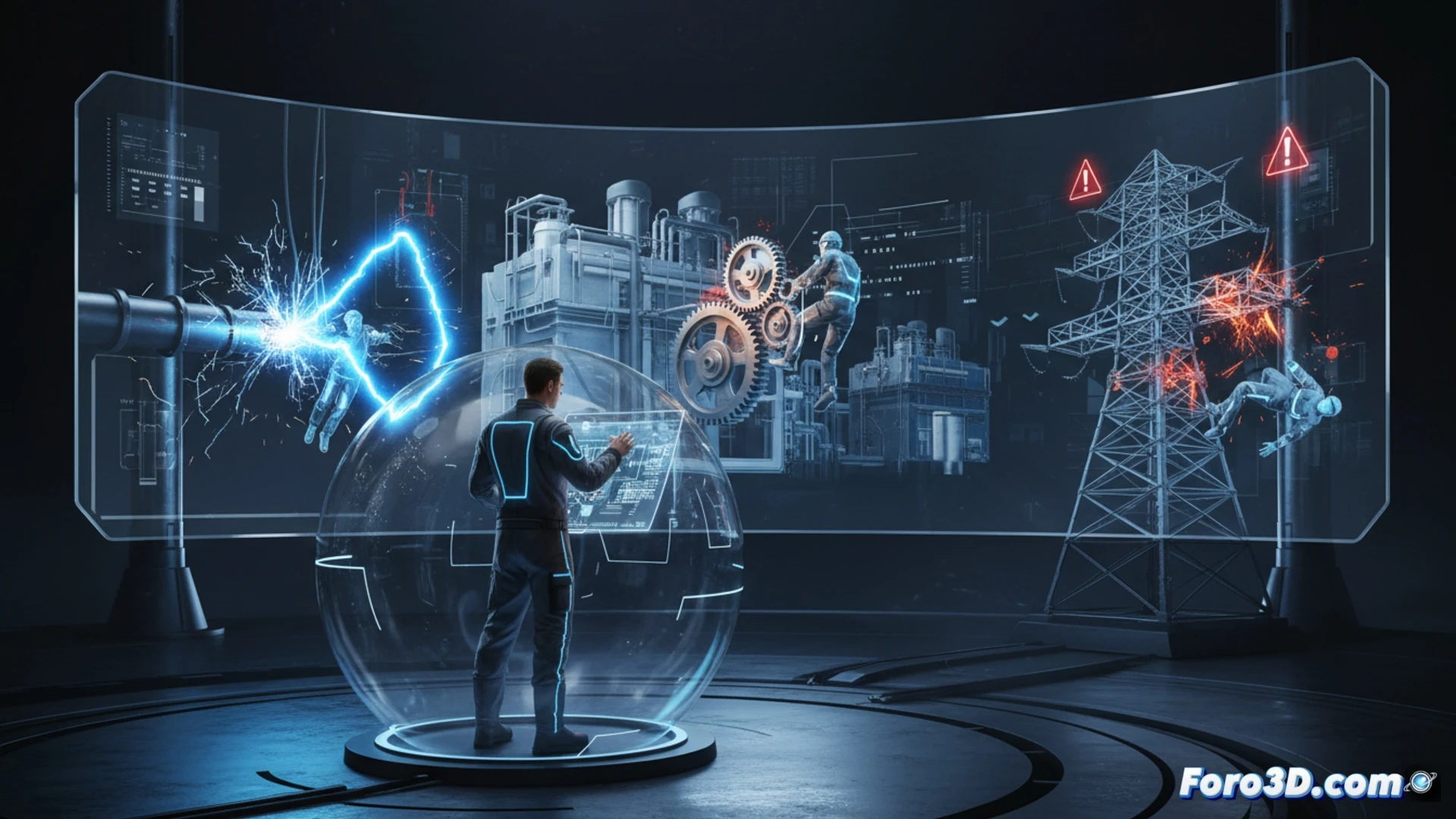
The work of an electromechanical technician exposes the worker to critical hazards such as electrocution, electric arc, entrapment by moving parts, and falls from height, in addition to ergonomic risks from handling heavy loads and exposure to oils. Addressing this complexity in a real environment implies constant danger. Simulation of industrial processes offers a radical solution: recreating these scenarios in immersive digital twins, where the operator can make mistakes without physical consequences and learn to identify each threat before setting foot in a real workshop.
Digital twins for training in safety protocols 🛡️
A digital twin of an industrial plant allows the electromechanical technician to interact with virtual machinery that faithfully replicates the behavior of motors, presses, and electrical panels. In this 3D replica, the user practices locking and tagging energy sources to prevent electric arcs, simulates the correct use of fall protection harnesses, and executes heavy load lifting maneuvers with virtual cranes. The system records every action, detects deviations such as the lack of insulating gloves or excessive proximity to moving parts, and generates performance reports. This approach turns error into a pedagogical tool, eliminating the possibility of real injuries during the learning curve.
Active prevention beyond the risk manual ⚡
The differential advantage of 3D simulation lies in its ability to expose the worker to controlled stress situations, such as a sudden electrical failure or a mechanical jam requiring intervention. Instead of reading about the risk of entrapment, the electromechanical technician experiences it in a virtual environment, developing reflexes and muscle memory for the correct response. This immersive practice transforms prevention from an abstract concept into a tangible experience, elevating the safety culture to a level where noise, solvents, and overexertion are managed with the same precision as a maintenance protocol.
How can 3D simulation of electromechanical processes predict and mitigate the risk of electric arc in industrial environments before personnel intervention?
(PS: Simulating industrial processes is like watching an ant in a maze, but more expensive.)