Olive cultivation presents critical hazards such as falls from ladders, tractor rollovers, and exposure to phytosanitary products. In the Process Simulation niche, these variables are modeled in virtual environments to predict accidents. Digitally recreating harvesting on slopes or the operation of shakers allows for analyzing the kinematics of falls and the dispersion of chemicals, offering precise data to redesign safety protocols without exposing workers.
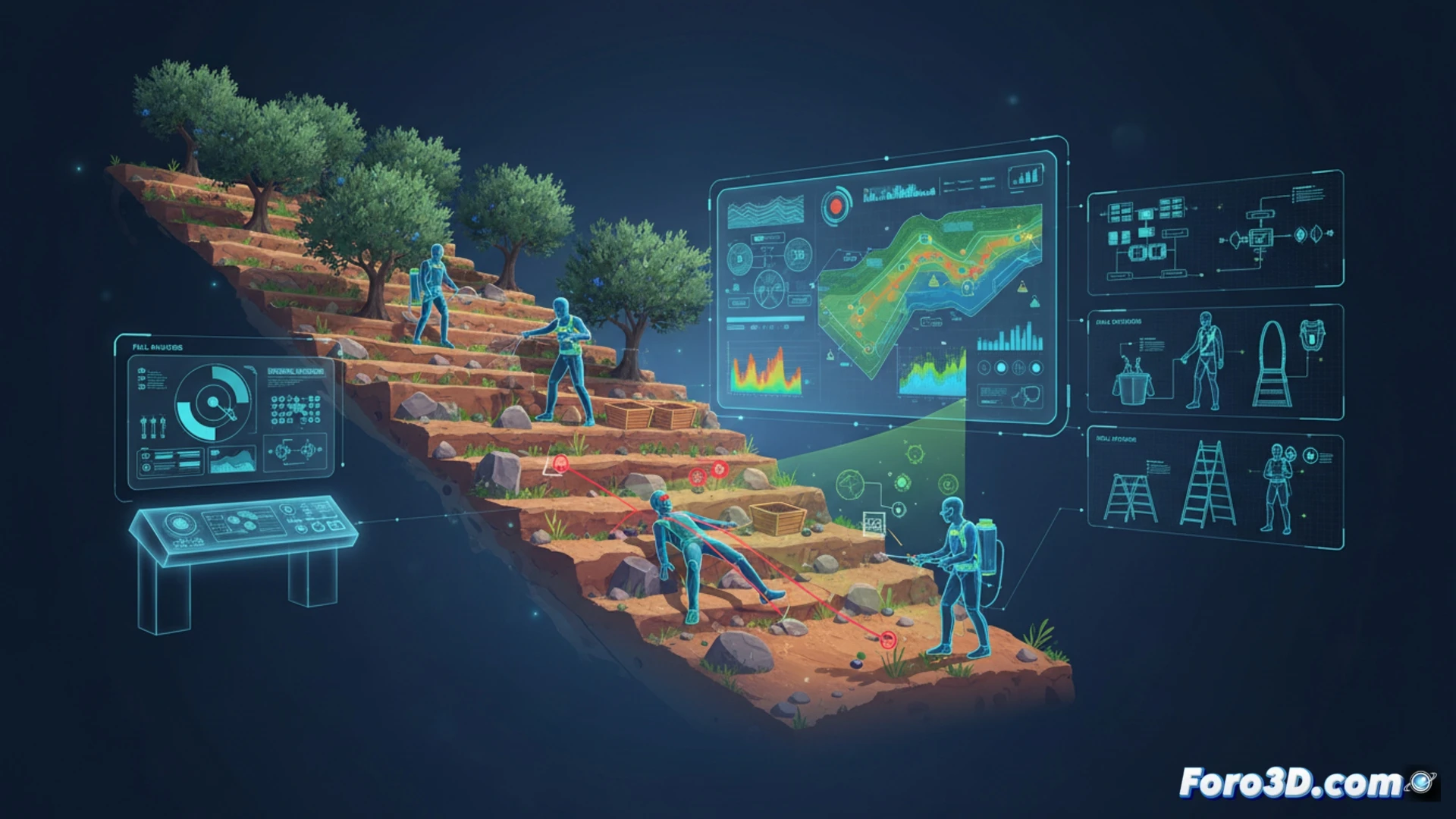
Hazard modeling and virtual ergonomics 🛠️
3D simulation breaks down each olive grower's task into measurable variables. For example, when modeling the use of a tractor with a shaker, rollover angles on uneven terrain and the operator's structural fatigue are calculated using biomechanical avatars. For pruning or manual harvesting, the trajectories of falling branches and joint pressure on slopes greater than 15% are simulated. This analysis allows for adjusting the position of ladders or the design of harnesses, reducing the risk of lower back pain and impacts. Additionally, chemical exposure is visualized through virtual particles, optimizing field re-entry times and necessary ventilation.
Immersive training for real prevention 🎯
Beyond analysis, process simulation allows training olive growers in digital twins of the olive grove. The worker practices safe tractor driving on virtual slopes and learns to identify signs of fatigue without suffering real consequences. This approach transforms theory into practical experience, reducing accident rates. Investing in these models not only saves lives but also optimizes production by minimizing downtime due to accidents and improving ergonomics in each harvest.
How can 3D simulation faithfully recreate risk factors in an olive farm, such as the stability of a ladder on uneven terrain or the drift of phytosanitary products under different wind conditions, to train workers without exposing them to real dangers?
(PS: Simulating industrial processes is like watching an ant in a maze, but more expensive.)