Programming and testing industrial robots exposes the robotic engineer to severe electrical and mechanical hazards: entrapment, crushing, and impacts from unexpected movements. Added to this are falls, forced postures, intense noise, and stress from integrating high-power systems. However, 3D simulation of robotic environments offers a crucial way to visualize and neutralize these risks before any physical intervention.
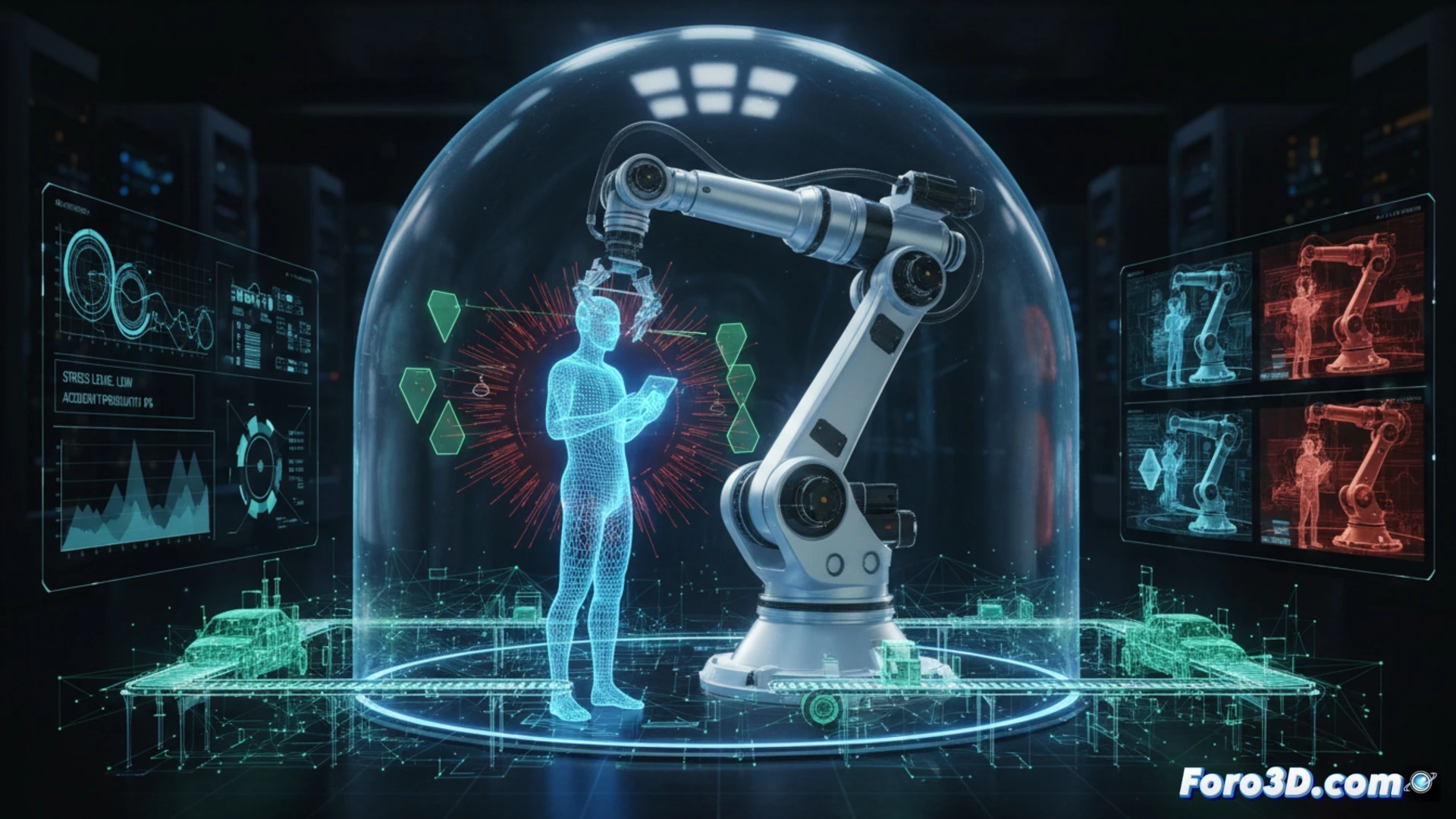
Digital twins for preventing entrapment and collisions 🤖
The use of digital twins allows precise modeling of robotic arm trajectories and surrounding danger zones. By simulating software failures or sudden movements, the engineer can identify blind spots for entrapment and crushing areas without being exposed to real risk. Furthermore, virtual reality integrated into these models facilitates ergonomic analysis of forced postures and the planning of safe access for maintenance, reducing the likelihood of electrical and mechanical accidents during commissioning.
Safe training and reduction of mental load 🧠
Beyond physical prevention, 3D simulation acts as a shield against the stress and mental fatigue of the robotic engineer. By allowing safety protocols and emergency responses to be rehearsed in a virtual laboratory, anxiety over costly errors is reduced, and confidence in integrating complex systems is improved. This approach transforms risk into controlled learning, making safety a pillar of design, not a late reaction.
As a robotic engineer, what has been the most impactful safety incident you have witnessed or avoided thanks to 3D simulation before programming an industrial robot?
(PS: Simulating robots is fun, until they decide not to follow your orders.)