The logistics operator faces a dual risk: from eye strain and sedentary office work to being struck by forklifts in the warehouse. Planning under pressure generates stress, while travel and occasional overexertion add physical hazards. Analyzing these factors is key to prevention, and 3D technology offers an innovative way to visualize and correct these scenarios before they occur.
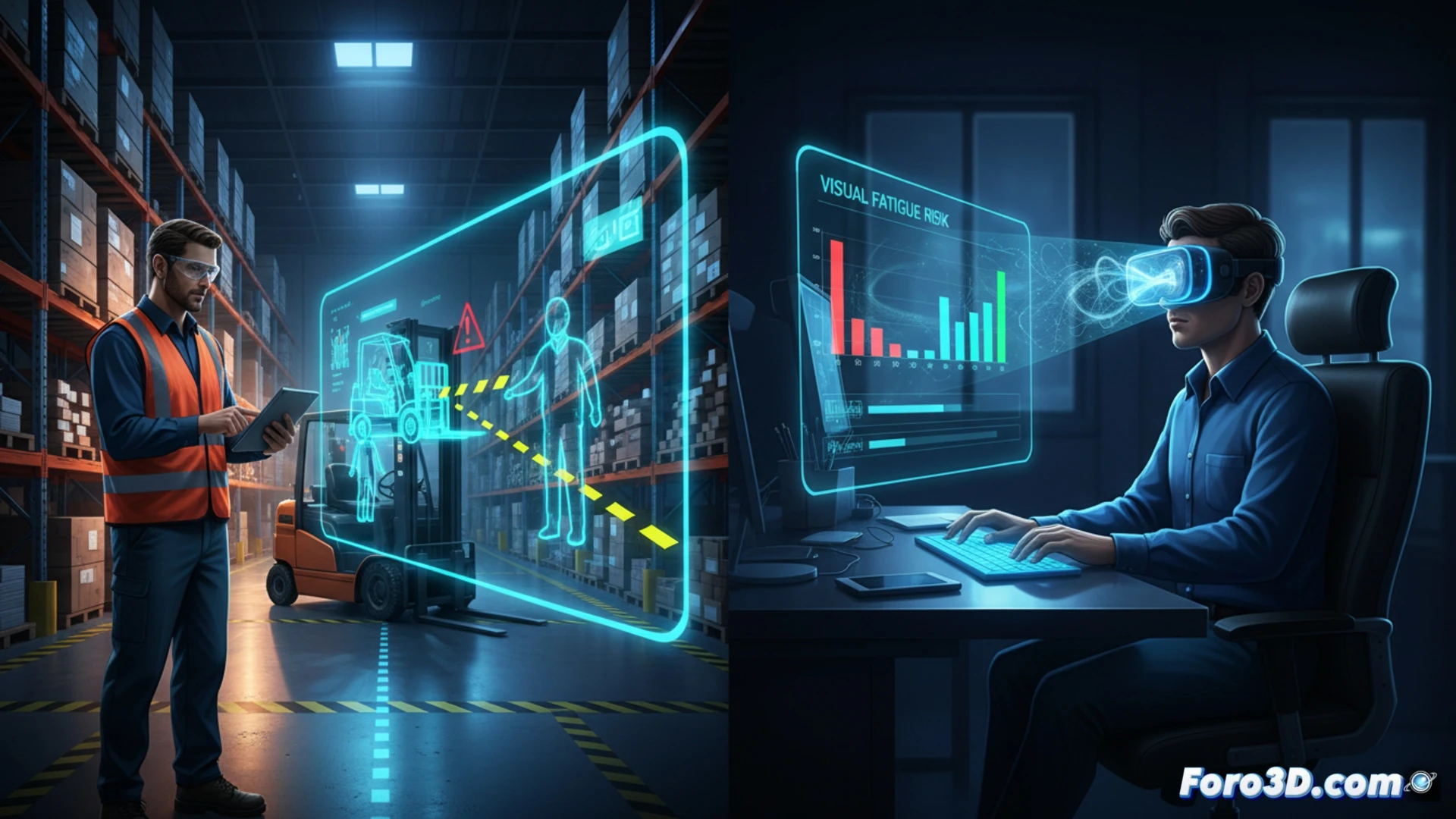
3D modeling of warehouses and pedestrian flows 🚧
Three-dimensional simulation allows for accurately recreating the routes of operators and machinery within the warehouse. By modeling the movements of forklifts and pedestrians, blind spots at intersections and high-risk collision zones are identified. Additionally, visual safety protocols can be designed, such as the virtual delimitation of safe corridors or the optimization of shelving placement. This digital representation turns theoretical analysis into an interactive tool for staff training and process reengineering.
Interactive prevention against overexertion 💪
Ergonomics also benefits from 3D analysis. By simulating the operator's posture when lifting loads or handling inventory, movements that cause overexertion are detected. This allows for redesigning workstations and adjusting task frequencies. Visualizing these risks, integrated with planning data, helps reduce stress from tight deadlines, offering a tangible perspective to improve comprehensive occupational health in the logistics sector.
As a logistics center manager, how would you prioritize between simulating office ergonomic risks and floor-level collision hazards to obtain an immediate return in safety?
(PS: 3D logistics is nice until you try to fit a container where it doesn't fit)