The mechanical engineer faces a dual risk landscape spanning from the workshop to the office. Entrapments from heavy machinery, exposure to industrial noise, and particle projections on the factory floor combine with sedentary screen time and stress from tight deadlines. 3D industrial logistics and production offers an advanced solution: simulating complete environments to identify these hazards before they occur, transforming prevention into a visual and dynamic process.
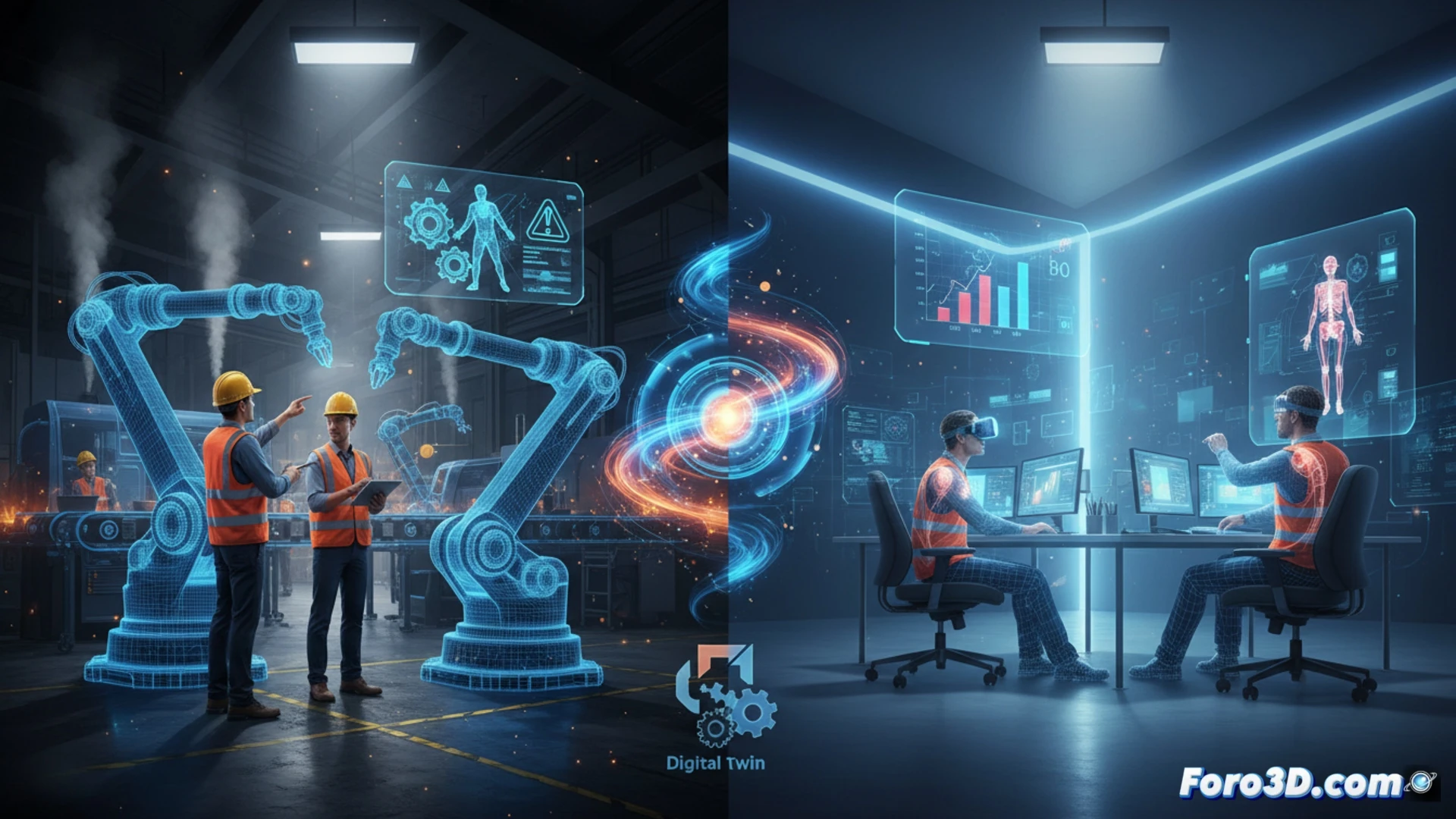
Digital twins against entrapments and projections 🛡️
3D plant modeling allows for the precise recreation of each machine, robot, and logistics flow. Using simulation software, exclusion zones can be drawn around robotic arms and presses, visualizing entrapment risk areas in real-time. Additionally, the trajectory of chip or metal fragment projections is simulated to design virtual protective screens. These tools also calculate noise maps, identifying critical points where acoustic insulation or protective equipment is required, all without exposing real personnel.
Virtual ergonomics and project stress management 💻
Beyond the workshop, the digital twin of the office workstation allows for analyzing postural ergonomics in front of screens and lighting, reducing sedentary behavior and eye strain. For project stress, simulating workflows and deadlines in a 3D environment helps visualize bottlenecks and overloads, allowing for the preventive reallocation of resources. Thus, 3D industrial production not only physically protects the engineer but also optimizes their mental load and overall work environment.
How can 3D simulation predict and prevent entrapments in heavy machinery during the design phase, before the mechanical engineer sets foot on the production floor?
(PS: at Foro3D we optimize routes like we optimize polygons: until the computer says enough)