The street vendor operates at the intersection of labor vulnerability and constant exposure to physical risks. From climatic aggression (UV, extreme heat) to the danger of being run over, their workday lacks the protections of a fixed environment. This article explores how 3D simulation and the design of alert systems can transform risk prevention for this group, offering concrete data for regulation and effective protection.
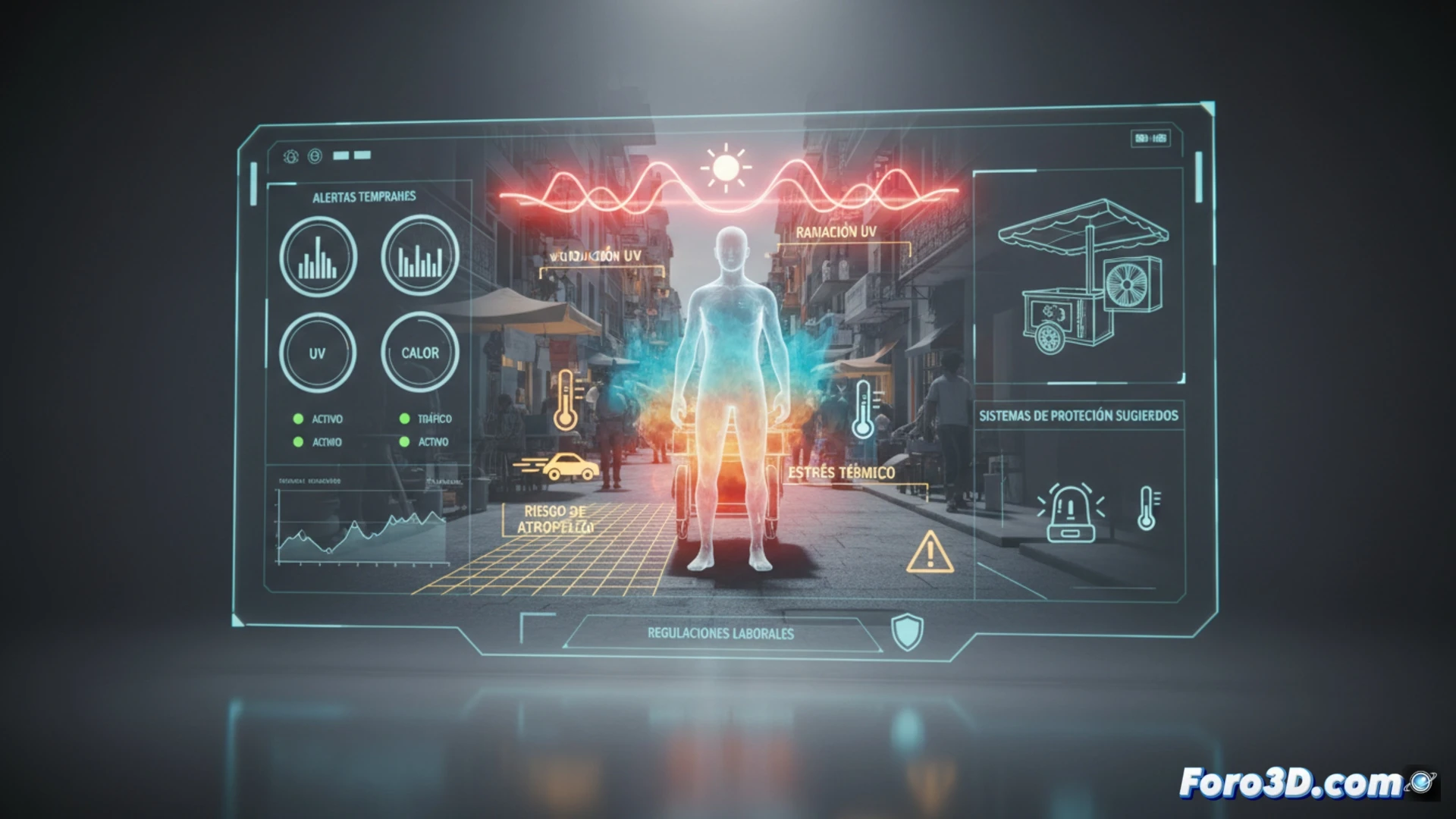
Urban digital twins: risk modeling and alerts 🛡️
The creation of digital twins of high pedestrian traffic areas allows for 3D visualization of blind spots for drivers, uneven surfaces that cause falls, and heat buildup in stalls without shade. Through parametric simulations, the physical effort of carrying merchandise can be modeled and UV radiation peaks can be predicted. The result is an early warning system integrated into a portable device, which notifies the vendor about the need for hydration, posture change, or relocation in the face of an imminent risk of being run over, based on real-time traffic data.
From irregularity to data-based protection 📊
The absence of a specific legal framework turns the vendor into an invisible actor for occupational safety. 3D simulation allows visualizing the impact of these irregular conditions, demonstrating how the lack of infrastructure (shade, pedestrian zones) multiplies risks. By presenting these models to regulatory bodies, evidence-based regulatory improvements can be proposed, transforming a precarious trade into an activity with rights and technologically viable protection systems.
How can 3D simulation predict and mitigate the specific risks of climatic aggression and being run over in urban environments to improve the safety of street vendors?
(PS: checking the status is like leveling the bed: if you don't do it right, the first layer (and the rights) fail)