The work of a park ranger involves facing risks ranging from falls on steep terrain to exposure to wildfires and dangerous wildlife. Traditional training does not always manage to replicate the complexity of these environments. This is where 3D simulation becomes a vital tool, allowing the virtual recreation of the worst-case scenarios to prepare professionals without exposing them to real danger.
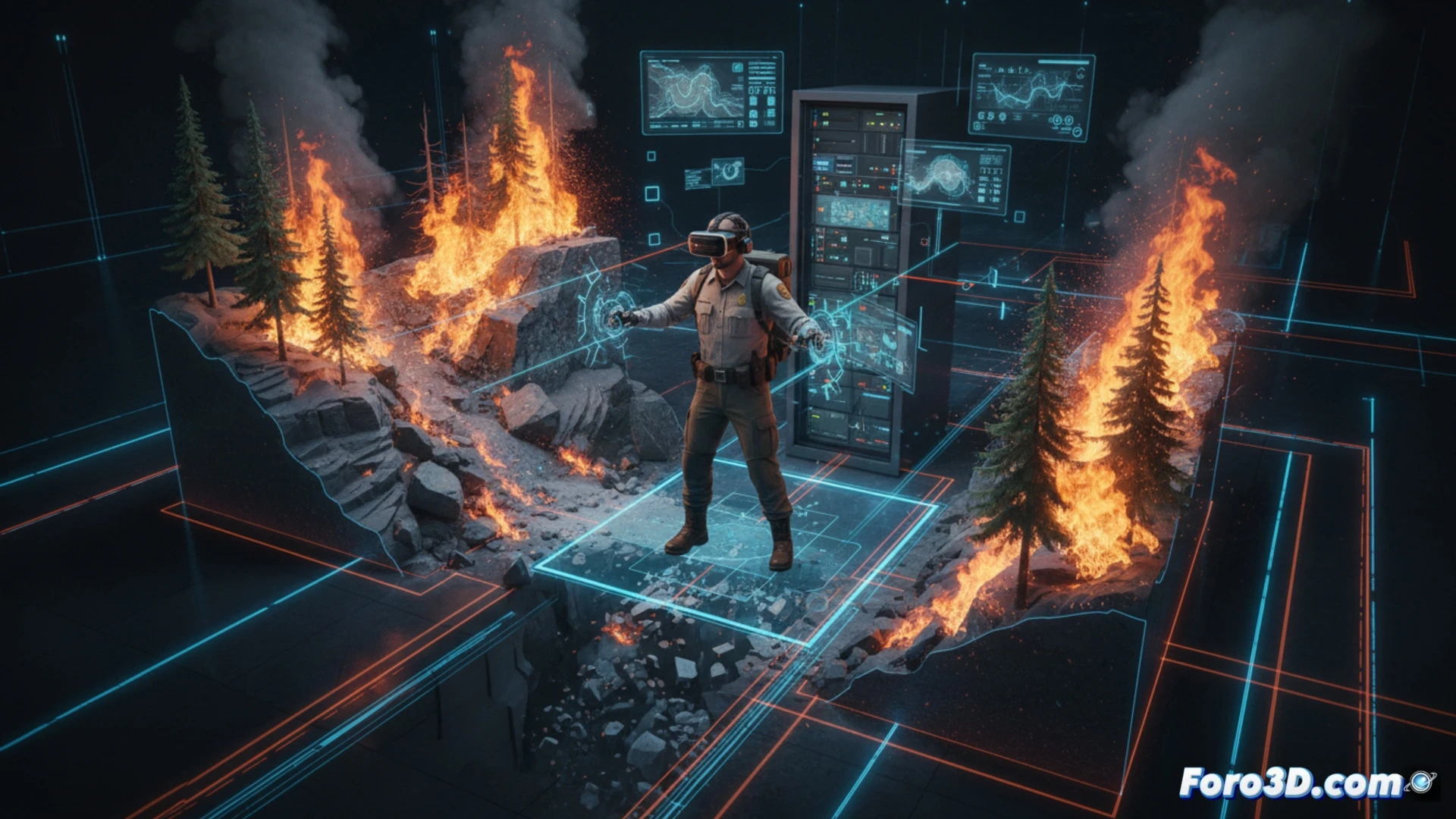
Terrain modeling and wildfire propagation 🌲🔥
Simulation platforms allow for precise modeling of the uneven topography of a natural park, including slippery slopes and unstable ground, to train in fall prevention. Additionally, the propagation patterns of a wildfire based on wind and vegetation can be visualized in real time. This technology also recreates extreme weather conditions, such as heatwaves or cold storms, and simulates wildlife behavior, teaching the ranger how to react to an attack or a bite without being physically at risk.
Active prevention before the catastrophe 🛡️
The real value of these tools lies in the ability to shift from reaction to prevention. By simulating rollovers of off-road vehicles or exposure to zoonotic diseases, the ranger can practice evacuation and first aid protocols in a safe environment. This approach not only reduces workplace accidents but also optimizes the planning of safe routes, transforming disaster management into a proactive and measurable process.
How can a 3D simulation of natural disasters improve the training of park rangers to anticipate and mitigate the risks of landslides or fires on steep terrain?
(PS: Simulating disasters is fun until the computer crashes and you are the disaster.)