The figure of the vocational trainer faces a dual occupational exposure: the risks inherent to their own teaching activity and those specific to the trade they teach. From forced postures in front of a classroom to handling heavy machinery in a workshop, prevention requires visual tools that go beyond the traditional manual. 3D technology offers a safe environment to identify these hazards without exposing the user to real risk.
Technical architecture of the interactive simulation 🛠️
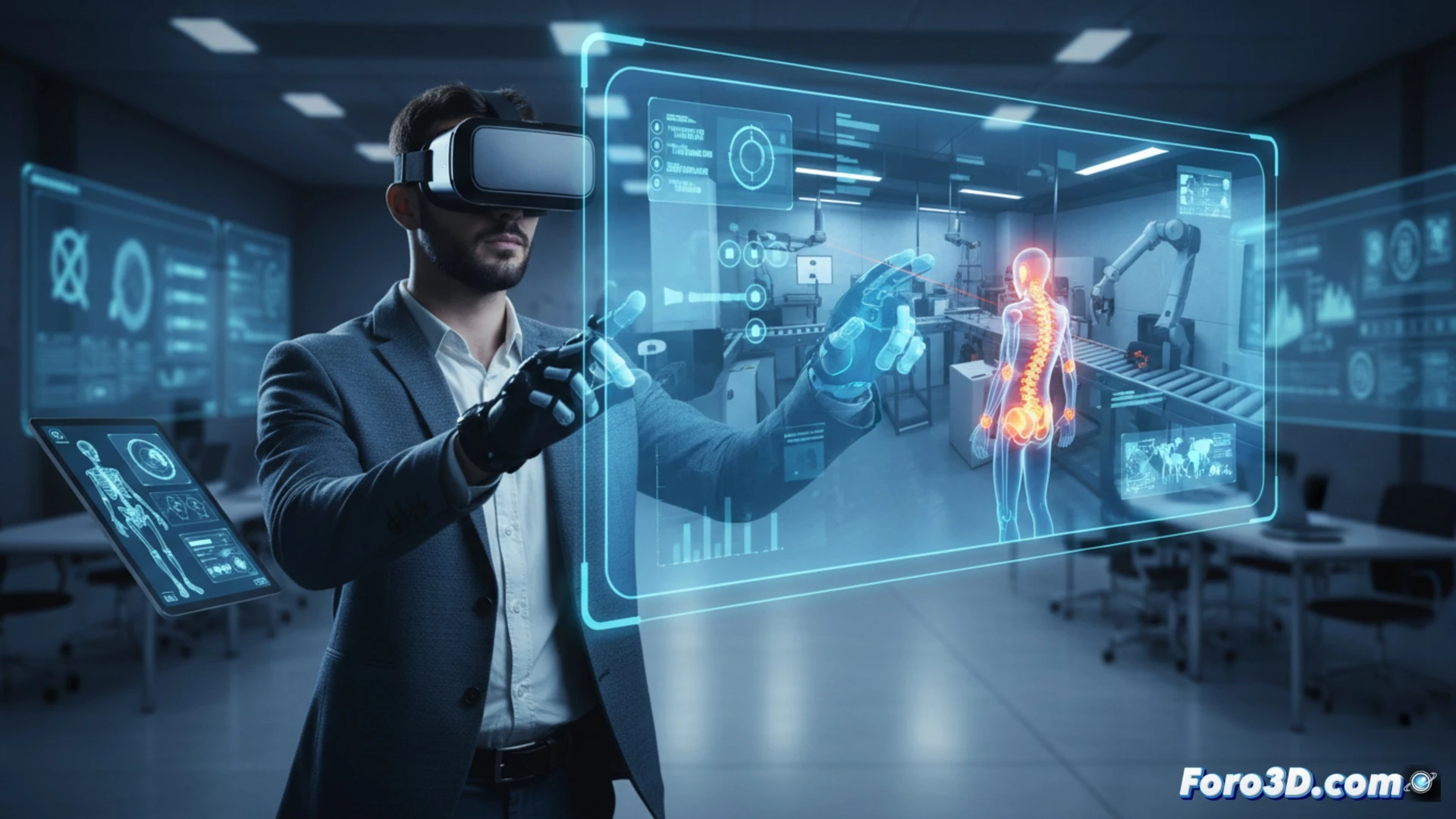
We developed a digital twin of the trainer's work environment, divided into two key zones. In the workshop module, we modeled machine tools with hot spots that activate technical sheets on risks of cuts, entrapment, or particle projection. In the classroom module, we represented the trainer sitting on a standard chair and standing in front of a blackboard; by interacting with their posture, the system displays ergonomic tips and alerts about vocal strain. Each interaction is recorded in a learning log, allowing the instructor to evaluate student retention.
From visualization to a preventive culture 🧠
The retention of safety concepts improves dramatically when the student can explore, make mistakes, and correct them within a virtual environment without physical consequences. This simulation not only teaches how to identify a risk but also trains the automatic response to it. By transferring theory to an immersive experience, we transform prevention from a regulatory duty into a habit internalized by the trainer and, by extension, by all the trades they teach.
How 3D simulation can replicate the dual occupational exposure of the vocational trainer to train them in identifying and mitigating risks specific to their teaching environment and the sector in which they provide training
(PS: Teaching with 3D models is great, until the students ask to move the parts and the computer freezes.)