Exposure to ionizing radiation, criticality risks, and containment failures make nuclear technicians a group especially protected by occupational safety regulations. The analysis of these risks requires not only strict protocols but also advanced simulation tools that allow anticipating critical scenarios and verifying regulatory compliance.
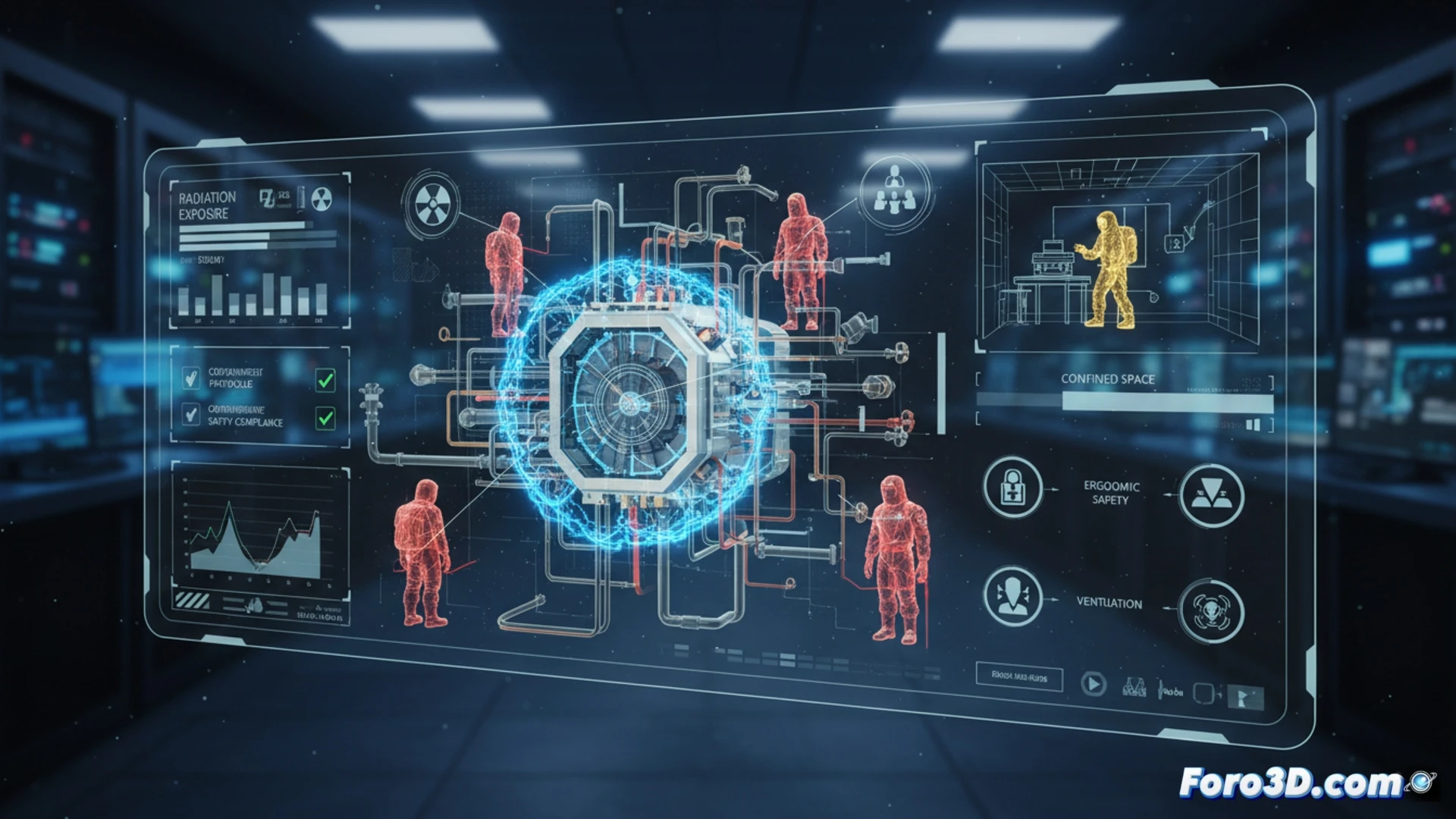
3D Modeling of Confined Spaces and Containment Failures 🛡️
Three-dimensional modeling technologies allow recreating with millimeter precision the reactor rooms, waste storage areas, and ventilation ducts where a technician could become trapped or suffer internal exposure. By integrating real sensor data and radiological protection regulations, these simulations facilitate the validation of emergency protocols and the identification of blind spots in containment. Furthermore, visualizing the trajectories of radioactive particles in a virtual environment helps compliance teams document and audit each step of the drill, reducing the margin for human error.
Protocol Stress and the Need for a Digital Twin 🧠
The psychological pressure derived from the rigorous application of safety procedures is an underestimated risk factor. A digital twin of the facility, updated with real-time data, allows technicians to practice complex maneuvers without being exposed to actual radiation doses. This tool not only improves preparedness for containment failures but also serves as verifiable evidence for regulatory inspections, integrating 3D simulation as a pillar of digital compliance in high-criticality environments.
Can a real-time 3D simulation replace the need to perform physical criticality tests in the validation of nuclear safety protocols?
(PS: complying with the law is like modeling in 3D: there is always a polygon (or an article) that you forget)