The farrier's trade involves constant interaction with large animals and high-temperature tools, generating risks such as kicks, cuts, burns, and forced postures. Process simulation in 3D environments allows modeling each phase of shoeing, from forging to fitting the horseshoe, facilitating the identification of critical accident points without exposing the worker to real dangers.
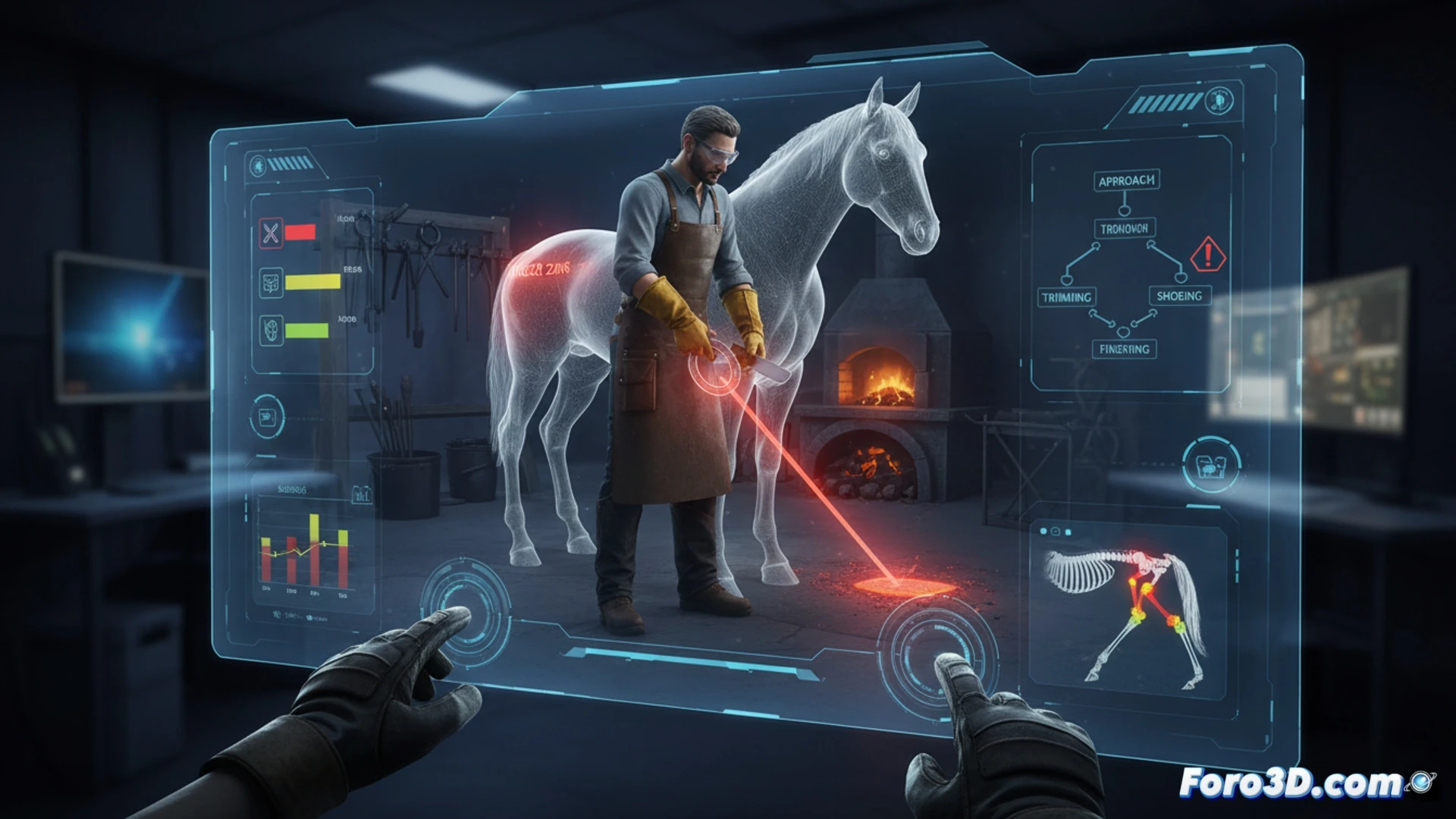
Modeling risk scenarios and virtual ergonomics 🛠️
Using process simulation software, the farrier's bent position while lifting the horse's leg can be recreated, assessing lumbar load and joint wear. Additionally, danger zones from kicks or sudden animal movements are visualized, as well as the projection of sparks and hot surfaces. This representation allows adjusting the working distance, the anvil's location, and the tool sequence to minimize blows and cuts. The simulation also optimizes workflow, reducing the time the farrier spends in forced postures.
Towards safer farriery through simulation 🐴
Process simulation not only identifies risks but also allows testing solutions such as virtual physical barriers, changes in workspace design, or the introduction of ergonomic supports. By visualizing the impact of each improvement before implementation, uncertainty is reduced, and the adoption of effective safety measures is accelerated. This approach turns 3D technology into a key tool for preserving the farrier's health without sacrificing trade efficiency.
What do you think about this advancement? 🤔