The partial failure of a structural glass walkway in a Smart City has revealed a critical vulnerability in composite materials. The expert assessment determined that the SentryGlas adhesive lost its load-bearing capacity after exposure to unauthorized cleaning products. Using an innovative stress analysis through transparency, engineers were able to visualize the molecular degradation of the adhesive before the crack became visible, establishing a precedent in chemical fatigue simulation.
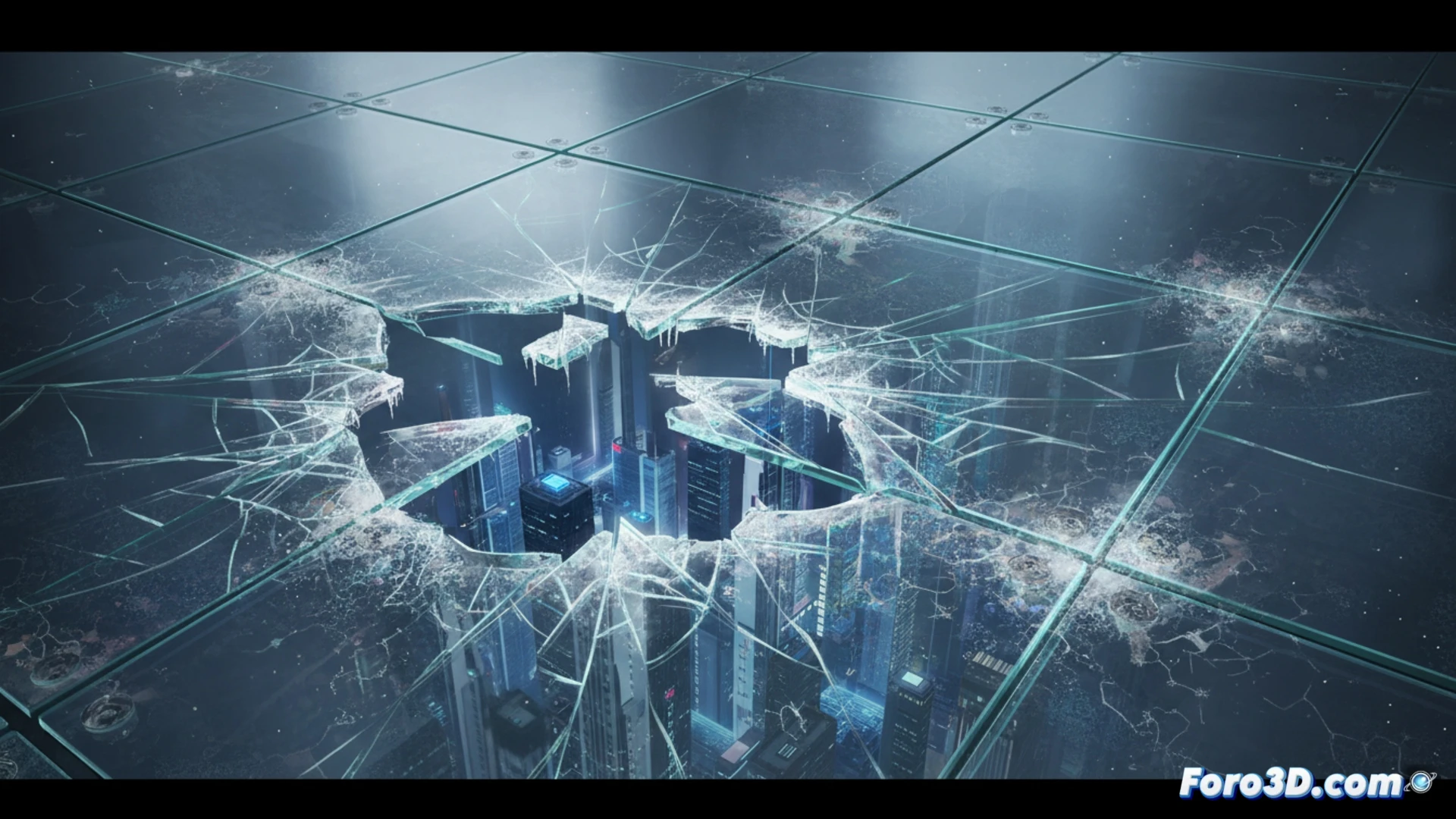
Workflow: Scanning, modeling, and chemical fatigue simulation 🔬
The 3D expert assessment process began with laser scanning of the collapsed walkway, whose data was processed in CloudCompare to align the point clouds with the original BIM model in Revit. Subsequently, the corrected geometry was imported into Autodesk Fusion 360, where a stress analysis through transparency was applied. This technique allowed simulating the propagation of the failure in the adhesive under the influence of aggressive chemical agents, modulating the viscoelastic properties of SentryGlas. The results showed that material fatigue accelerated by 340% due to the chemical reaction, a data point that no traditional destructive test had been able to quantify with precision.
Lessons for structural design: The invisible enemy 🧪
This case underscores the need to integrate chemical interaction into material fatigue models. The SentryGlas adhesive, technically suitable for mechanical loads, proved vulnerable to common cleaning compounds. The 3D simulation not only resolved the litigation but also exposed a gap in current regulations. As technical writers, we must insist that stress analysis through transparency become a standard for predicting invisible failures, where the true enemy is not the load, but the chemical environment that degrades structural integrity.
Is it possible to accurately predict the exact point of crack initiation in SentryGlas adhesive during 3D fatigue simulation, considering cyclic pedestrian loads and differential thermal stresses in a Smart City glass walkway?
(PS: Material fatigue is like yours after 10 hours of simulation.)