The Cybex Anoris T2 i-Size child restraint system introduces a full-body airbag integrated into the seat, an advancement that redefines the standards of frontal protection for minors. From a 3D modeling perspective, this device presents unique challenges in deployment simulation, as it must coordinate with the vehicle's impact sensors and ADAS systems. We analyze how this activation process is designed and visualized to ensure optimal energy absorption.
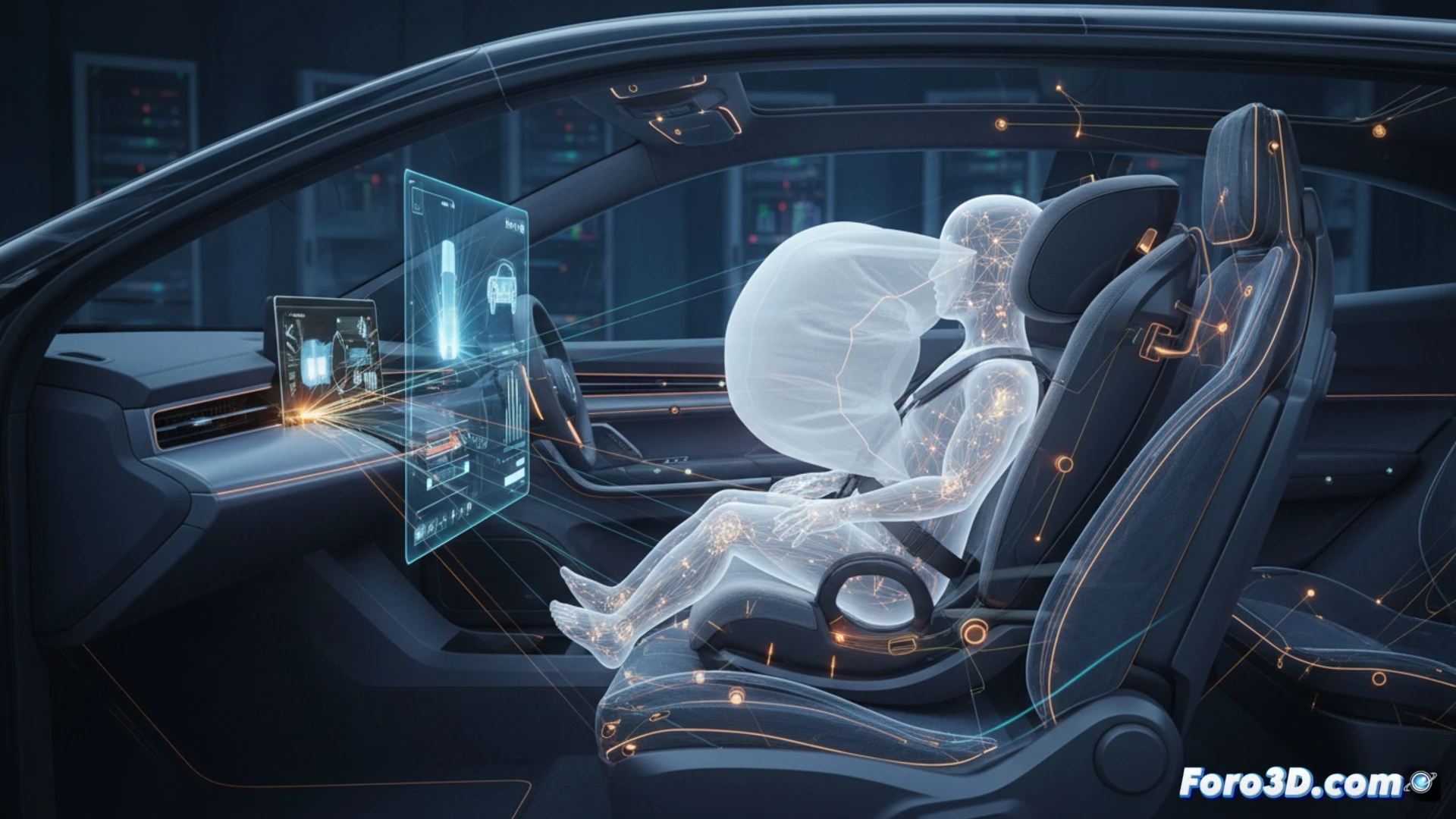
Kinematic modeling of deployment and impact sensors 🚗
The 3D modeling of the Anoris T2 airbag requires a multiphysics simulation that integrates the kinematics of the air cushion, the stiffness of the seat frame, and the response of the crash sensors. In the CAD environment, a controlled deployment volume is defined that envelops the occupant's torso and head, reducing the stopping distance. Impact detection algorithms, synchronized with the vehicle's ADAS systems, activate the airbag in milliseconds. Technical visualizations show how the airbag expands from the headrest downward, creating a barrier that limits the child's forward movement. This process is validated through virtual crash test simulations, where deceleration curves and internal airbag pressure are analyzed.
Implications for the design of restraint systems 🛡️
The integration of airbags in child seats opens a debate on the evolution of passive safety systems in automotive applications. From a 3D design standpoint, the challenge lies in miniaturizing the pyrotechnic components without compromising seat comfort or ergonomics. Simulation allows for predicting structural failures and optimizing the airbag geometry for different weight and height percentiles. This technical approach suggests that the future of child safety depends not only on seat belts but on active systems modeled with millimeter precision.
What finite element simulation parameters and boundary conditions should be applied to the 3D model of the Cybex Anoris T2 airbag to validate its effectiveness in a 50 km/h frontal impact compared to conventional child restraint systems?
(PS: modeling a car is easy; the hard part is making sure it doesn't turn into a cube with wheels)