The profession of a chemist involves constant exposure to hazardous agents: from toxic and corrosive substances to flammable and reactive materials. Accidents due to spills, explosions, or poisoning are a real risk in any laboratory. Process simulation in 3D environments offers an innovative solution to mitigate these dangers, allowing the recreation of critical scenarios without jeopardizing the physical integrity of personnel.
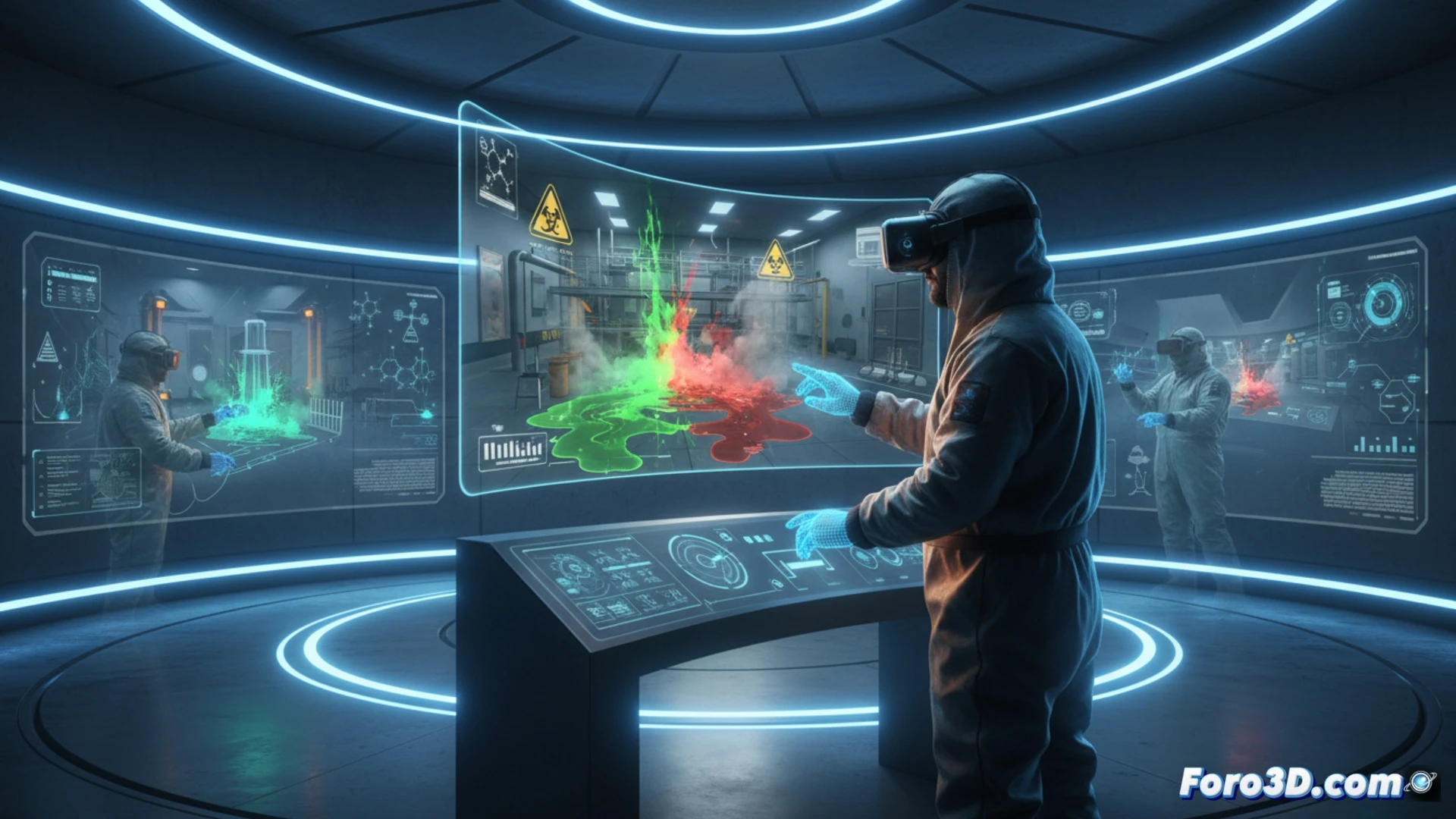
Virtual Laboratories: Modeling Protocols and Emergencies 🧪
3D simulation technology allows the construction of digital twins of laboratories where working conditions are accurately replicated. Users can practice handling glassware, dosing corrosive compounds, and activating emergency ventilation systems. Additionally, fire or explosion scenarios can be modeled to train in evacuation and the use of fire extinguishers. This approach drastically reduces accidents from cuts, burns, or awkward postures, as workers acquire safe reflexes before stepping into a real laboratory.
Active Prevention: Beyond the Safety Manual 🛡️
Reading a manual is not enough to internalize the reaction to an acid spill or a toxic gas leak. 3D simulation transforms theory into practical experience, reducing stress and anxiety for new personnel. When facing a biological hazard or a virtual explosion, the chemist learns to manage their emotional and technical response. Ultimately, this technology not only saves lives but also optimizes training resources and raises the safety standard in the industry.
Is it possible to accurately simulate the dispersion of a toxic gas in a 3D environment to train chemists in leak response without exposing them to real risks?
(PS: Simulating industrial processes is like watching an ant in a maze, but more expensive.)