The position of sous chef involves high exposure to physical and psychosocial hazards. Burns, cuts, overexertion from lifting heavy utensils, falls on slippery floors, sustained forced postures, and stress from coordination make this job a challenge for occupational safety. Process simulation allows recreating these scenarios in a controlled virtual environment.
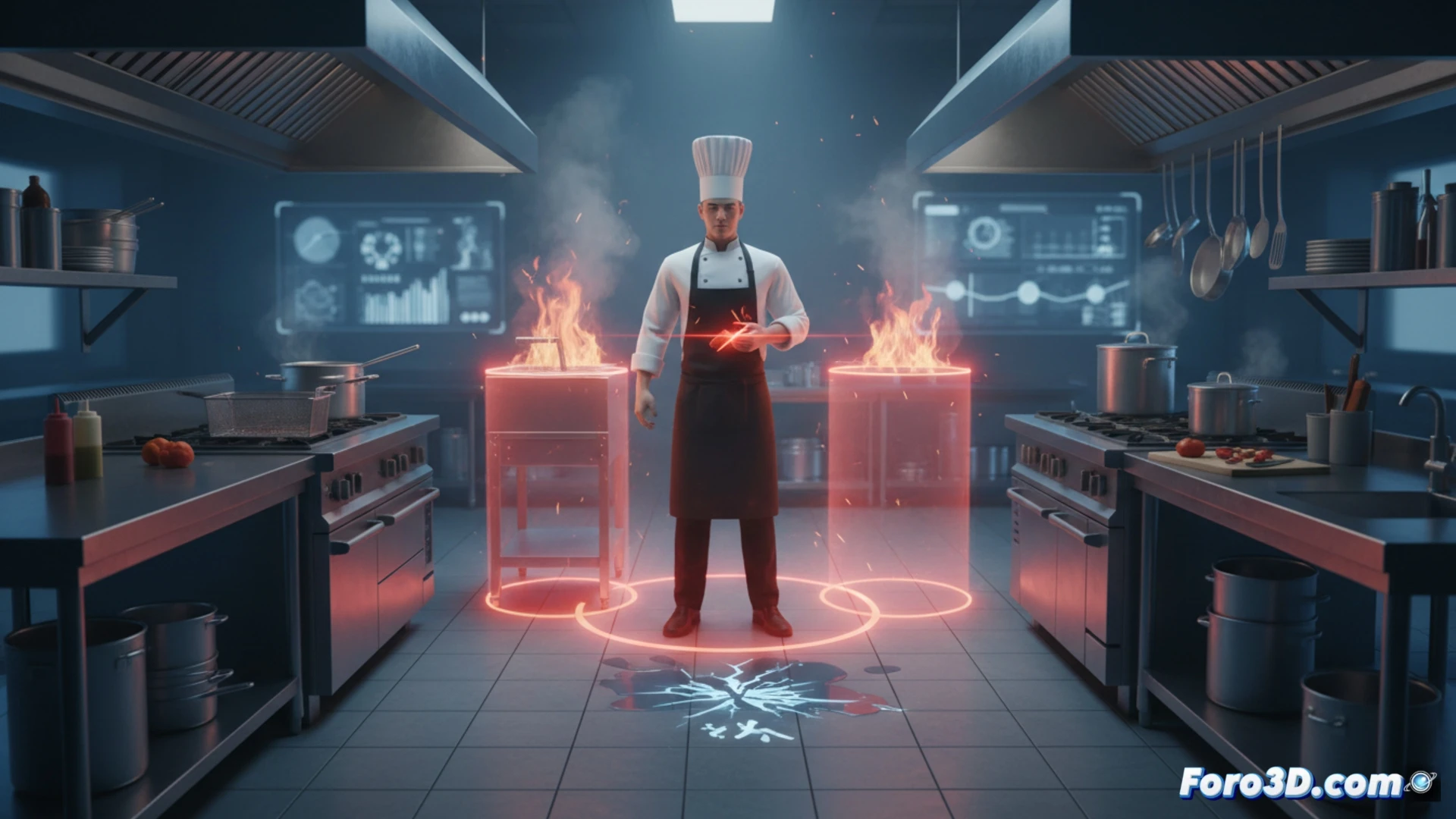
Modeling physical and ergonomic risks in 3D environments 🛠️
3D simulation technology allows building a virtual kitchen with realistic physical parameters: hot surfaces, knives with collision detection, weights of pots and food sacks, and floors with variable friction coefficients. The virtual sous chef can interact with these elements, recording biomechanical data such as joint angles in forced postures, lumbar compression forces when lifting loads, and cumulative time of exposure to radiant heat. The system evaluates fatigue risk from shifts by simulating work and rest cycles.
Immersive prevention to reduce actual accident rates 🎯
By visualizing workflows in 3D, the sous chef identifies blind spots where falls or collisions occur. Simulation allows practicing safe cutting and lifting techniques without real consequences, reducing the learning curve in safety. This tool transforms passive prevention into active and immersive training, adapted to the specific conditions of each professional kitchen.
How can the exposure of a sous chef to repetitive postural overexertion be modeled in 3D to optimize the ergonomic design of a professional kitchen without losing service efficiency?
(PS: Simulating industrial processes is like watching an ant in a maze, but more expensive.)