The job of a stocker in logistics and retail involves constant exposure to physical risks, ranging from overexertion due to manual handling of loads to falls from ladders. The lack of visual training in these environments leads to repetitive accidents. We present an interactive 3D simulation that allows identifying and preventing these hazards through the virtual representation of a warehouse with animations of correct and incorrect postures.
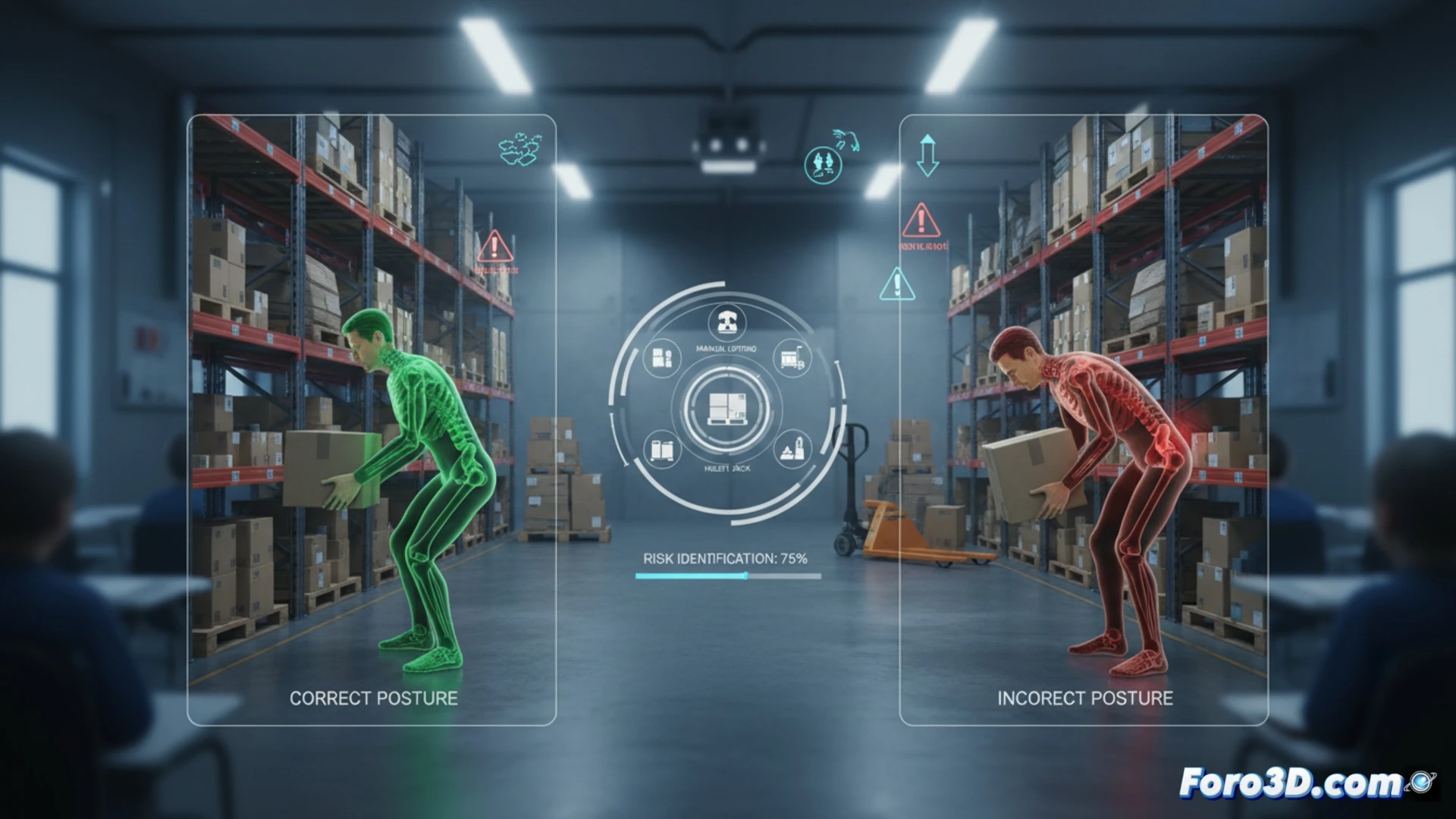
3D modeling of risks: overexertion, falls, and cuts 🚧
In our 3D model, we have recreated an aisle of shelves with the restocking of heavy products. The simulation includes animations of forced postures when bending and stretching to reach heights, contrasted with the correct ergonomic technique using legs and a lumbar belt. We also represent the use of step ladders with stabilizers and the signage of product drop zones. Scenes of cuts with blades and entrapments in mobile shelving were added, allowing the user to interact to activate or deactivate safety measures. Ambient dust was simulated with dynamic particles to assess its impact on visibility.
Why 3D visualization saves lives in logistics 🦺
Traditional training with manuals fails to convey the severity of an entrapment or a fall. This 3D simulation allows the stocker to virtually experience the consequences of poor posture or a lapse in attention, internalizing prevention protocols. By visualizing the risk of overexertion in real time or the exact point where a cut is most likely, workers improve their situational awareness. The result is a direct reduction in accidents and a safer work environment.
How can 3D simulation of occupational hazards optimize the ergonomics of stockers in warehouses to reduce overexertion injuries and improve productivity?
(PS: 3D bottlenecks are like traffic jams: you see them coming but can't avoid them)