The profession of solar panel installer concentrates multiple physical hazards: falls from sloped roofs, electric shocks from high-voltage connections, handling panels weighing up to 30 kilos, and prolonged sun exposure. Modeling these scenarios in a process simulation environment allows visualizing each phase of the workflow, from material hoisting to final wiring, to identify blind spots in safety.
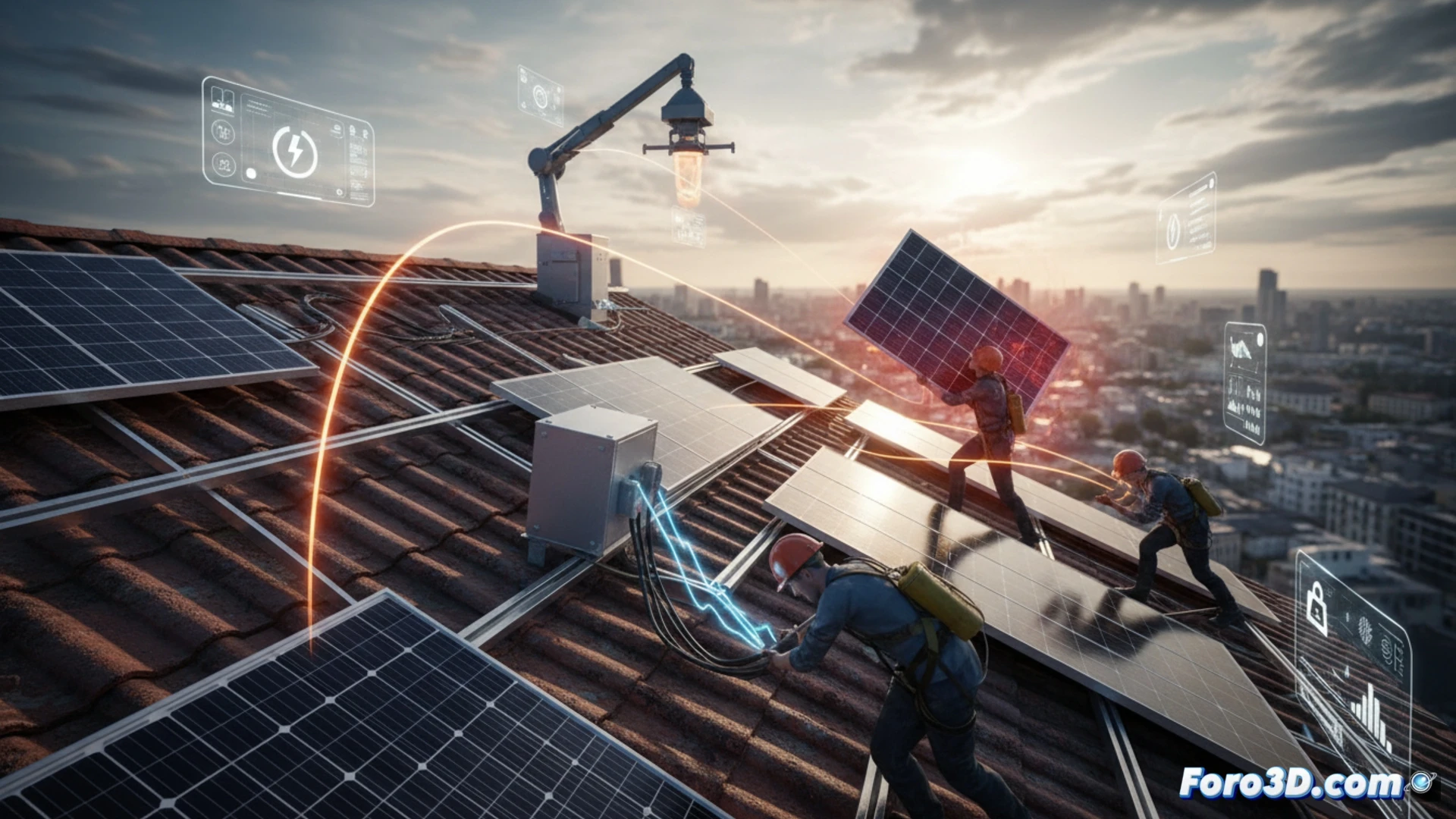
Virtual recreation of critical points and PPE protocols ⚠️
The 3D simulation accurately reproduces roof slopes, scaffolding height, and ladder positioning, integrating realistic physics for falls and load swaying. Models of dielectric gloves, fall arrest harnesses, and helmets with visors are incorporated, evaluating their correct use against cuts from circular saws or burns from soldering tin. The system records every deviation: a poorly secured panel, a ladder without a foot, or a live connection, generating incident reports without exposing the operator.
Training without real risk to validate procedures 🛠️
By deploying digital twins of the workstation, trainers can design iterative safety protocols: from the assembly sequence to breaks for heat stress. The installer practices high-altitude rescue maneuvers or emergency disconnection in a hazard-free environment. This methodology reduces real accidents and accelerates crew certification, transforming prevention into a quantifiable and repeatable process.
How can 3D process simulation predict and mitigate the risk of electric shock in solar installations during adverse weather conditions?
(PS: Simulating industrial processes is like watching an ant in a maze, but more expensive.)