The profession of a crane operator involves critical risks such as falls from height when accessing the cabin, entrapment by moving parts, crane overturning, falling suspended loads, electric shocks, and exposure to high noise levels. Process simulation allows recreating these scenarios in safe virtual environments, offering a key tool for training and evaluating protocols without exposing real workers.
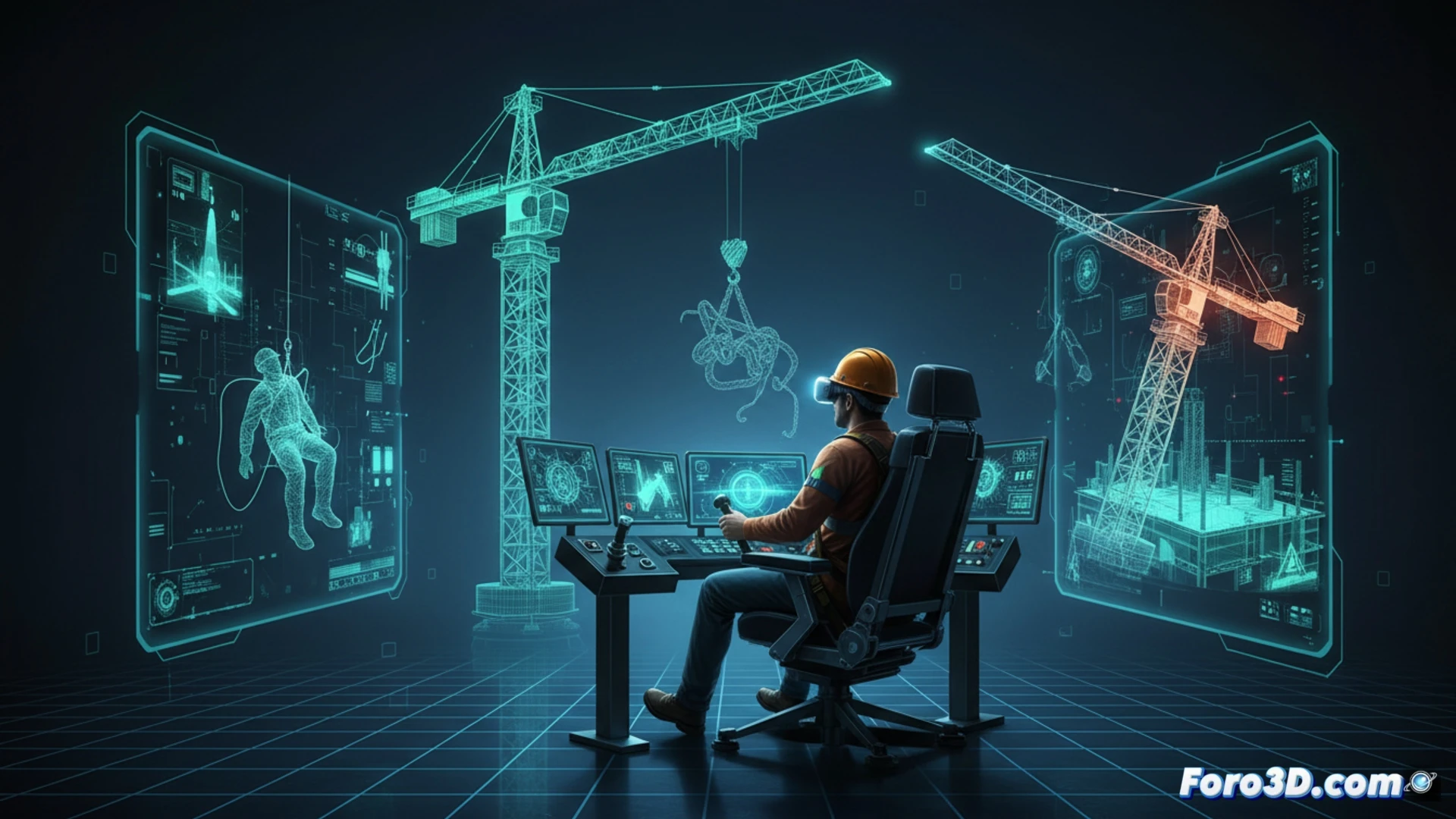
Modeling critical scenarios in the crane operator position 🏗️
An interactive 3D simulation of the crane operator position can include specific modules: cabin access via ladders or platforms, where risks of slips and lack of anchorages are detected; boom operation with suspended loads, modeling the effect of winds or overloads that can cause overturning; and proximity to overhead power lines, visualizing electric arcs and safety distances. Additionally, virtual noise sensors are integrated to alert about the need for hearing protection. Each scenario allows the user to identify hazards, execute correct maneuvers, and receive immediate feedback on their decisions.
Virtual training for a real safety culture 🎯
Simulation not only reduces costs and risks associated with traditional training but also allows repeating emergency situations as many times as necessary. By visualizing the consequences of an error in a controlled environment, crane operators develop reflexes and situational awareness that they transfer to real work. This technology transforms occupational risk prevention into a dynamic, measurable, and highly effective process for the construction and industrial sectors.
How can a 3D simulation faithfully recreate the kinetics of a swinging load and real visibility conditions to train crane operators in preventing entrapments and falls?
(PS: Simulating industrial processes is like watching an ant in a maze, but more expensive.)