The occupational risk analysis for a hotel housekeeper reveals a complex web of hazards that go beyond simple cleaning. Constant movement through hallways, stairs, and storage rooms generates a high risk of falls and bumps. 3D process simulation allows visualizing this daily flow, modeling each route and each task to identify the exact points where the probability of an accident skyrockets, transforming a static report into a dynamic prevention tool.
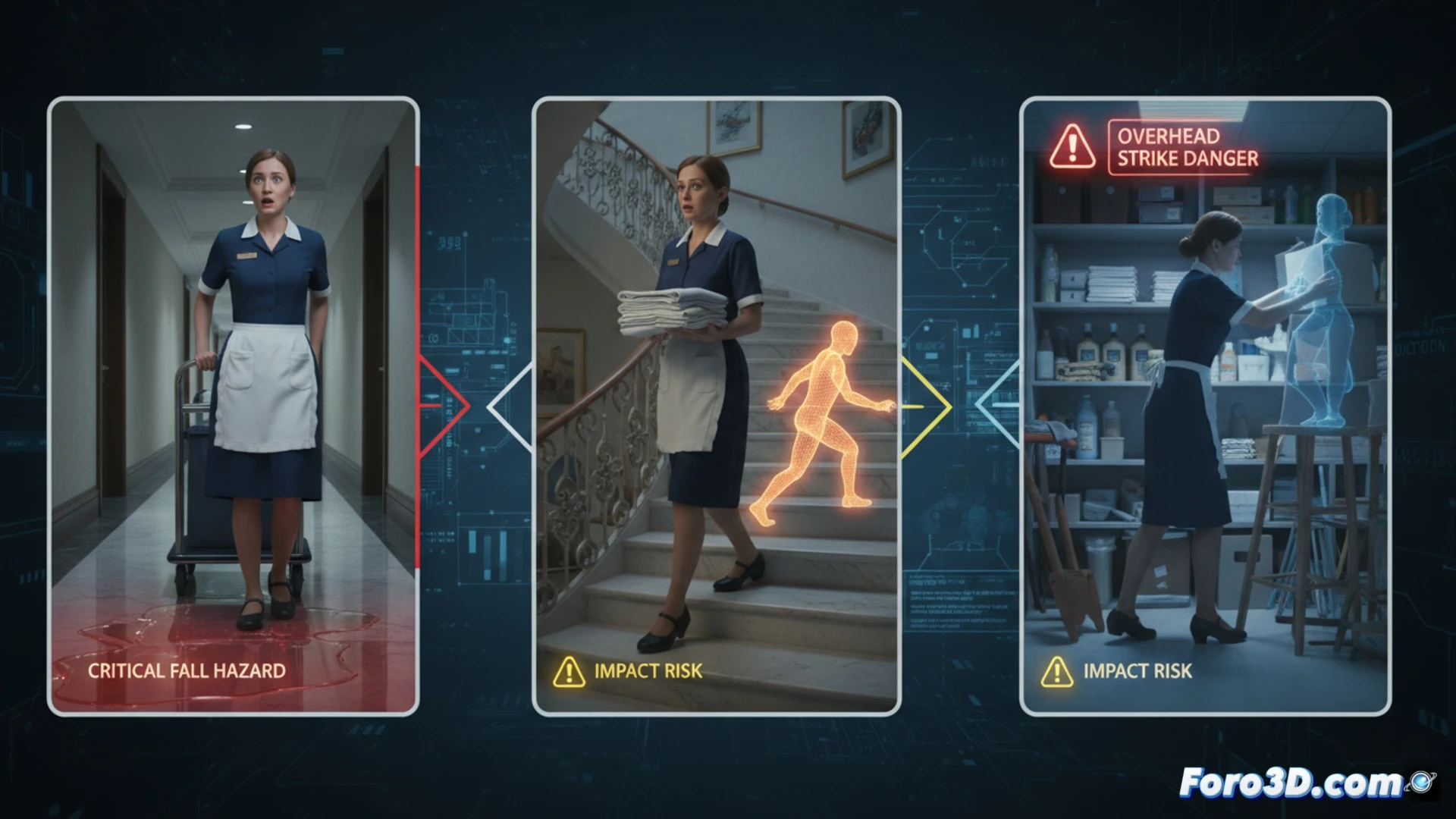
Flow modeling and detection of critical points 🚶
To address these risks through simulation, a 3D model of the hotel is built, including all transit areas: stairs, cleaning rooms, linen storage rooms, and narrow hallways. The housekeeper's avatar travels these routes while the software records variables such as speed, frequency of stops, and turning angles. Areas where overexertion accumulates due to handling loads of sheets or forced postures when bending down are marked with warm colors (red for high risk, yellow for medium). The animation reveals how the accumulation of stress from tight cleaning times increases muscle tension, visualizing musculoskeletal disorders as a heat map on the virtual body.
From textual prevention to interactive visualization 🖥️
The great advantage of this approach is turning risk analysis into an immersive experience. By animating the route, the safety team can identify not only where falls occur, but why they occur: a poorly lit staircase, a cleaning cart blocking the way, or a storage room with poorly placed shelves. This graphical representation of stress and fatigue allows redesigning processes before a real accident occurs, optimizing routes to avoid unnecessary movements and scheduling active breaks at times of greatest physical overload.
How can an immersive 3D simulation anticipate and train the hotel housekeeper in identifying ergonomic and chemical exposure risks that are not evident in a traditional safety manual?
(PS: Simulating industrial processes is like watching an ant in a maze, but more expensive.)