The trade of window dresser involves constant exposure to physical risks ranging from falls from height to muscle overexertion. Through process simulation, it is possible to digitally model the workplace to identify these hazards without exposing the worker. This technical article analyzes how to create an interactive virtual environment that allows training in risk prevention, replicating real scenarios of window dressing assembly.
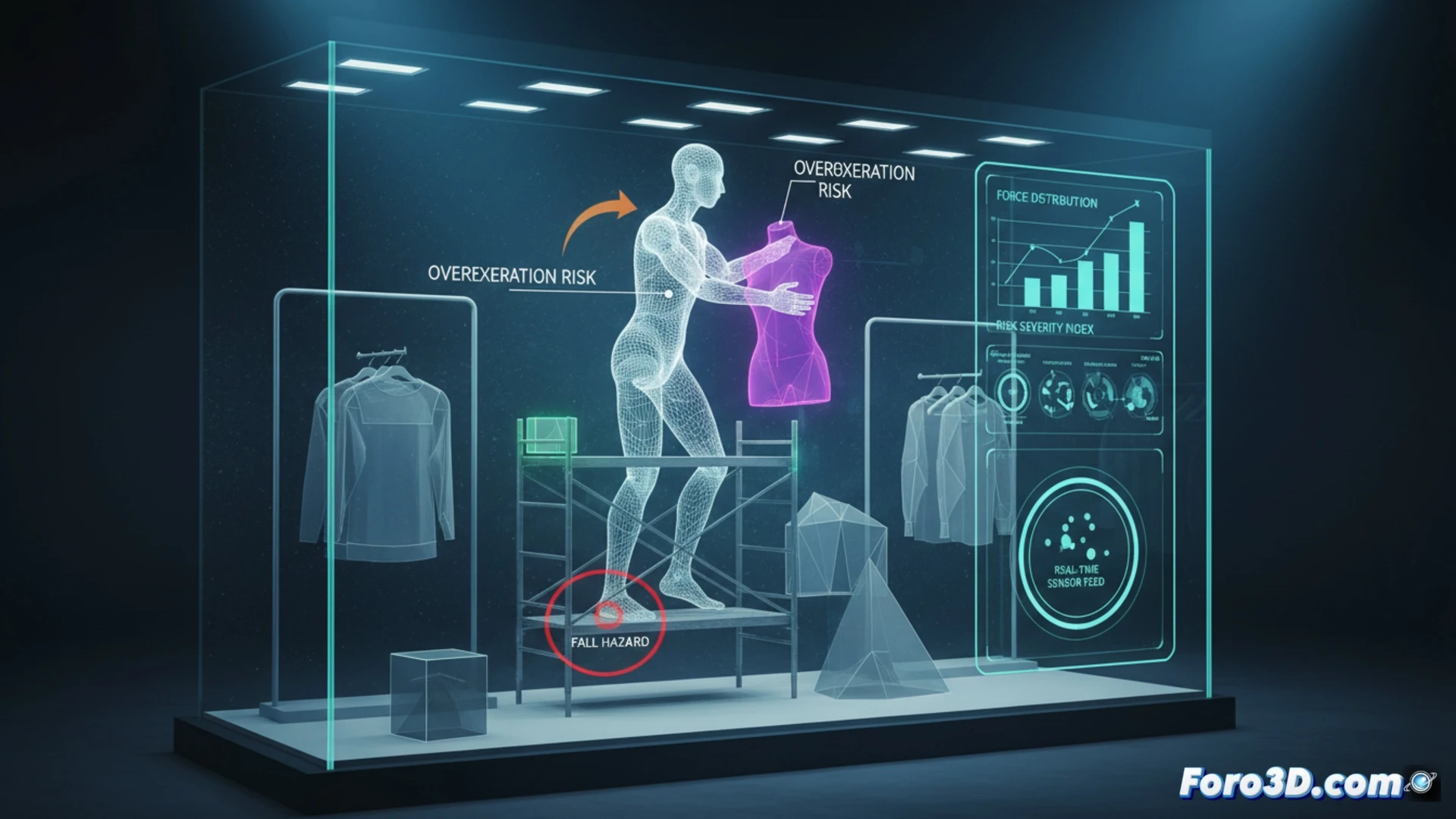
3D modeling of the work environment and associated hazards 🛠️
To simulate the workplace, a typical store with a window display must be modeled in 3D, including step ladders, mobile scaffolding, and heavy decorative elements. The simulation software must integrate realistic physics to recreate falls from height when placing signs or mannequins, forced postures with raised arms for more than 10 minutes, and cuts from utility knives or scissors when handling fabrics and cardboard. Additionally, muscle fatigue parameters can be added to simulate overexertion when lifting plaster figures or furniture, as well as particle clouds to represent the inhalation of adhesive and paint vapors. The user, through an avatar, must complete tasks such as fixing a support at the top of the window display, while the system automatically detects if they adopt incorrect postures or do not use the safety harness.
Benefits of virtual training in prevention 🎯
This approach allows the window dresser to practice safety protocols in an environment free from real consequences. By repeating the simulation, the user internalizes the need to check the ladder's stability before climbing, alternate arms to avoid fatigue, and use cut-resistant gloves. The tool not only reduces accidents but also optimizes the training process, as detailed reports of each mistake made can be generated. Ultimately, modeling the trade in 3D transforms prevention into an immersive and measurable experience.
How can the biomechanics of a window dresser's repetitive movements be modeled in 3D to predict and prevent musculoskeletal injuries before they occur in the real environment?
(PS: Simulating industrial processes is like watching an ant in a maze, but more expensive.)