The figure of the railway inspector faces complex occupational risks ranging from falls when moving between moving carriages to passenger assaults or being run over on tracks. Regulatory compliance requires proactive prevention. This article explores how 3D simulation technologies allow these scenarios to be modeled to design effective safety protocols and comply with worker protection regulations.
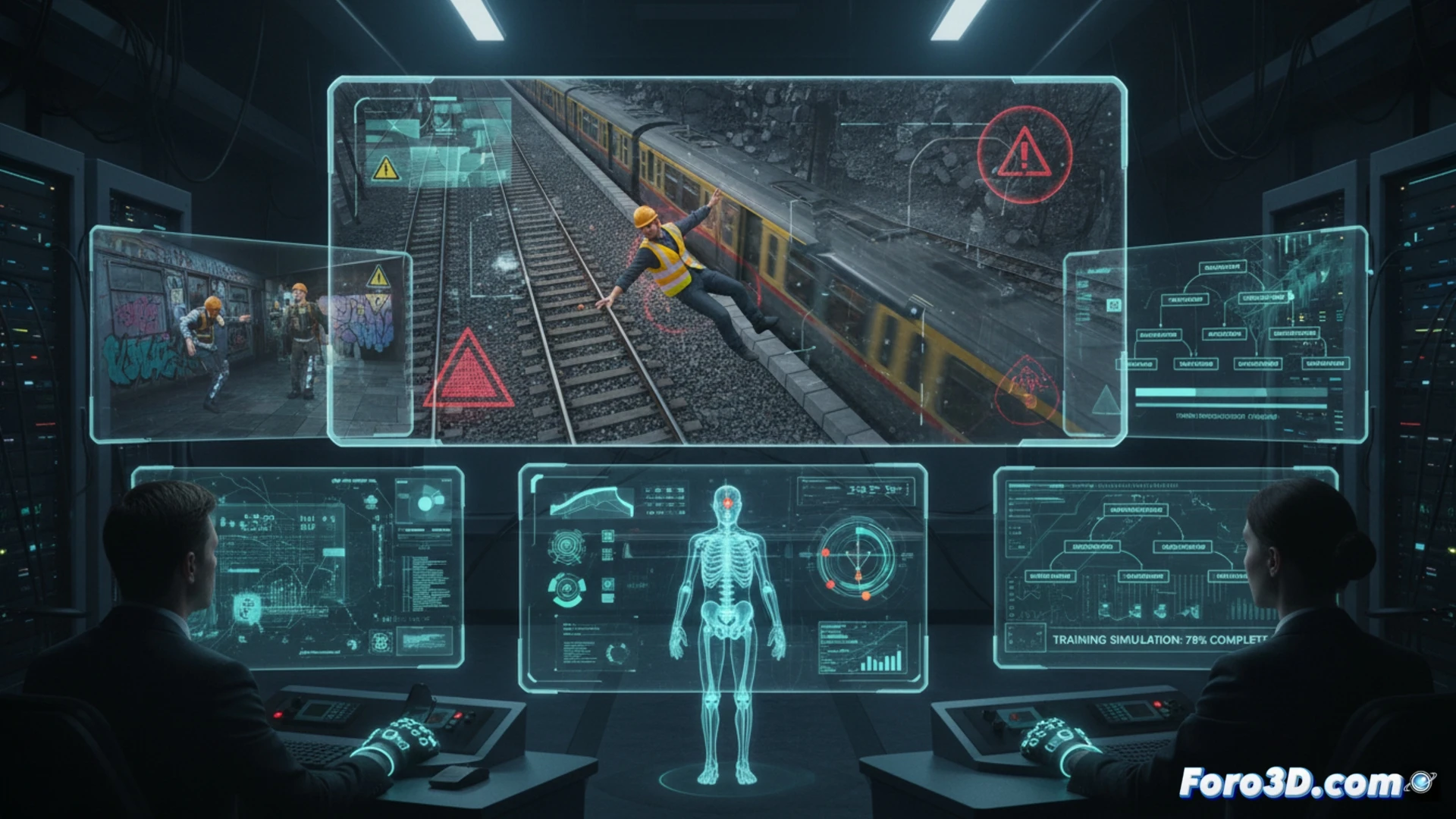
Modeling risk scenarios for regulatory audit 🚆
Virtual reality tools and digital twins allow for accurately recreating the risks of the trade: instability when moving between carriages while in motion, exposure to constant noise, and forced postures from long walks. These 3D models serve as a basis for compliance audits, as they allow visualizing the accident before it occurs. Prevention officers can identify regulatory blind spots and adjust safety procedures, digitally documenting each simulation as evidence of compliance for labor inspections.
Digital prevention against the human factor and stress 🧠
Beyond physical risks, 3D simulation addresses stress from conflicts with passengers. By recreating high-pressure environments with virtual avatars, the inspector can practice assertive responses without real danger. This approach not only reduces accident rates but also legally protects the company by demonstrating specific training in psychosocial risks. 3D technology thus becomes a digital compliance asset, transforming prevention into a measurable, repeatable process aligned with labor regulations.
Considering that 3D simulation allows recreating realistic risk scenarios, how can this technology influence the determination of the railway company's legal responsibilities in the event of an inspector's workplace accident, compared to traditional investigation methods?
(PS: fines of €79,380 are like failed renders: they hurt more the longer you've been working on them)