The trade of rebar worker accumulates a high accident rate due to manual handling of steel, the use of heavy machinery, and work at height. This article proposes the design of an interactive 3D simulation to visually identify critical points in each process, from rod storage to on-site assembly, integrating real-time prevention data.
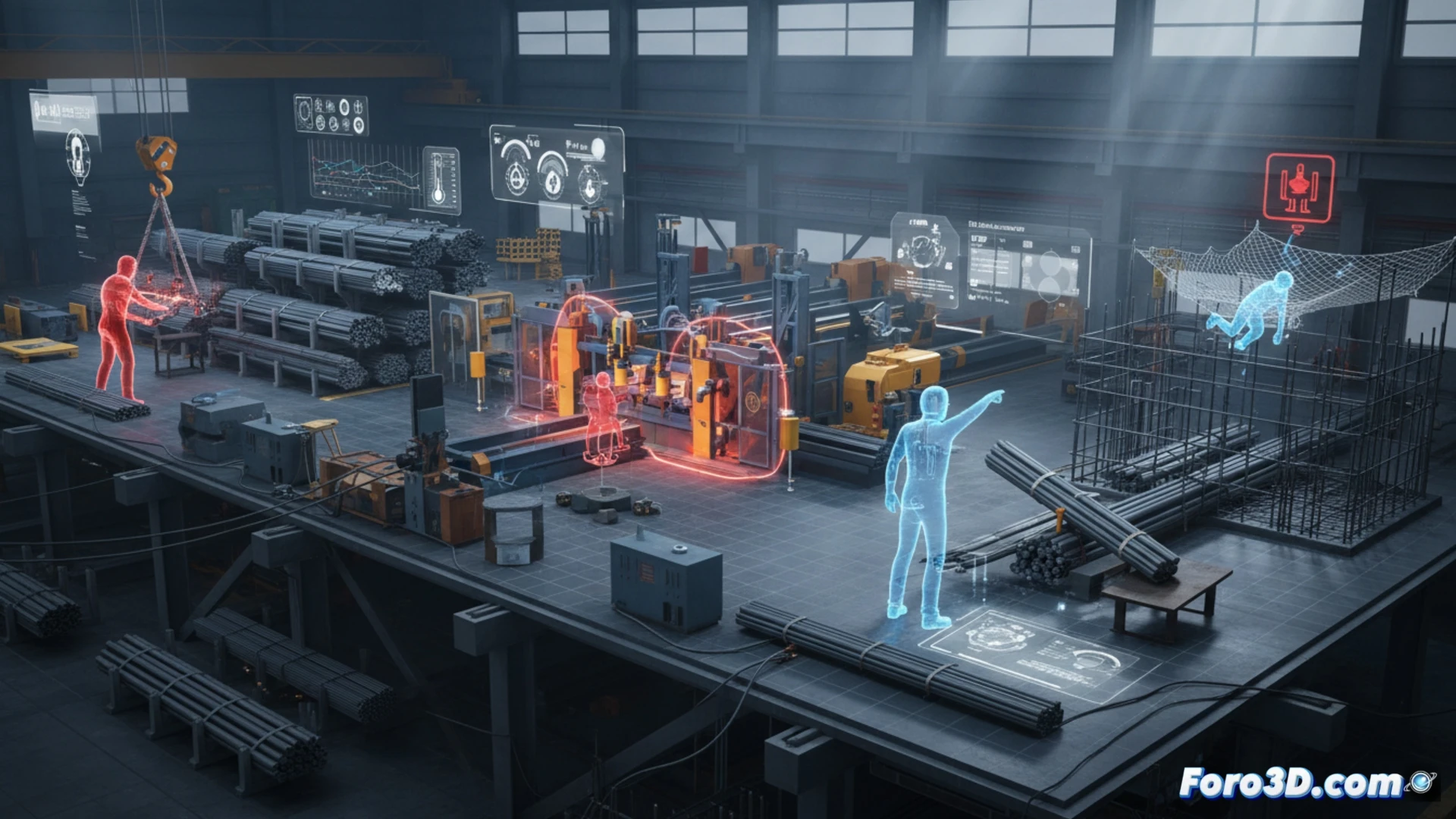
Modeling critical points and workflow 🏗️
The 3D simulation divides the plant into key zones: rod reception, cutting and bending area, assembly zone, and assembly scaffolding. Bending machines with trapping zones marked in red, cutting tables with proximity sensors, and storage racks with adjustable heights are modeled. A dynamic overlay shows the probability of incidents per workstation, such as cuts from metal burrs or overexertion when handling steel bundles. Falls from scaffolding are also recreated using virtual avatars that lose stability when carrying excessive weight, allowing testing of anchoring protocols and anti-slip platforms.
Predictive ergonomics and visual prevention 🛡️
Beyond modeling, the simulation allows adjusting variables such as the angle of the bending machines or the height of the tables to calculate the reduction of ergonomic risks. Accident data is overlaid on 3D heat maps, showing that 40% of accidents occur in the manual cutting area. With this tool, safety managers can redesign the plant layout before implementing physical changes, optimizing collective protection without stopping production.
How can 3D risk simulation in a rebar plant predict blind spots in the interaction between heavy machinery and operators to reduce accident rates?
(PS: simulating an industrial plant is like playing The Sims, but without pools to remove the ladder)