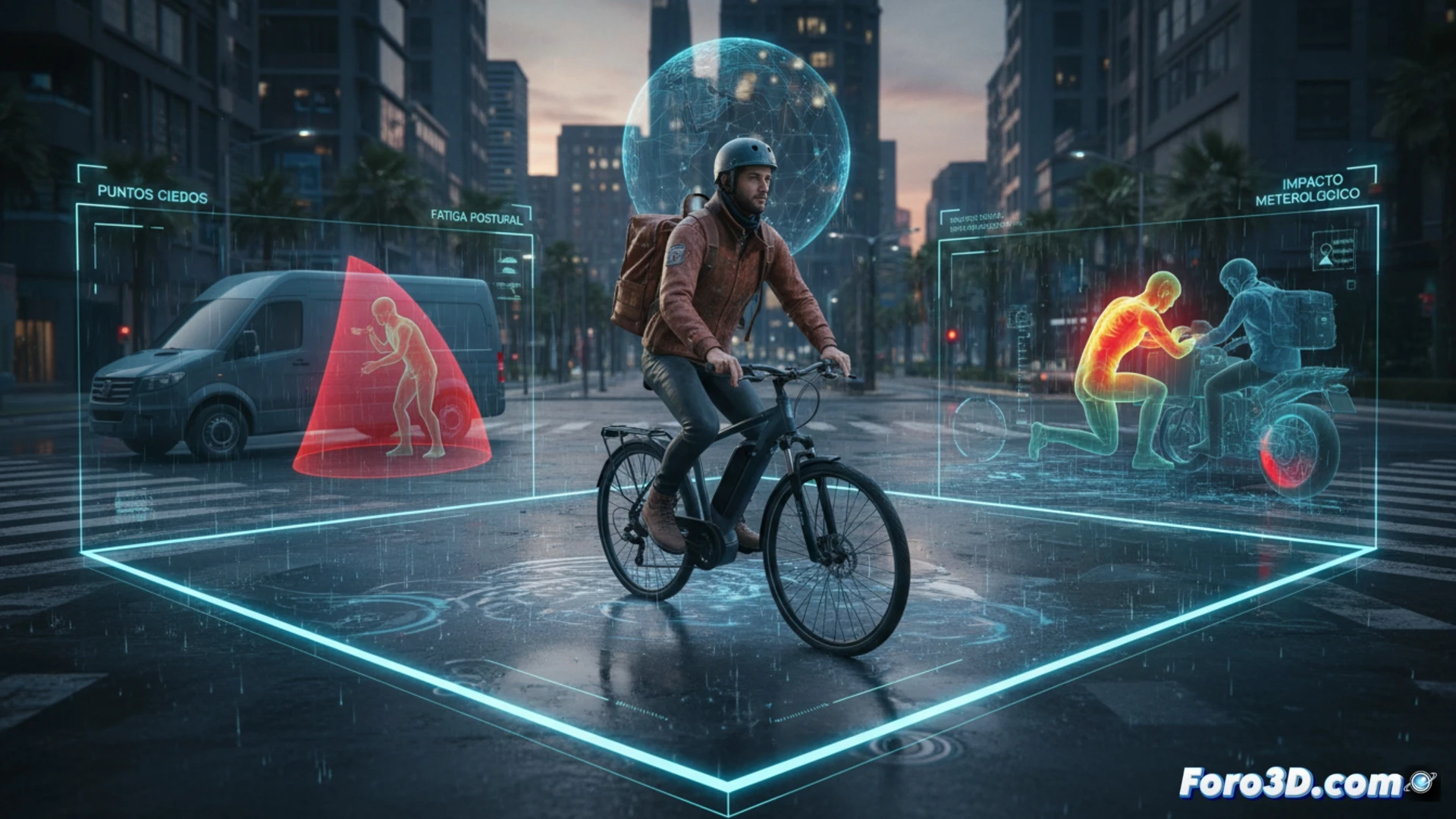
The occupation of urban courier involves high occupational accident rates: traffic accidents on motorcycles or bicycles, run-overs, falls, stress from tight deadlines, climate exposure, overexertion from carrying loads, and assaults. Analyzing these factors through digital twins makes it possible to visualize blind spots at intersections, measure postural fatigue during mounting maneuvers, and predict the impact of weather on pavement grip.
Fleet digital twin for ergonomics and road safety 🚴
Modeling delivery routes in 3D with real traffic data makes it possible to identify high-risk intersections where visibility is limited for motorcycles and bicycles. The simulation also reproduces forced postures when mounting and dismounting cargo, calculating the accumulated lumbar strain per shift. By integrating climate variables such as rain or ice, the digital twin adjusts delivery times and suggests safe parking zones, reducing stress from deadlines and the likelihood of run-overs in double-parked areas.
Towards safer deliveries with 3D data 🛵
The integration of IoT sensors in backpacks and helmets feeds these models, detecting vibrations and sudden turns that anticipate falls or collisions. With this information, logistics companies can redesign loading points, optimize weight distribution in vehicles, and train couriers in defensive driving techniques. 3D simulation not only prevents accidents but also humanizes an increasingly digitalized and demanding profession.
How can the interaction between a courier on a motorcycle, a parked vehicle opening its door, and a distracted pedestrian be modeled in a 3D environment to predict and mitigate collisions in the last mile?
(PS: visualizing logistics flows is like watching ants... but with less order and more budget)