The production of artisanal and industrial cheese hides specific dangers that often go unnoticed in safety manuals. The cheesemaker's trade combines handling heavy loads, slippery floors due to fats and whey, prolonged exposure to cold in maturation chambers, and contact with aggressive chemicals. Analyzing these risks using 3D visualization tools makes it possible to anticipate accidents before they occur.
Modeling hostile environments and risk hotspots 🧀
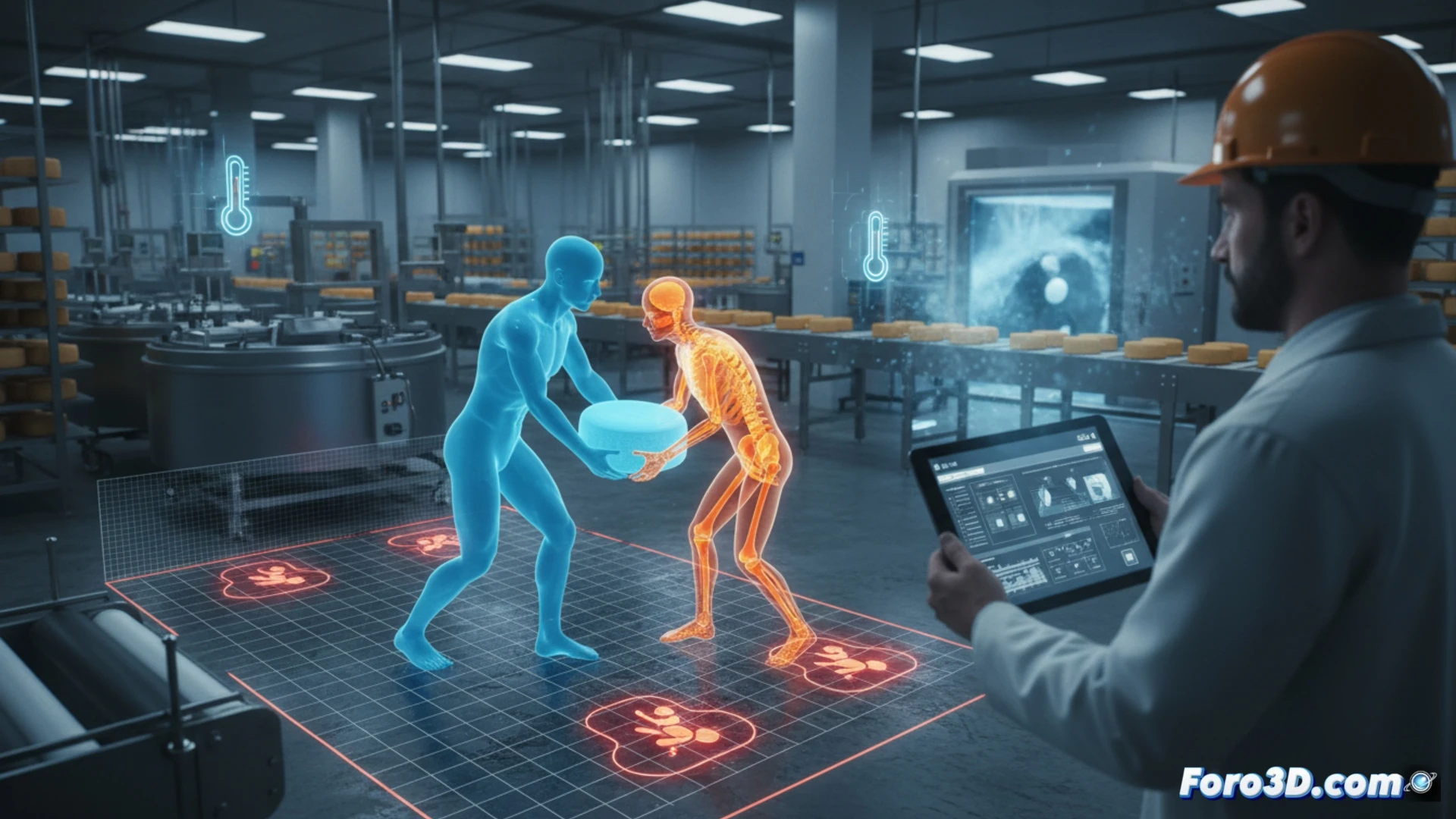
The 3D simulation of an industrial cheese factory allows for accurately recreating critical areas. The modeling identifies wet floor areas near the curdling vats, where the probability of falls is high. Animations of virtual workers performing forced twists while transporting 15-kilo molds are incorporated, highlighting harmful postures for the lumbar spine. Cold rooms are represented with visual thermal gradients, alerting to the maximum exposure time. Additionally, hotspots where alkaline and acid detergents are stored are marked, facilitating virtual emergency signage.
Ergonomic design as a digital preventive solution ⚙️
3D visualization not only diagnoses risks but also proposes solutions. Lifting tables can be virtually tested to reduce overexertion when unmolding, and shelving can be relocated to avoid repetitive twisting. It is also possible to simulate the installation of anti-slip flooring with a specific texture and protective barriers against chemical splashes. This methodology allows safety managers to validate layout changes without interrupting real production, turning prevention into an iterative and efficient process.
As a production engineer, what has been the most unexpected or counterintuitive workplace accident discovered when simulating cheese factory processes in 3D that would not have been detected with a traditional risk analysis?
(PS: visualizing logistics flows is like watching ants... but with less order and more budget)