Plumbing is one of the trades with the highest exposure to physical and biological risks, from confined spaces to burns and cuts. Modeling these environments in 3D allows workers to train in a virtual safe environment, replicating real conditions such as forced postures or heavy load handling. This simulation becomes a key tool for accident prevention.
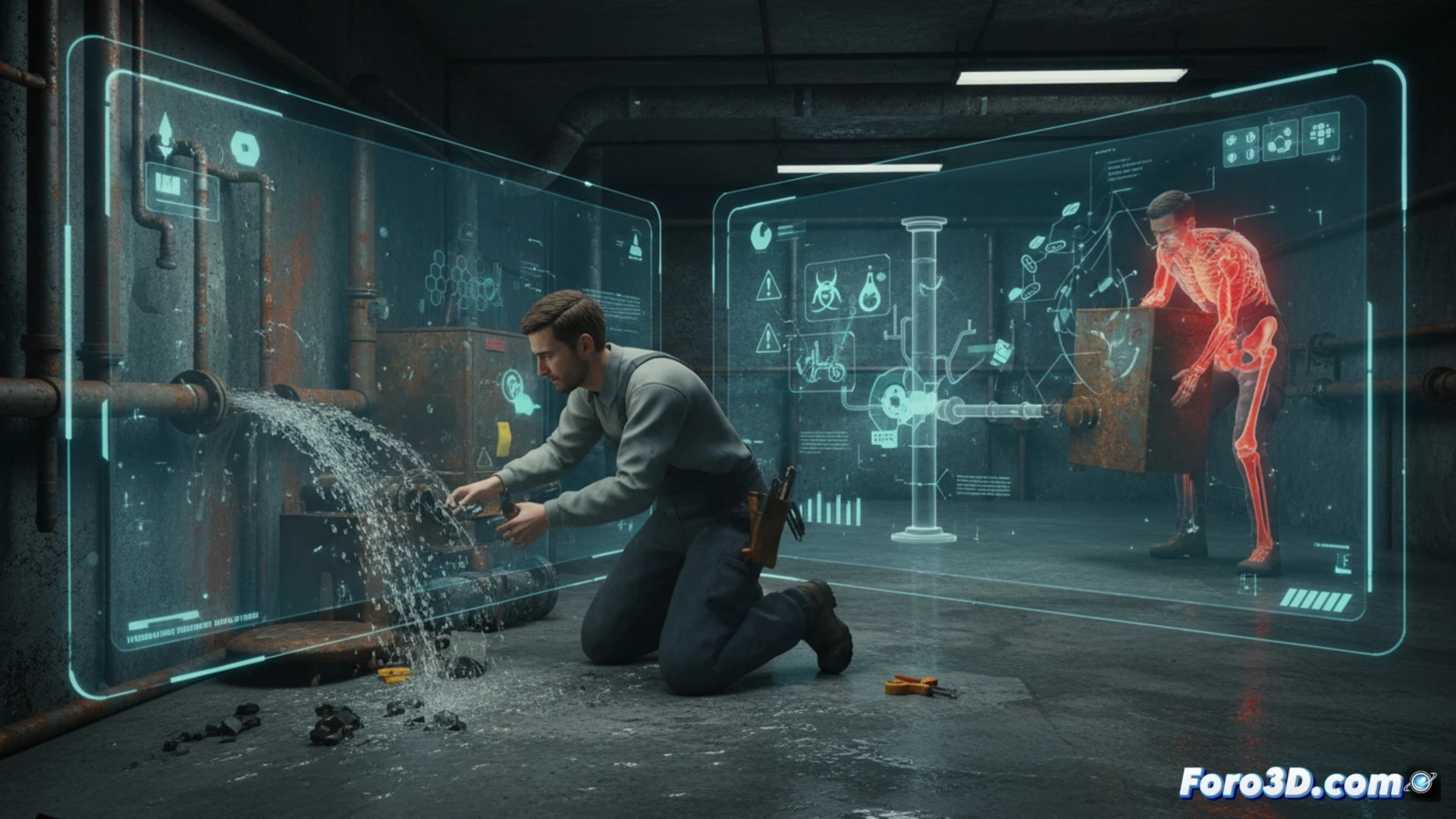
Modeling confined spaces and biological exposure 🛠️
To recreate high-risk scenarios, it is necessary to design complex geometries of pipes and cramped basements where the plumber must operate. The simulation must include biological agents such as contaminated water, represented through particles and textures that indicate danger. Additionally, the worker's forced postures are modeled using rigging and animation, evaluating ergonomics. Falls from ladders and load handling are integrated with realistic physics, allowing the user to practice safety protocols without real consequences.
Towards a preventive culture through virtual environments 🧠
3D simulation not only teaches how to avoid accidents but transforms the perception of risk in the trade. By visualizing situations such as a welding burn or a tool cut in first person, the plumber internalizes corrective measures. This technology, applied to professional training, reduces accident rates and optimizes work processes, demonstrating that modeling danger is the first step to neutralizing it.
Is it possible to realistically recreate the feeling of claustrophobia and thermal stress in a virtual reality environment to simulate confined spaces, or should trainers prioritize technical precision over sensory immersion to ensure learning effectiveness?
(PS: Simulating industrial processes is like watching an ant in a maze, but more expensive.)