The craft of pottery, although artisanal, presents a lethal combination of physical and environmental risks that are often underestimated. Exposure to silica dust can trigger silicosis, while forced postures in front of the wheel and repetitive movements cause chronic musculoskeletal injuries. At Foro3D, we propose an innovative approach: modeling these hazards in a virtual environment to transform occupational risk prevention.
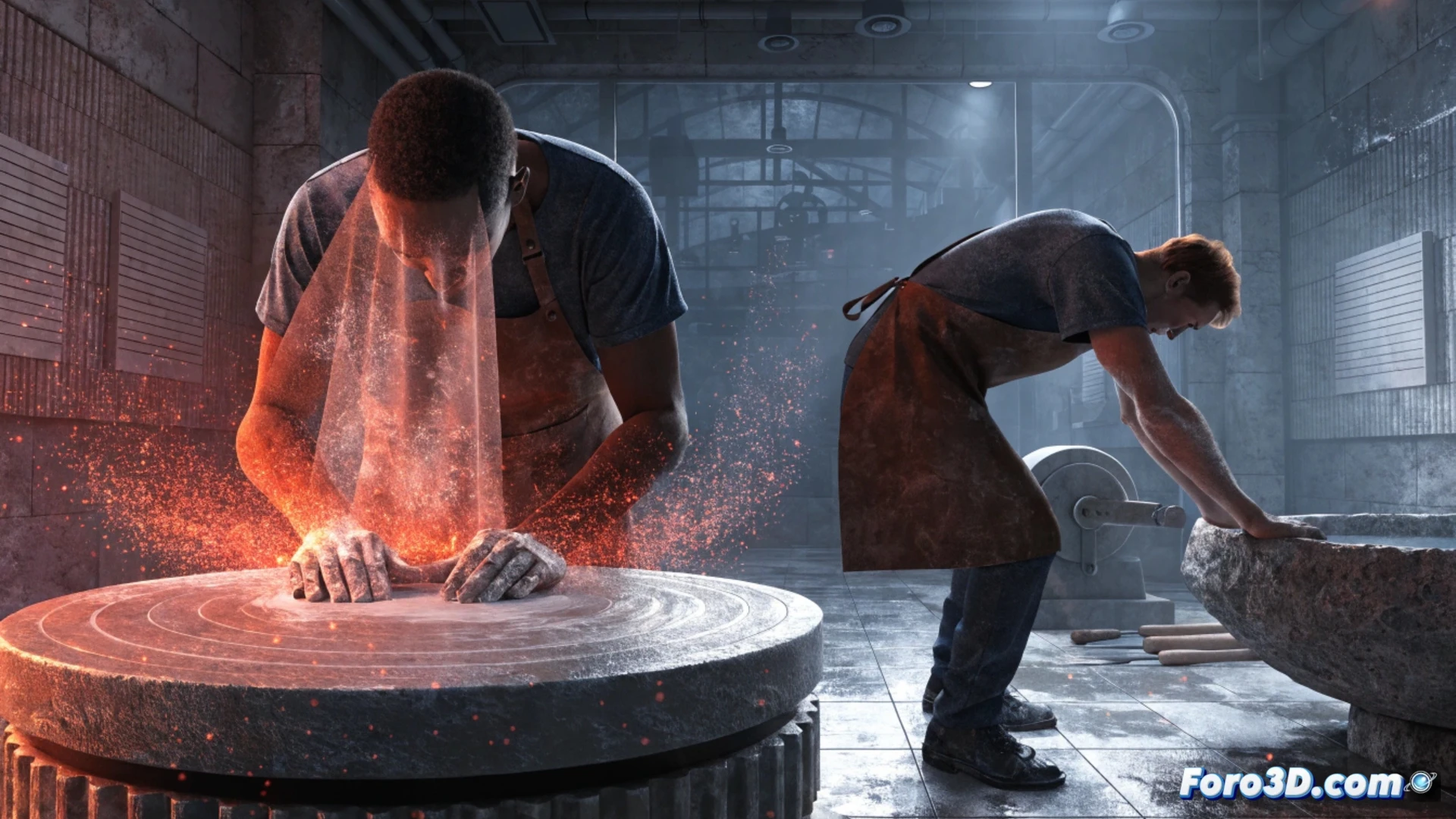
Technical modeling of the workstation and its hazards 🛠️
For the simulation, we began by modeling the potter's wheel with polygonal precision, including the spinning wheel and the low seat. The animation must capture the excessive lumbar flexion and shoulder rotation that occur during clay centering. We incorporate a particle system to visualize suspended silica dust in the air, assigning a semi-transparent color to alert the user. The kiln is modeled with a radiant heat zone, and cutting tools are tagged with hazard colliders. The key is to program a repetitive work cycle that, when activated, shows joint wear through a virtual skeleton colored by tension zones.
Visualized prevention in a safe environment 🎯
The real value of this simulation lies in its ability to teach without real consequences. The user can switch between a first-person view of the potter and an aerial view that reveals the blind spots of risk: the wet floor causing falls and dermatitis from contact with glazes. By interacting with the scene, the worker learns to adjust the bench height or activate dust extraction. It is not just about seeing the danger, but about practicing postural correction and the use of PPE in a 3D laboratory that saves lives before stepping into the real workshop.
Of all the stages of the pottery process, from kneading to firing, which one do you consider presents the greatest challenge to accurately model in a 3D simulation of occupational hazards and why?
(PS: Simulating industrial processes is like watching an ant in a maze, but more expensive.)