Forklift operation is one of the activities with the highest accident rates in logistics: tip-overs, pedestrian run-overs, entrapment against shelving, and falling loads. We analyze these risks from the perspective of industrial 3D modeling, recreating virtual scenarios to identify causes and visualize preventive measures such as safety distances, pedestrian walkway signage, and dynamic stability protocols.
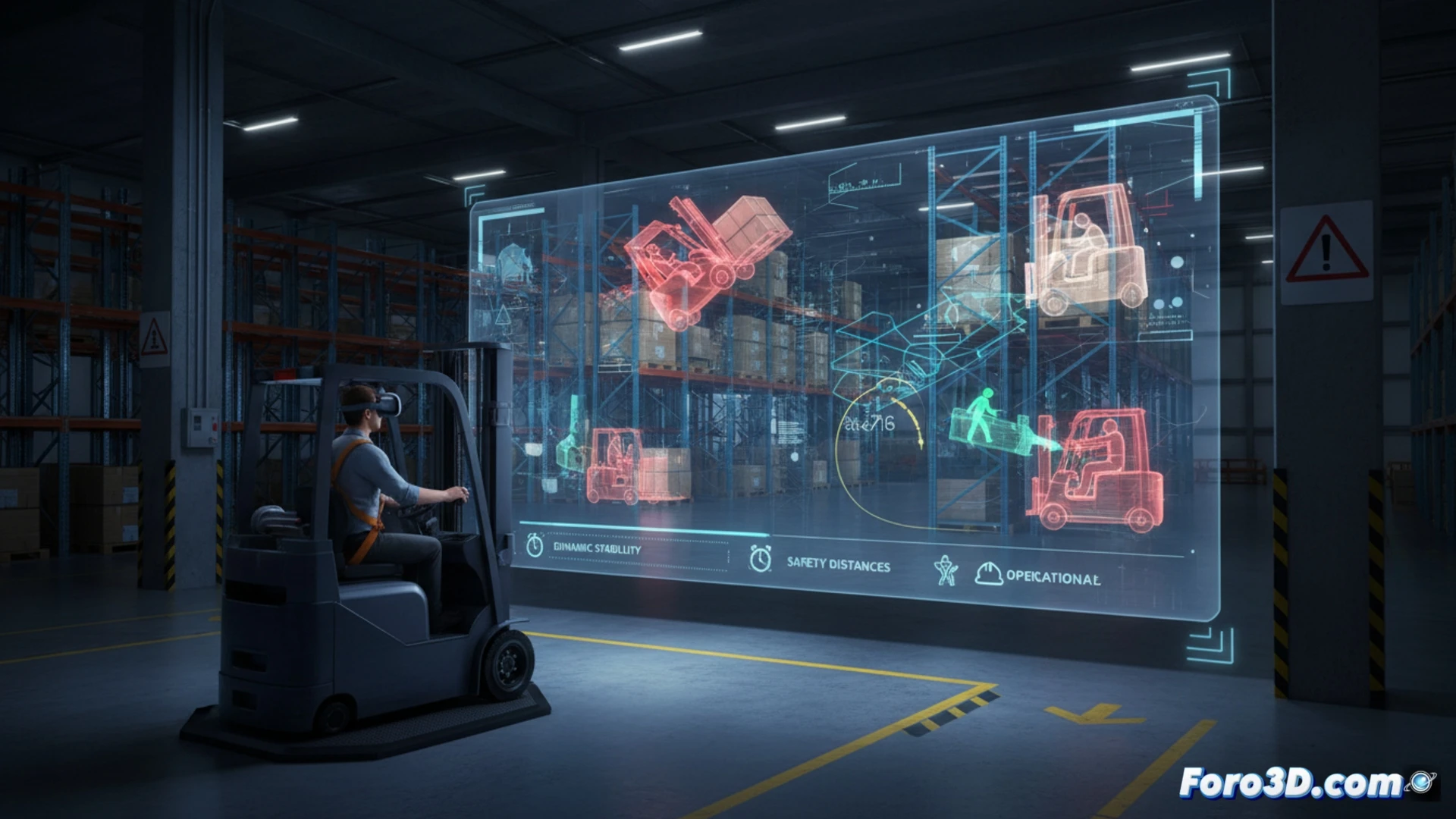
Technical visualization of incidents: tip-over, run-over, and entrapment 🚜
In a warehouse digital twin, we can simulate a lateral tip-over due to a sharp turn with a raised load, observing how the center of gravity shifts outside the support base. We also recreate pedestrian run-overs at blind intersections, where the lack of mirrors or sensors aggravates the risk. Entrapments between the machine and shelving occur when the minimum turning radius is not respected, generating compression points that the 3D model allows us to measure with millimeter precision. These recreations are key to designing segregated traffic zones and adjusting fork height in narrow aisles.
Virtual training: from passive prevention to safety culture 🎓
3D simulation not only documents the accident but also allows the operator to experience the consequences of a bad habit in a safe environment: getting on or off the forklift while moving, ignoring acoustic signaling, or exceeding the nominal load. By integrating noise, vibration, and fume exposure data into the model, we obtain a complete map of ergonomic and environmental risks. The result is an immersive training module that reduces accident rates and meets compliance standards in occupational risk prevention.
How 3D simulation can predict and prevent the risk of a forklift tip-over based on load distribution and warehouse floor conditions
(PS: at Foro3D we optimize routes like we optimize polygons: until the computer says enough)