The hospitality industry is one of the sectors with the highest rates of workplace accidents. The profession of waiter accumulates physical and psychosocial risks ranging from falls on wet floors to stress from a fast pace. Analyzing these dangers statically is insufficient. 3D process simulation offers a technical tool to recreate real environments, identify safety blind spots, and optimize ergonomics before an accident occurs.
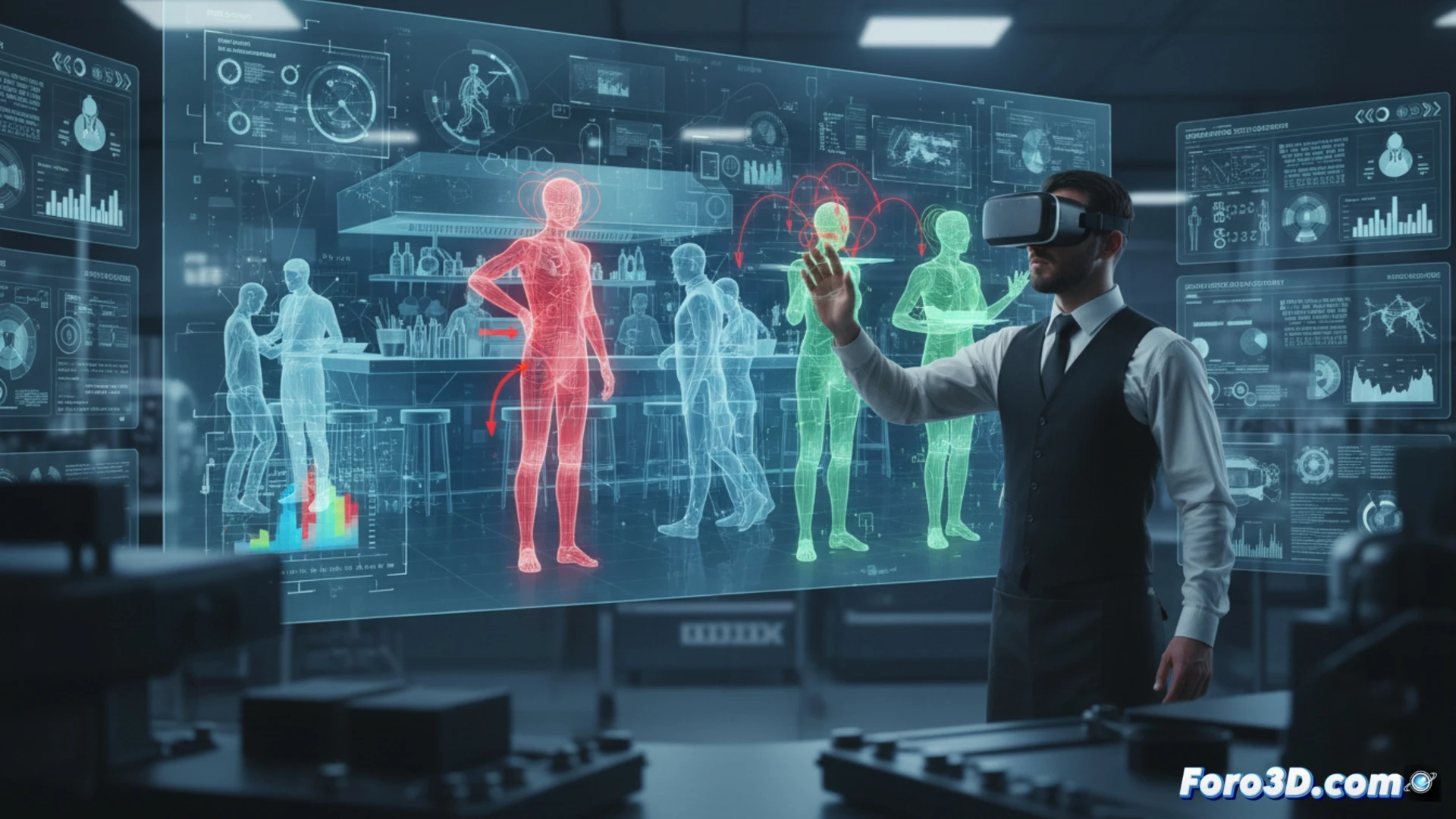
Modeling physical and ergonomic risks in the virtual environment 🛠️
A digital twin of a restaurant allows replicating critical scenarios: the overloaded tray that forces a strained lumbar rotation, the waxed floor near the bar that reduces friction, or the repetitive gesture of bending down to pick up broken glass. Using physics engines, the load on joints can be simulated and musculoskeletal disorders can be predicted. Additionally, burns from contact with hot liquids and cuts from utensils are modeled, evaluating the worker's reaction time. This analysis allows redesigning the kitchen and dining room layout to minimize unnecessary movements and congestion points.
From hazard visualization to stress reduction 🧠
Simulation not only prevents physical injuries. By recreating customer flow and demand peaks, the waiter can be trained in managing work pace without real pressure. Visualizing correct postures when carrying trays or serving tables in a 3D environment reduces anxiety and improves decision-making. This approach turns workplace safety into a dynamic and measurable process, where each identified risk is an opportunity to optimize operations and team well-being.
Can a 3D process simulation accurately predict the repetitive movements that cause musculoskeletal injuries in waiters and propose ergonomic adjustments in the design of service routes to prevent them?
(PS: Simulating industrial processes is like watching an ant in a maze, but more expensive.)