A recent radiological safety incident has brought the reliability of hermetic sealing processes into focus. A Cesium-137 capsule, used in industrial radiography, began releasing radioactive material due to a micro-leak. Forensic analysis, performed using computed tomography and finite element simulation, identified the root cause: a lack of penetration in the laser weld, caused by a momentary power fluctuation during the manufacturing cycle.
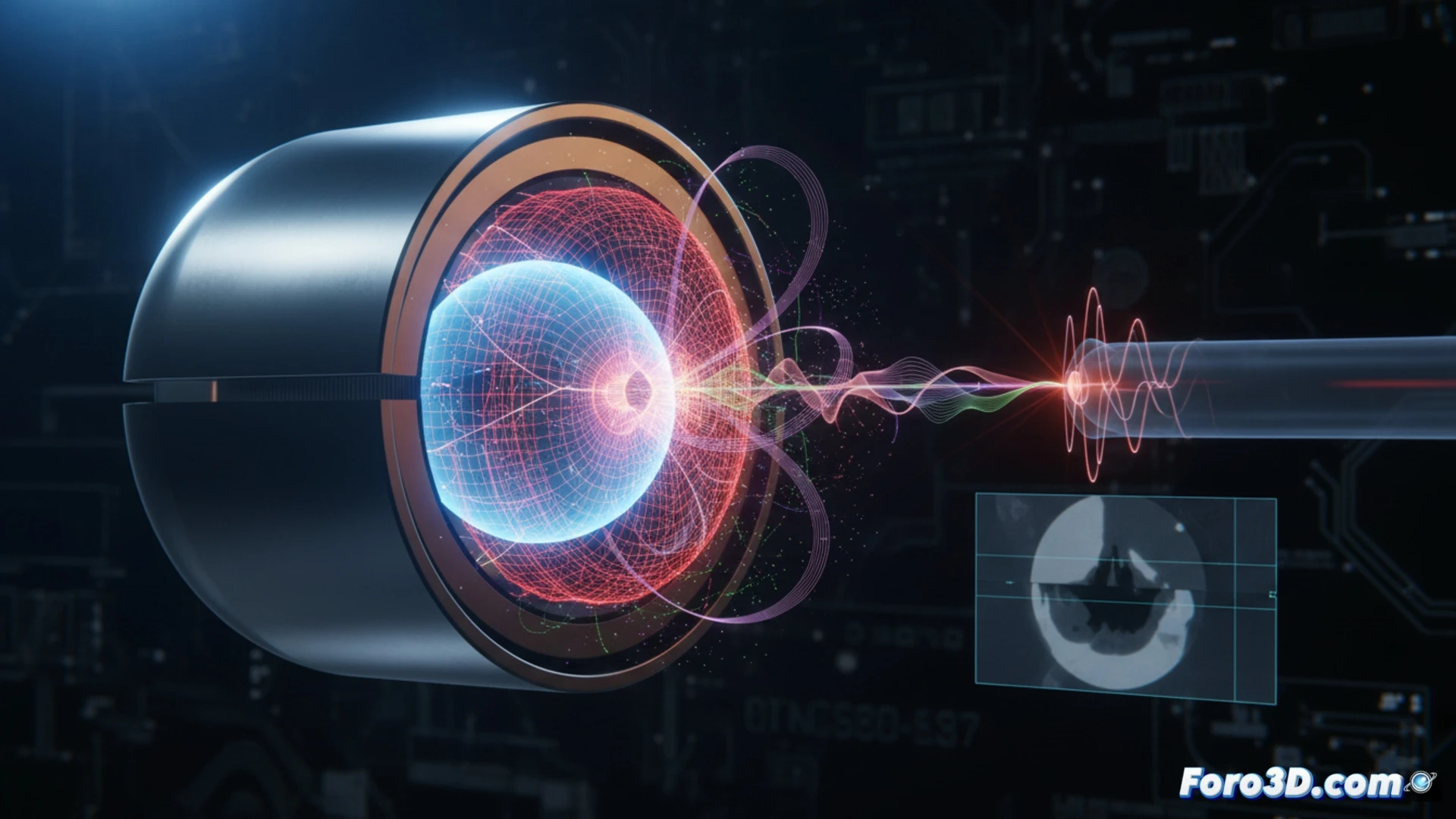
Technical workflow: From point cloud to fatigue analysis 🔬
The process began with digitizing the defective capsule using RealityCapture, generating a high-precision digital twin. This model was imported into Volume Graphics to perform microporosity and weld bead continuity analysis. The 3D reconstruction showed an incomplete fusion zone in 12% of the seal's perimeter. Subsequently, the defect geometry was exported to Ansys to simulate the laser thermal cycle. The thermal fatigue model revealed that the power fluctuation generated an uneven cooling gradient, creating residual stresses that exceeded the material's yield strength at the joint interface, propagating microcracks.
The value of predictive simulation versus destructive testing ⚙️
This case demonstrates why material fatigue simulation is critical in the nuclear industry. A traditional destructive test (such as tensile or bending) would have validated the capsule's mechanical strength but would never have detected internal microporosity or localized residual stress. 3D simulation, by modeling material behavior under cyclic thermal and mechanical stress, allows predicting these hidden failures before a leak occurs, offering an additional safety barrier without needing to destroy the container.
What 3D fatigue simulation methodologies allow detecting hidden failures in nuclear capsule welds before they manifest in conventional pressure tests
(PS: Material fatigue is like yours after 10 hours of simulation.)