The craft of cabinetmaking exposes the worker to multiple mechanical risks: cuts from saws and milling machines, projection of splinters, entrapments, and falls from high benches. Added to this is exposure to wood dust, classified as a carcinogen. The key to mitigating these hazards lies not only in personal protection but in understanding how materials fail under repetitive stress. Here, material fatigue simulation becomes an essential predictive tool.
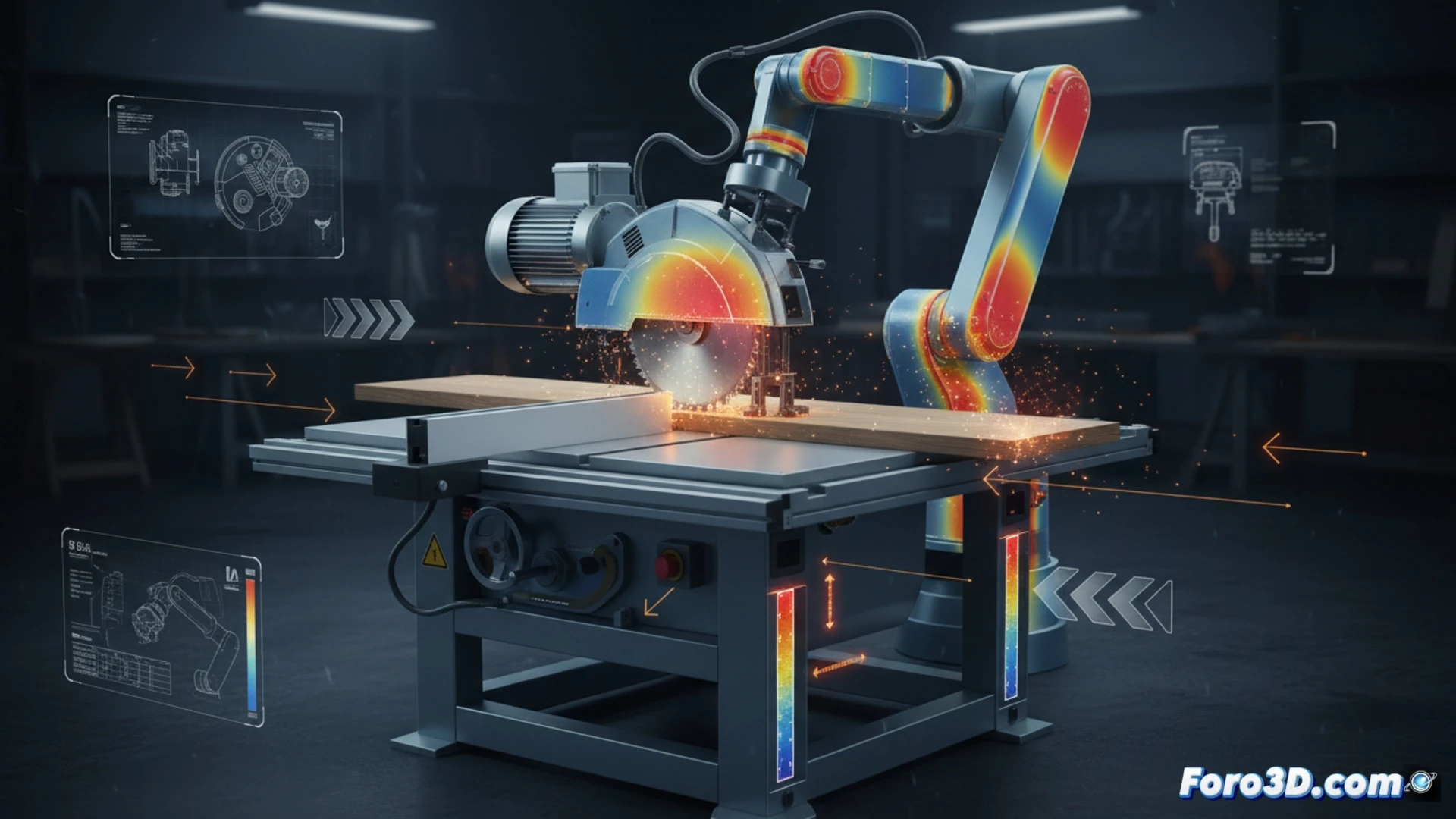
Material fatigue in cutting tools and workbenches 🛠️
Circular saws and milling machines undergo constant load cycles that generate microcracks in the steel. Through 3D fatigue simulations, it is possible to visualize stress concentration on the blade teeth and predict the exact point of brittle fracture before an accident occurs. Similarly, high workbenches, subjected to vibrations and dynamic loads, exhibit localized plastic deformations. A finite element analysis allows identifying these critical points, recommending structural reinforcements that prevent collapses or falls of the operator.
Predicting failure to save lives ⚠️
The projection of splinters is not a random event; it responds to wood fatigue in cutting zones with residual stresses. By simulating the degradation of woody material under planing cycles, we can adjust feed speeds and tool geometries. This approach transforms workplace safety from a reactive model to a predictive one, where 3D technical analysis prevents catastrophic failure. The cabinetmaking of the future not only carves wood but models its resistance to protect the craftsman.
Which material fatigue parameters should be prioritized in 3D simulation to predict failures in cabinetmaking cutting tools, such as saws and milling machines, before accidents due to breakage or excessive wear occur?
(PS: Material fatigue is like yours after 10 hours of simulation.)