The craft of glassworking exposes workers to multiple hazards: cuts from handling, burns from furnaces, projection of hot fragments, and thermal explosions. Material fatigue simulation allows these scenarios to be modeled in virtual environments, calculating the accumulated stress in glass up to the point of breakage. This predictive technology becomes an essential tool for anticipating structural failures and designing more effective safety protocols.
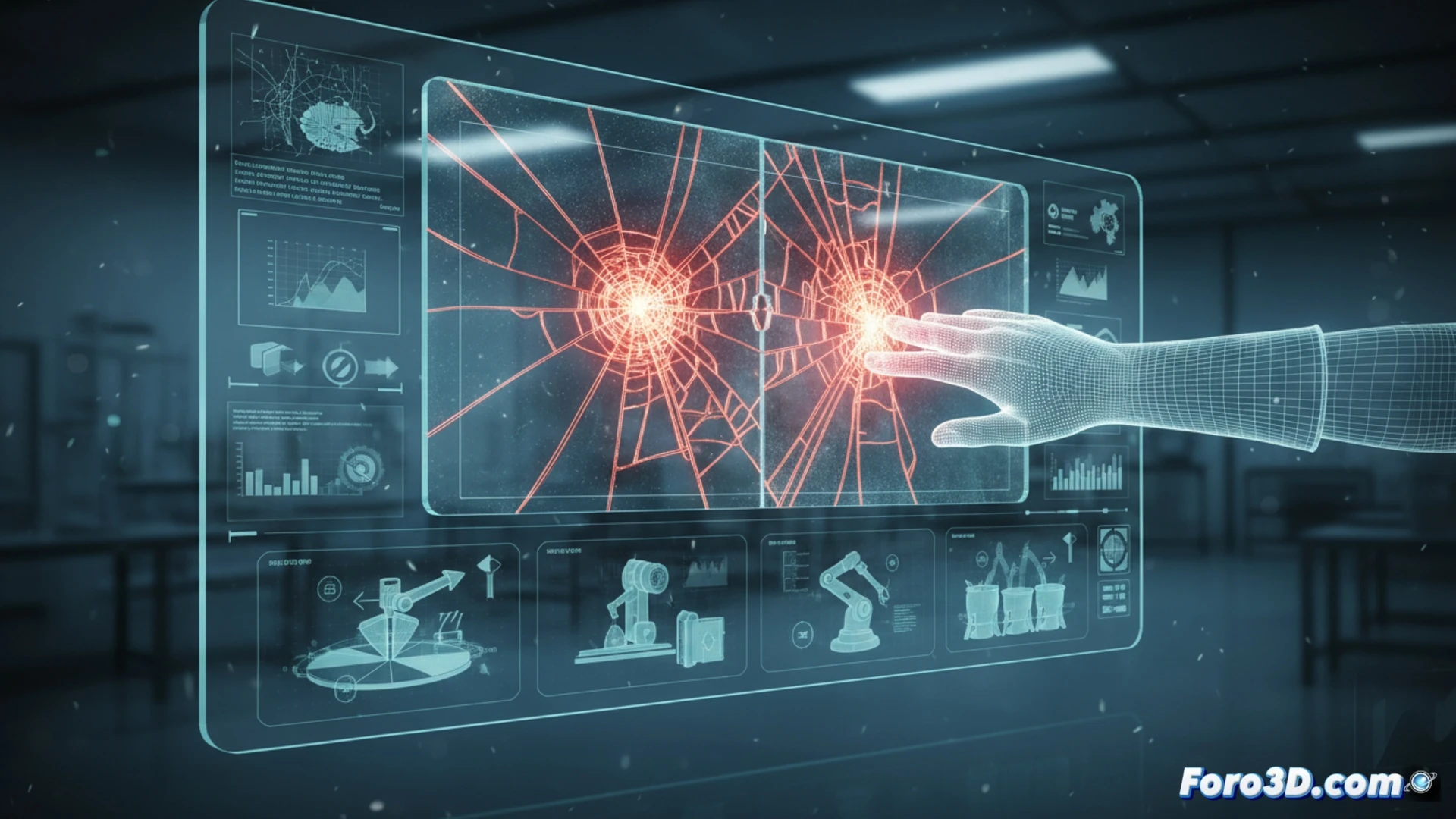
Analysis of thermal stresses and crack propagation 🔥
3D finite element modeling allows replicating the behavior of glass subjected to cycles of rapid heating and cooling. By introducing variables such as the coefficient of thermal expansion or material conductivity, the software identifies stress concentration zones where a thermal explosion is most likely. Additionally, impact simulation models crack propagation from the point of contact, showing how the piece fragments. This detailed analysis helps define minimum safe thicknesses, mandatory cooling times, and safety distances against projections, reducing accidents from cuts and burns.
Towards prevention based on virtual data 🛡️
Simulation not only predicts failure but also allows virtual testing of improvements in personal protective equipment, such as cut-resistant gloves or face shields against fragments. By visualizing material degradation from repeated heat exposure, usage limits for tools and work surfaces can be established. Integrating these digital tools into glassworker training transforms workplace safety: instead of reacting to an accident, the craft anticipates risk with scientific precision.
ANSYS or Abaqus for this analysis?