The presenter is a central figure in any live production, but their exposure to occupational hazards is high and often underestimated. Vocal strain, stage anxiety, fatigue from irregular schedules, and falls on stage are constant threats. From the technical planning of the show, 3D design of the stage space offers a key tool to anticipate these dangers and redesign the environment before the talent steps onto the set.
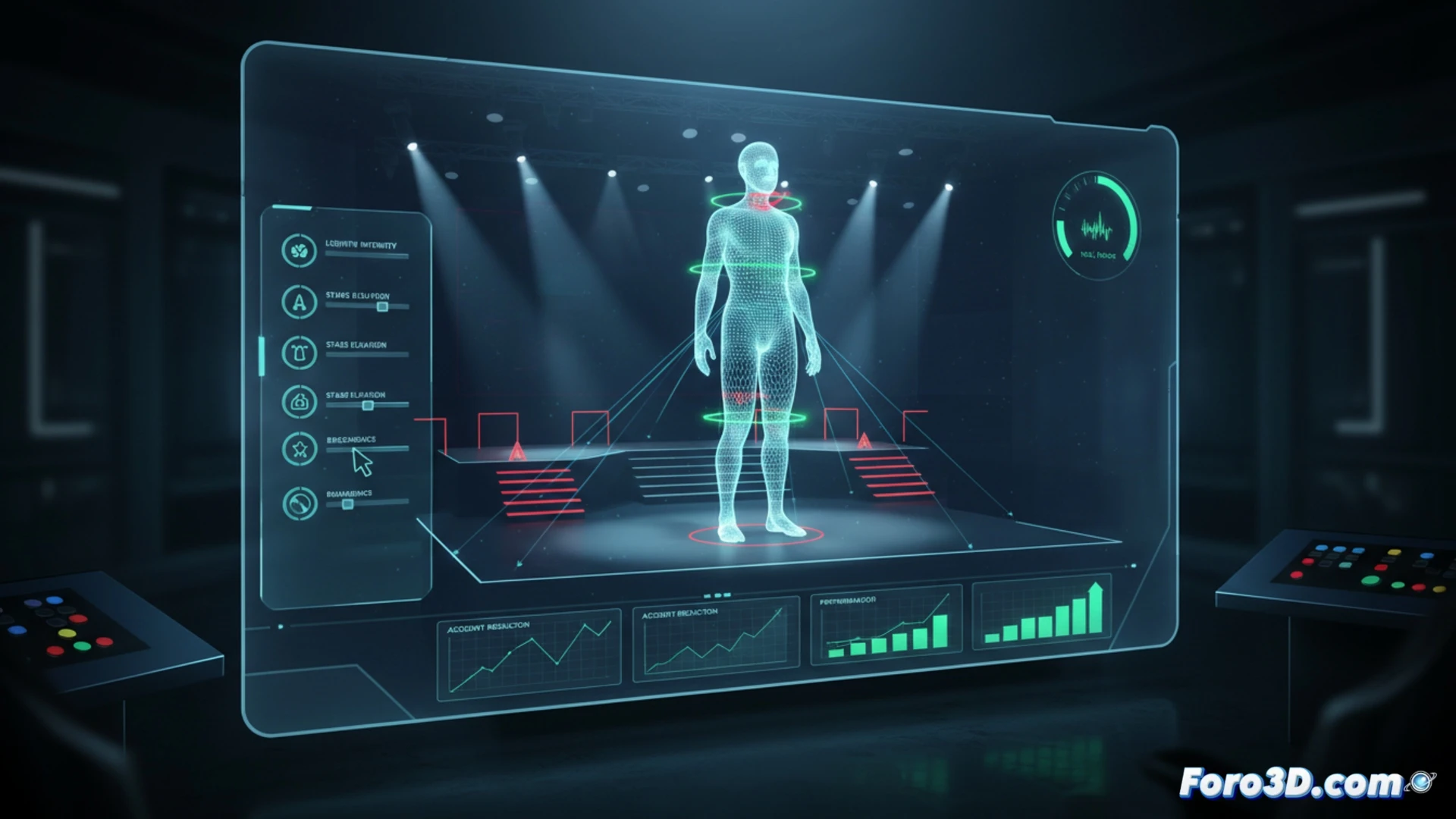
Modeling uneven surfaces and forced postures in virtual environments 🎭
3D simulation allows for precise modeling of every step, ramp, or uneven surface on stage, identifying blind spots that could cause falls during a live broadcast. Furthermore, using virtual avatars, we can analyze the presenter's forced postures during prolonged periods of standing. Adjusting the height of the podium, the location of the teleprompters, or the slope of the floor in the digital model helps redistribute body weight and reduce muscle fatigue. Even simulated lighting allows us to predict glare that would strain the presenter's eyes, mitigating visual fatigue and improving their concentration.
Stage prevention as part of show design 🎬
Integrating occupational risk prevention into the 3D design phase not only protects the presenter but also elevates the technical quality of the event. By simulating forced standing times and lighting changes, the production team can plan active breaks and camera rotations that alleviate stage anxiety. 3D technology ceases to be just a visual tool and becomes a strategic ally in the talent's health, demonstrating that a safe stage is the foundation of a successful show.
How can 3D stage simulation identify and mitigate specific risks for the live presenter, such as falls from moving platforms or exposure to pyrotechnic elements, before the actual production?
(PS: architectural mapping is like putting Instagram filters on a building)