ClearBot has introduced a system of autonomous boat swarms designed to patrol rivers and ports by detecting and collecting plastic waste. This advancement poses a fascinating challenge for 3D modeling: how to simulate the coordination of multiple robotic units in complex aquatic environments. Simulation allows predicting swarm behavior before building a single physical prototype.
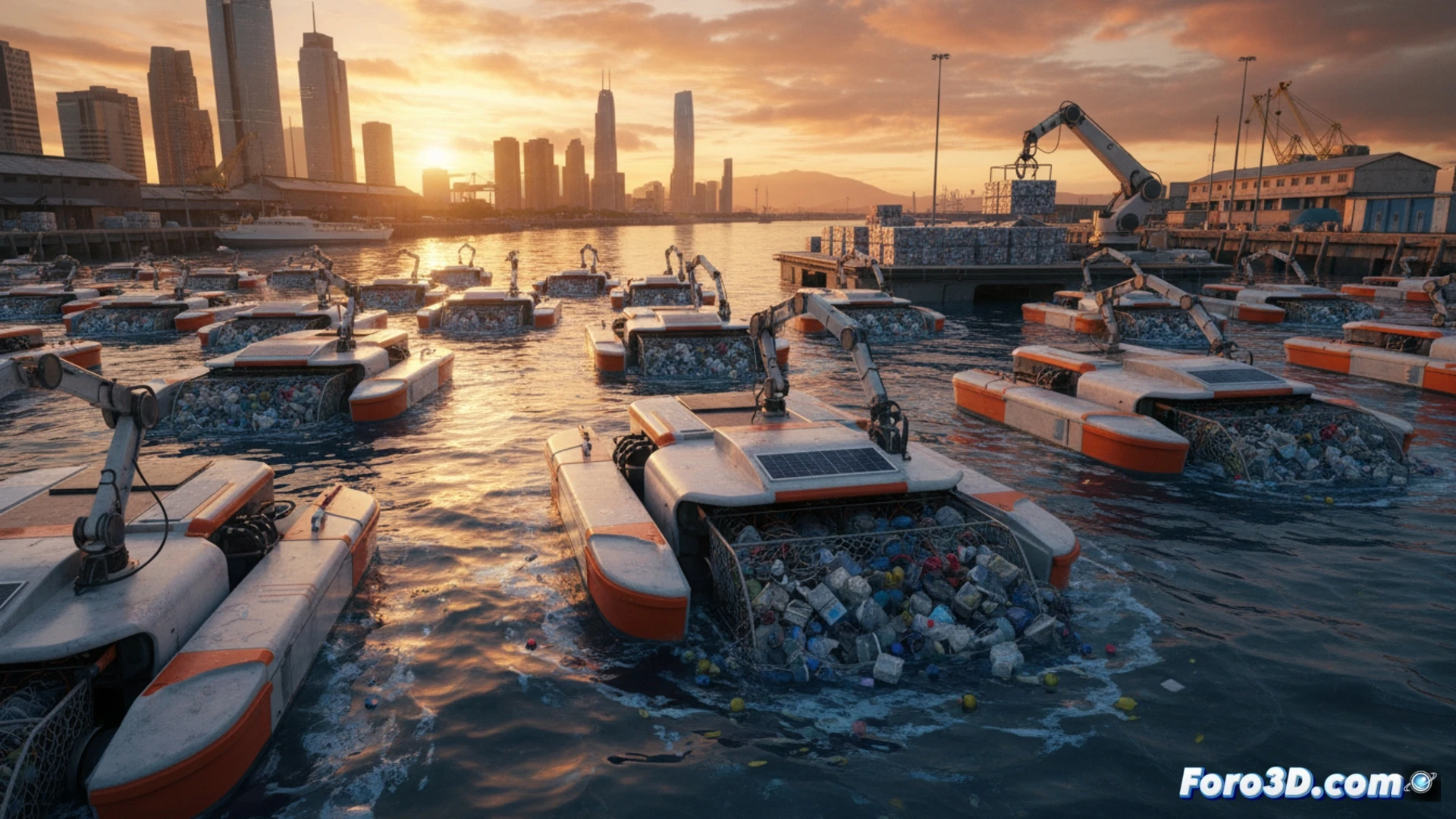
Modeling routes and fluid dynamics in port environments 🌊
To optimize the efficiency of these robots, engineers turn to 3D simulation tools that integrate computational fluid dynamics. Modeling allows visualizing surface currents and plastic dispersion, adjusting the navigation routes of each boat in real time. Additionally, coordination algorithms between units are tested virtually, avoiding collisions and maximizing coverage of the contaminated area. The three-dimensional representation of onboard sensors and cameras is also calibrated in these simulated environments, drastically reducing iteration costs.
The value of simulation in ecological automation 🤖
3D simulation not only accelerates the design of these swarms but also allows validating extreme scenarios such as storms or high waste density. ClearBot demonstrates that autonomous robotics can be more effective when each environmental variable is modeled. This approach brings automation closer to a tangible solution against plastic pollution, transforming virtual data into real cleaning actions.
How the coordination and collision avoidance in a swarm of autonomous boats is modeled in 3D to ensure efficient coverage in plastic cleaning in complex port environments
(PS: Simulating robots is fun, until they decide not to follow your orders.)