Firefighters face lethal risks daily: burns, collapses, and explosions. However, traditional training cannot always replicate the chaos of a real fire or water rescue without exposing the student to danger. 3D technology offers a viable alternative for simulating these extreme scenarios, allowing practice of action protocols without physical consequences.
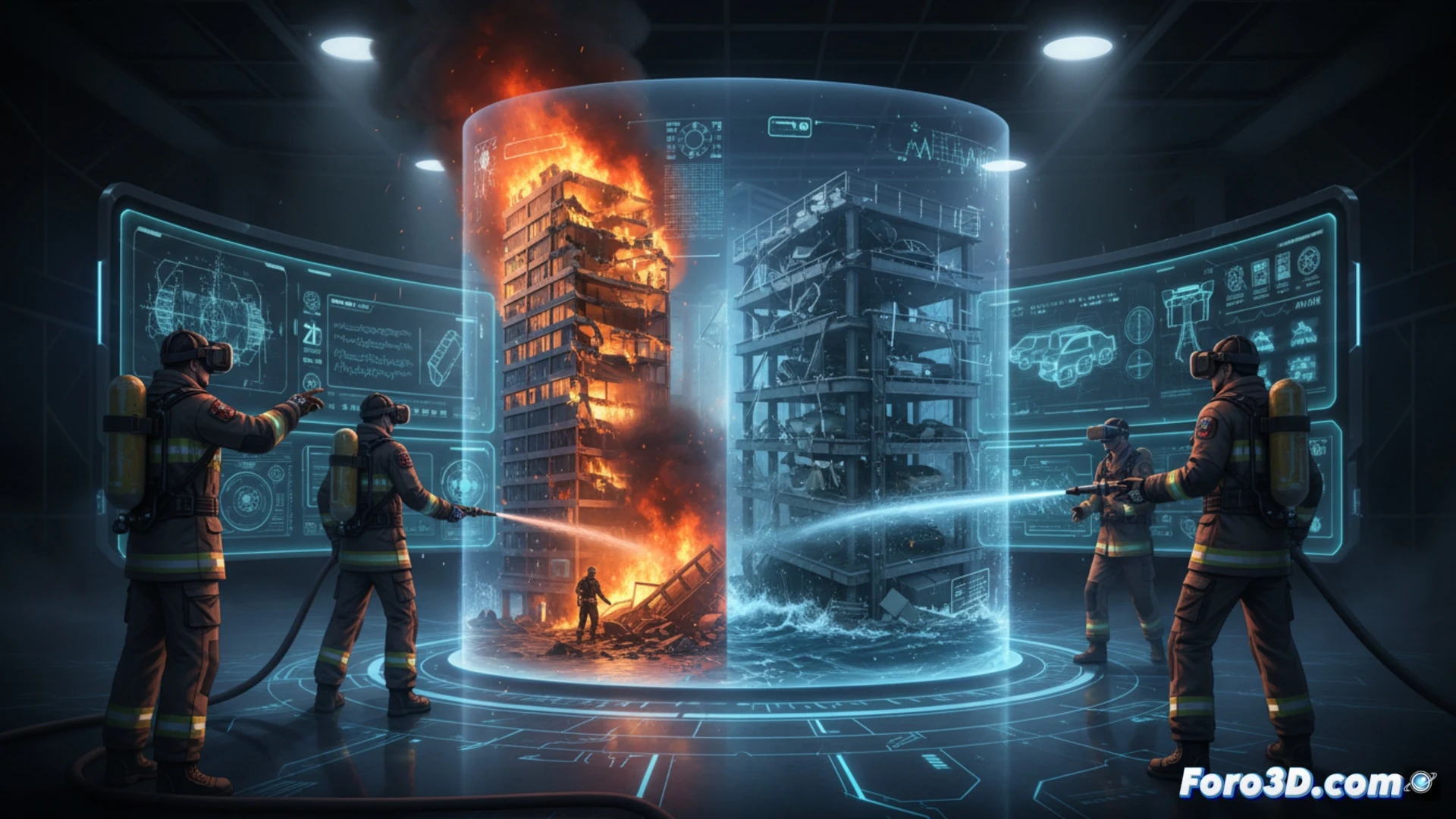
Modeling high-risk scenarios in virtual environments 🔥
The use of digital twins and game engines allows for precise recreation of critical factors such as fire spread, the structural instability of a collapsed building, or the toxicity of gases like carbon monoxide. Simulators can integrate data from historical incidents to generate unpredictable variables, such as sudden explosions or entrapment by debris. Additionally, haptic feedback in specialized suits reproduces extreme heat and muscle fatigue, preparing the firefighter for real physical exertion. This methodology reduces workplace accidents by identifying flaws in decision-making before facing an actual emergency.
The human factor: post-traumatic stress and prevention 🧠
Beyond physical risks, post-traumatic stress is a silent scourge within the firefighting corps. 3D simulation can also be used for controlled desensitization, exposing the professional to traumatic scenarios in a safe environment supervised by psychologists. By visualizing and repeating high-emotional-impact situations, resilience is strengthened and psychological support protocols are improved, humanizing a technology that saves lives both on and off the screen.
What variables would you consider for modeling this disaster?