The profession of a ski instructor involves extreme occupational risks that go beyond simple falls in the snow. Fractures, sprains, and head traumas from collisions are common, but severe weather exposure adds hypothermia, frostbite, and muscle fatigue. However, the greatest danger is the tactical stress of managing groups on slopes and the latent threat of avalanches, a catastrophic scenario that demands advanced technical preparation.
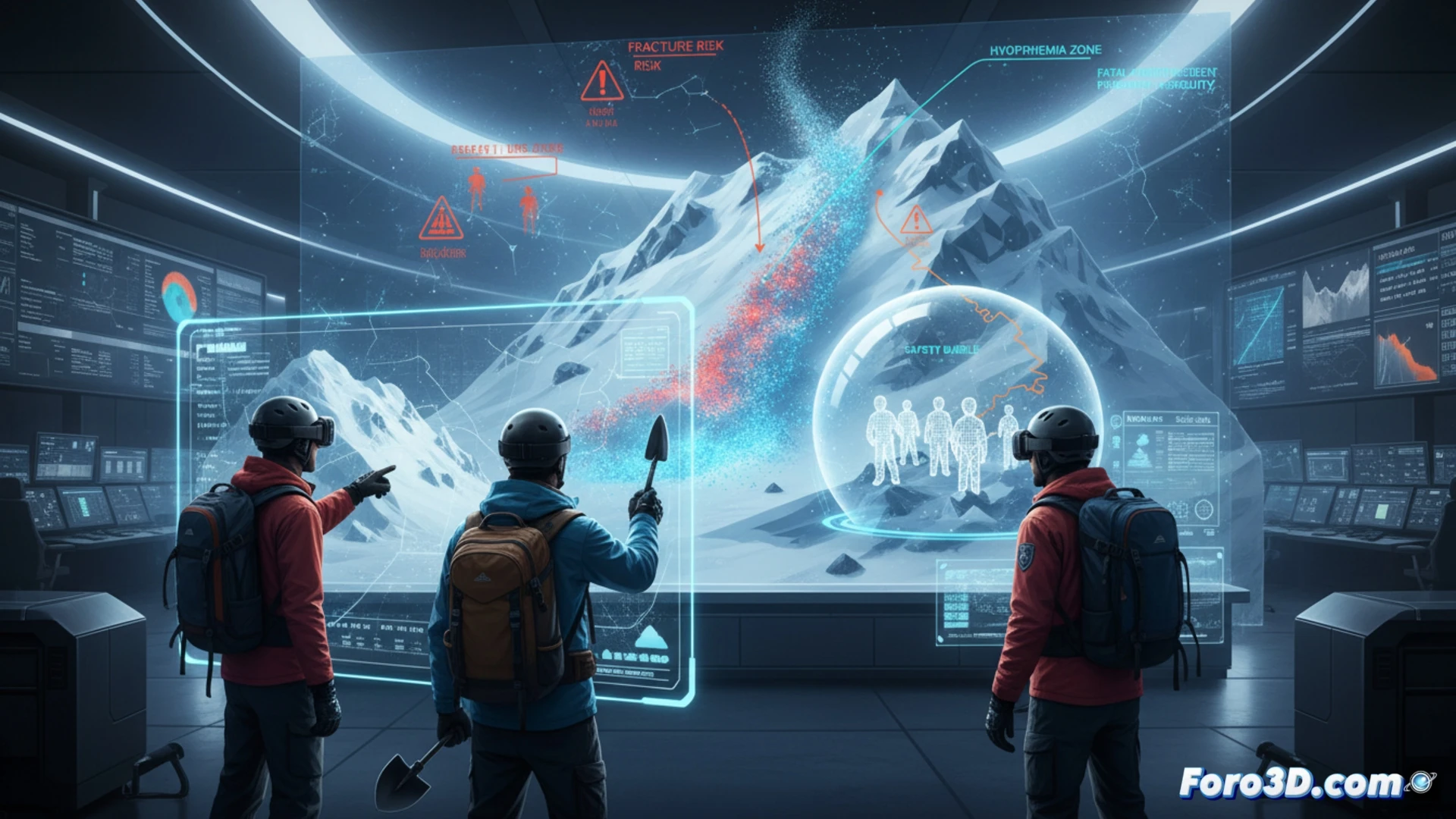
Visualization of Hazards and Rescue Protocols 🏔️
3D modeling technologies allow the recreation of dynamic hazard maps where wind conditions, UV radiation reflected by snow, and the accumulation of unstable slabs are simulated. Through immersive environments, instructors can practice evacuation and rescue routes in the event of an avalanche without being exposed to real risk. These simulations integrate meteorological and topographical data to predict collisions on slopes and critical fatigue zones, optimizing emergency response and reducing musculoskeletal injuries from overexertion.
Prevention through Virtual Training 🎿
3D simulation not only teaches how to avoid falls but also trains decision-making under extreme weather pressure. By visualizing the impact of hypothermia or disorientation from a blizzard, the instructor develops reflexes to protect their group. This approach transforms catastrophe prevention into a tangible practice, where a mistake in a virtual environment prevents real tragedy on the mountain.
How can a 3D avalanche simulation improve ski instructors' reaction capacity to a real event without exposing them to physical danger?
(PS: Simulating catastrophes is fun until the computer crashes and you are the catastrophe.)