The figure of the ship captain carries a titanic responsibility, facing daily risks ranging from collisions and sinkings to fires on board. Drowning, hypothermia, and falls on deck are constant threats, aggravated by the fatigue of long workdays and the stress of isolation. Analyzing these dangers from a technical perspective is crucial for preventing catastrophes at sea.
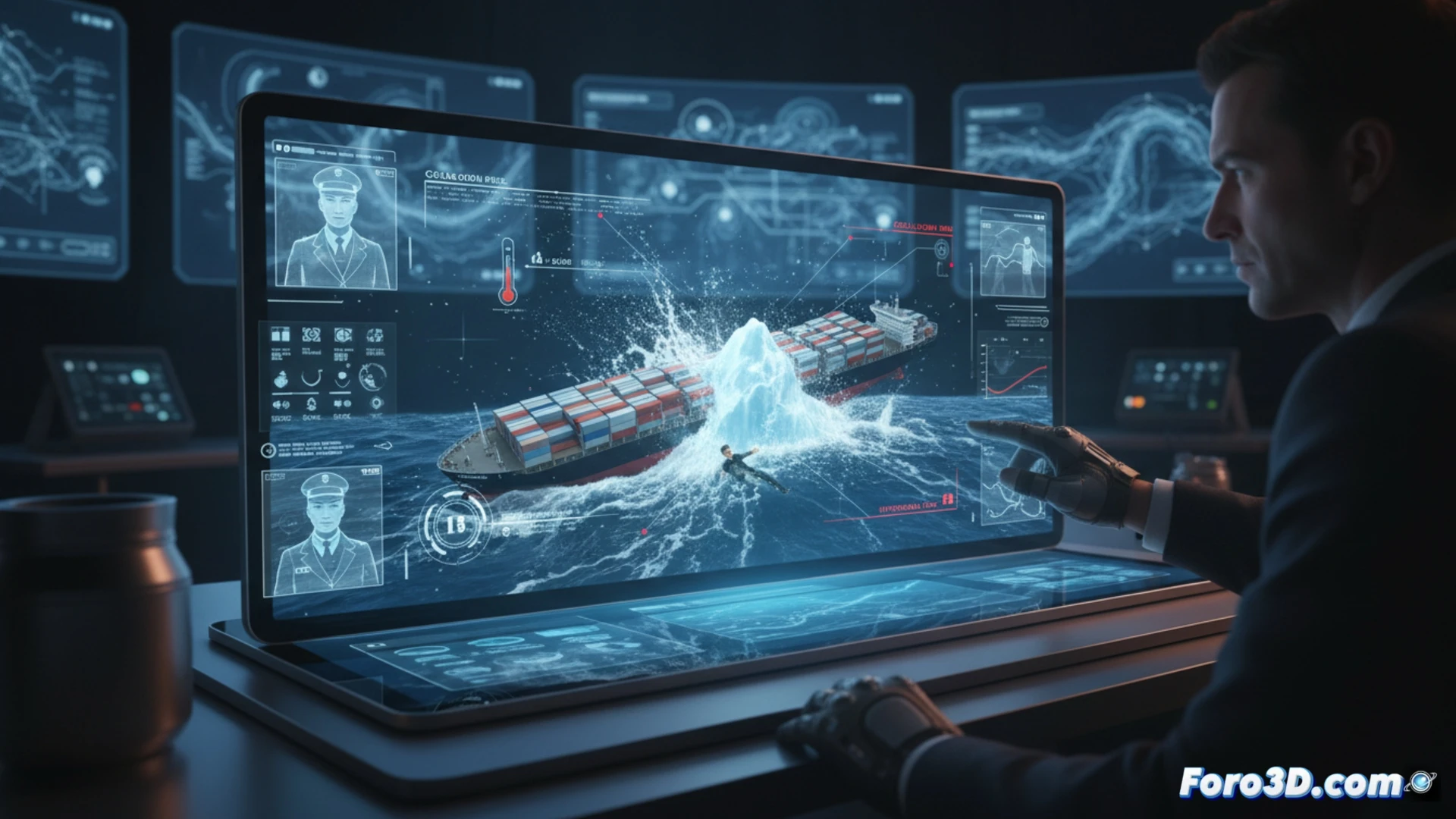
Digital twins and modeling of naval accidents 🌊
3D technologies allow the creation of digital twins of vessels to accurately simulate collision scenarios, assessing structural damage and the progression of water ingress. Fire modeling on board, considering smoke and heat propagation, helps design optimal evacuation routes. Likewise, extreme weather conditions, such as giant waves or electrical storms, can be recreated to train the captain in emergency maneuvers without putting real lives at risk, reducing the stress factor of responsibility in a controlled environment.
The loneliness of command in a digital ocean 🧭
Beyond the physics of accidents, 3D simulation addresses the human factor of isolation. By recreating prolonged emergency scenarios, the captain's fatigue and decision-making ability under pressure can be analyzed. This technology not only prevents catastrophes but also prepares the professional to manage panic and the loneliness of command, transforming an extreme occupational risk into a lesson learned in a safe virtual environment.
How can 3D simulation of maritime accidents train the captain to make split-second decisions during an imminent collision, without falling into analysis paralysis?
(PS: Simulating catastrophes is fun until the computer crashes and you are the catastrophe.)