The industrial assembler faces one of the most exposed professions in the logistics sector: falls from height, entrapment when assembling heavy parts, overexertion, and electrical risks. Traditional prevention relies on manuals and signage, but human error remains the leading cause of accidents. Digital twin and 3D simulation technology offers a radical alternative to anticipate these hazards before stepping onto the plant floor.
Digital twins for training and prevention of entrapment 🛡️
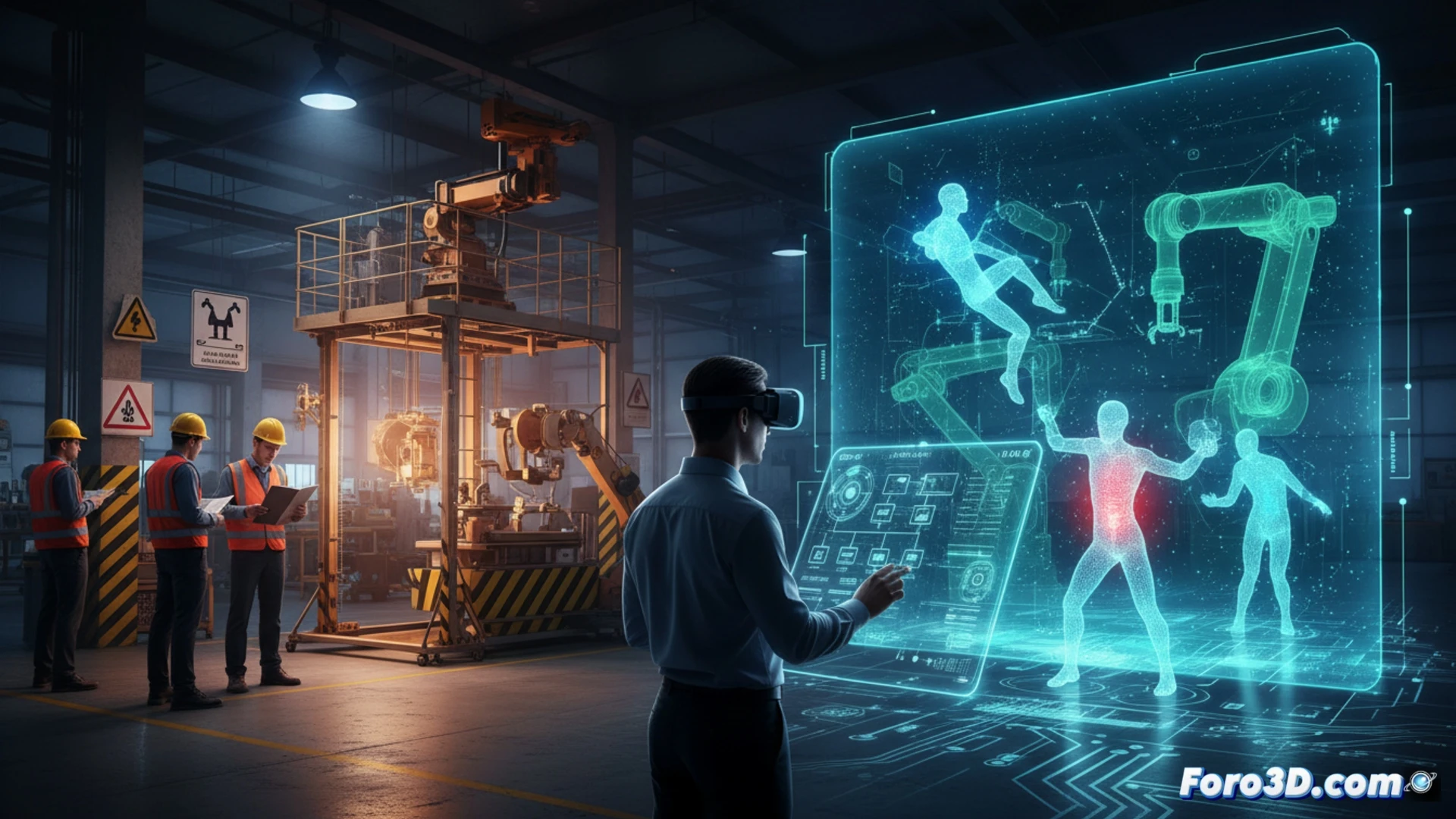
A digital twin accurately replicates every element of the assembly process: working heights, component weights, crane trajectories, and confined spaces. By introducing the operator into an immersive virtual environment, it is possible to simulate entrapment or crushing scenarios without real risk. The system records movements, forced postures, and noise exposure times, generating objective data to redesign safety protocols. For example, anchor points for lifelines can be adjusted or assembly sequences modified to avoid overexertion.
The future of safety: simulate before building 🔮
3D simulation not only protects the worker but also optimizes productivity. By identifying fall or cut risks during the design phase, real accidents and downtime are reduced. For the industrial logistics sector, adopting these tools means shifting from a reactive to a preventive culture. The industrial assembler of the future will not only wear a helmet and harness but will have trained hundreds of times in a digital twin before stepping onto the actual structure.
We can reduce the risk of entrapment by 80% through 3D simulation before assembly, but how do we measure the return on investment in human lives against the cost of the software.
(PS: at Foro3D we optimize routes like we optimize polygons: until the computer says enough)