The figure of the agricultural engineer encompasses a wide range of risks, from exposure to heavy machinery and phytosanitary products in the field to chronic stress from project deadlines and visual fatigue in the office. Traditionally, prevention has been addressed with manuals and checklists, but process simulation offers an immersive alternative for modeling these scenarios. This article analyzes how digital twins and 3D recreations allow for visualizing, quantifying, and mitigating the specific hazards of the profession.
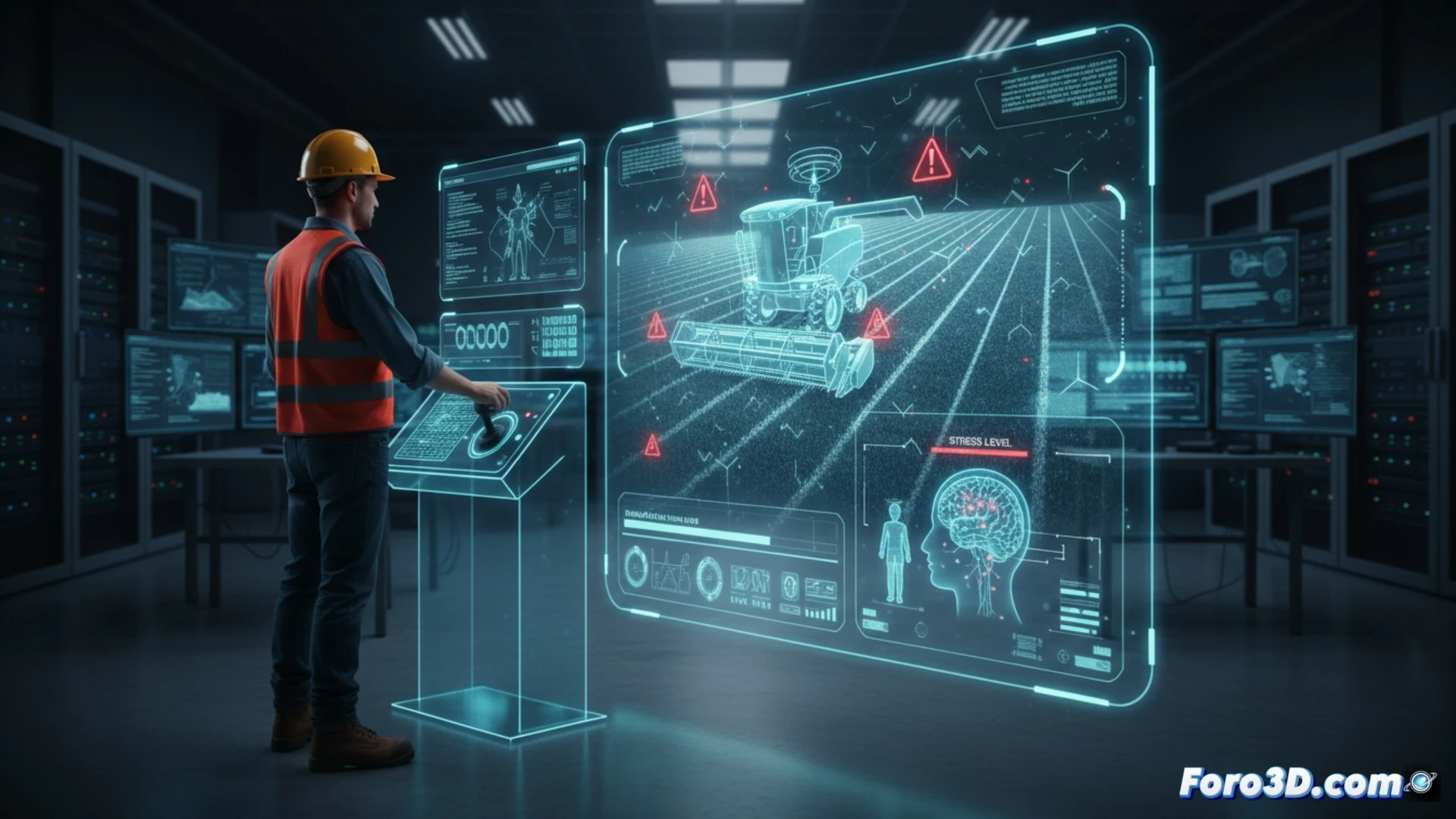
Digital twins of farms for risk analysis 🌾
Process simulation allows for building a digital twin of a farm where the engineer's interaction with tractors, irrigation systems, and animals is replicated. In this virtual environment, machinery trajectories can be modeled to detect blind spots or collision zones, the dispersion of chemical aerosols under different wind conditions can be simulated, and unpredictable livestock behaviors can be recreated. Additionally, human fatigue variables are integrated: the model can track screen exposure time in the virtual office or driving patterns during simulated commutes, offering objective data to redesign workdays and safety protocols.
Stress and fatigue: simulating the mental load of the project 🧠
Beyond physical hazards, stress from tight deadlines and constant multitasking are psychosocial risks difficult to measure with conventional methods. Process simulation can recreate the pressure of a planting schedule or an urgent phytosanitary inspection, monitoring the cognitive load of the digital avatar in real-time. By visualizing how accumulated fatigue affects decision-making in the field or precision in the office, active breaks, task rotations, and early warning systems can be designed, turning prevention into a dynamic and quantifiable process.
How can 3D simulation anticipate and mitigate the specific risks of agricultural machinery to improve the safety of the agricultural engineer in the field?
(PS: Simulating industrial processes is like watching an ant in a maze, but more expensive.)