Shuhei Yabuta began his career in the 3DCG department at Madhouse, but it was at Wit Studio and later at MAPPA where he left his mark. His work on Vinland Saga proved that digital animation could serve a historical narrative without fanfare. Yabuta does not seek empty spectacle, but rather believable backgrounds and camera movements that traditional 2D does not allow. His approach prioritizes the organic integration of 3D to achieve raw, functional realism.
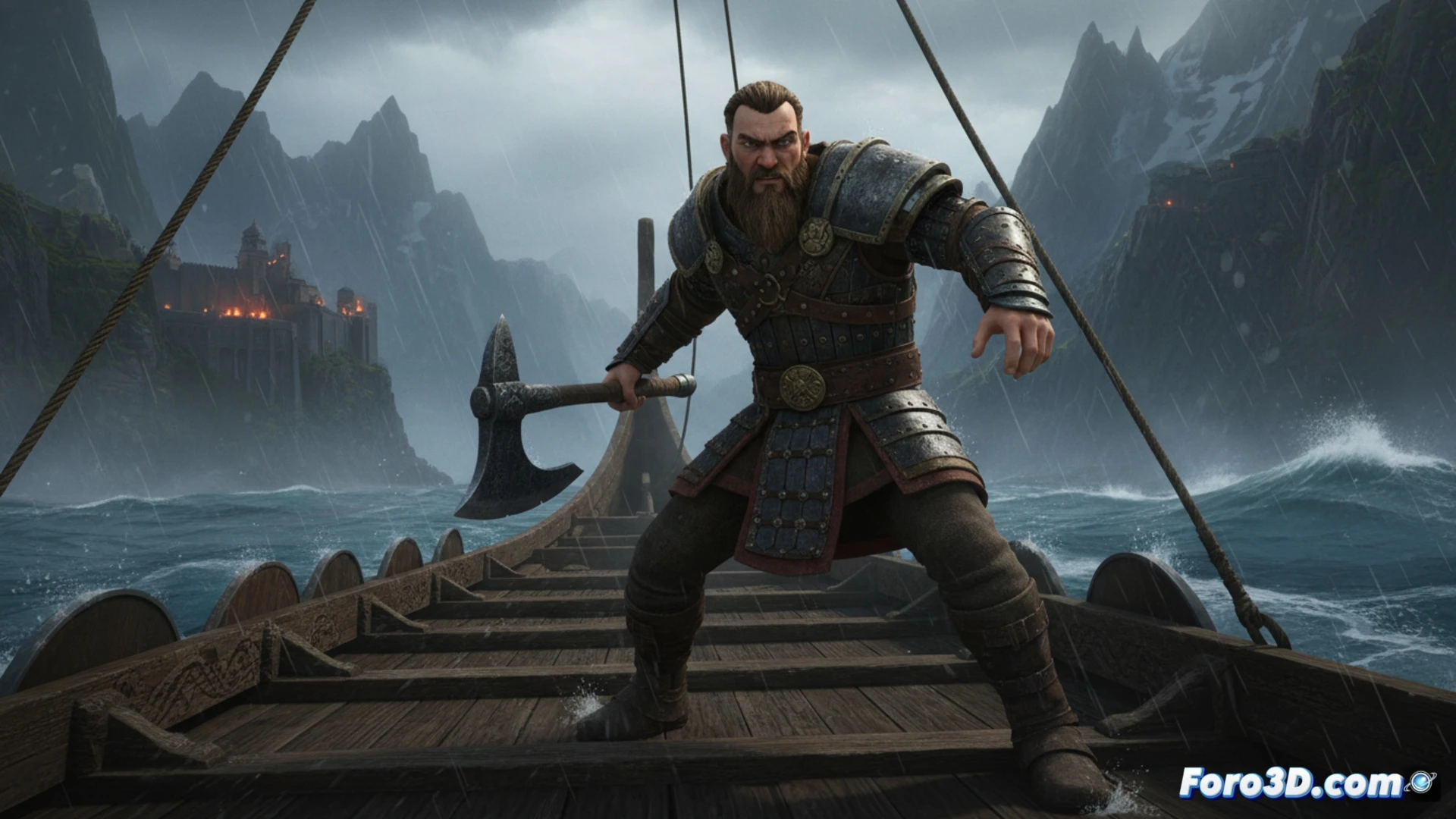
The digital fusion that sustains the Nordic epic ⚔️
Yabuta applies 3D as a support tool, not a substitute. In Vinland Saga, digital backgrounds enable battle sequences with tracking shots impossible in manual animation. The modeling of ships, landscapes, and architecture is built with polygons that are then integrated with 2D layers. The process avoids artificial gloss and seeks matte, almost dirty textures. In Inuyashiki, 3D was used for robotic movements and explosions, maintaining facial expressiveness in 2D. Yabuta understands that technology should be invisible.
When Vikings become polygons (and it's no big deal) 🛶
Yabuta managed to make the toughest Vikings in anime not look like plastic dolls, which was everyone's fear. Seeing Thorfinn running through a 3D forest without the technical effort being noticeable is almost a miracle. In Inuyashiki, the grandfather robot flew and shot with the same naturalness with which other characters ordered coffee. Yabuta proved that 3D is not the enemy, just another Viking on the ship. Of course, better not to ask how many hours of rendering each scene cost.