The Shinkansen 0 project, developed in Unity, bets on a psychological terror hidden in repetition. Its graphics engine seeks photorealistic quality but wraps it in VHS filters and film grain. The key to its atmosphere lies not in monsters, but in the lighting of enclosed spaces that conceals horrors among shadows and degraded textures. This technical analysis breaks down how they achieve that effect.
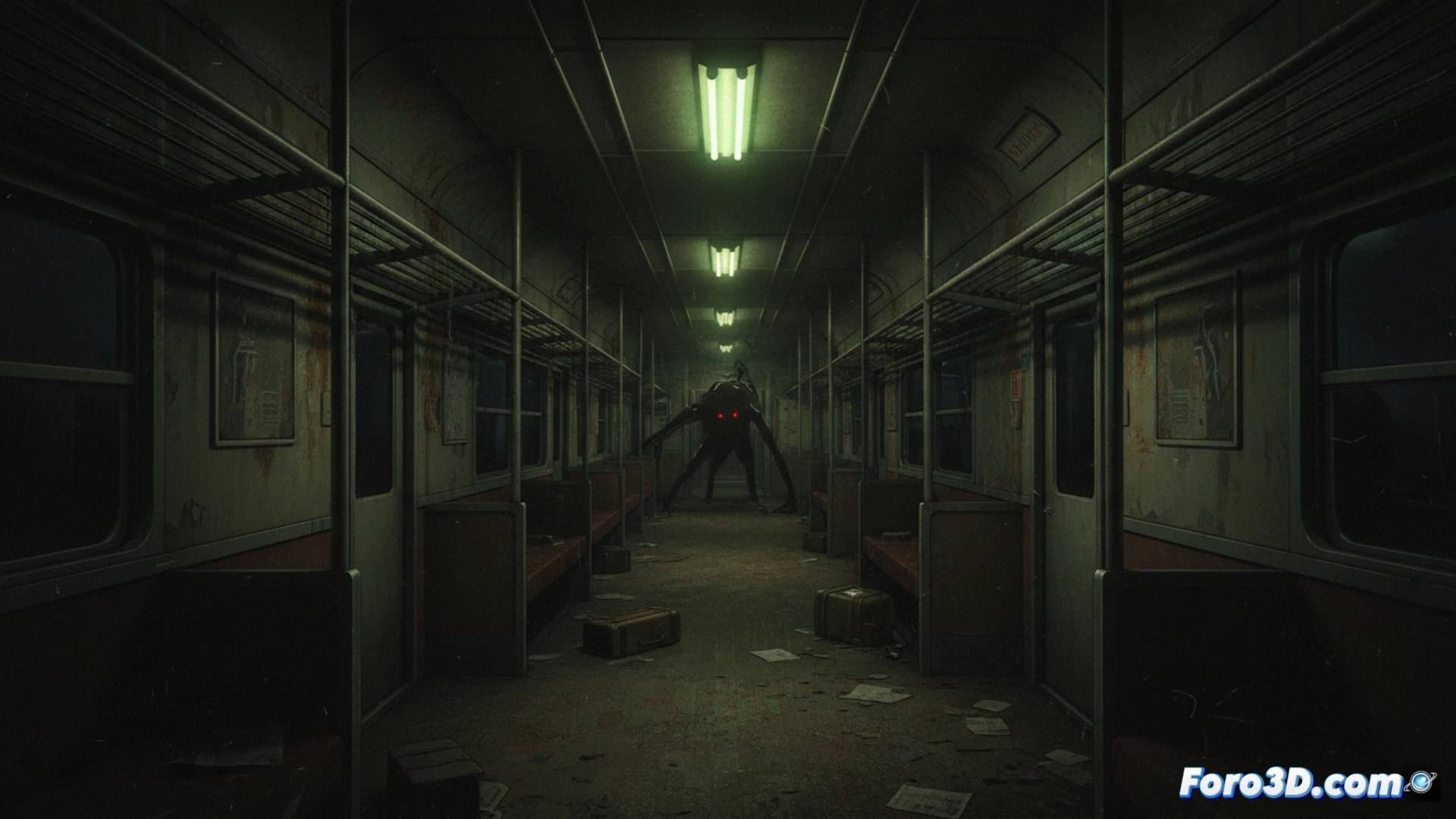
Dynamic lighting and VHS post-processing for claustrophobic environments 🚆
In Shinkansen 0, lighting not only defines the scene but is the main mechanism of concealment. To achieve photorealistic quality in train cars, point lights with soft shadows and strategic light probes are used to avoid visual noise. Post-processing in Unity applies a chromatic aberration effect and analog noise that simulates worn-out VHS tapes. This, combined with animated film grain, breaks the digital sharpness and creates the illusion of found footage. To optimize performance in repetitive spaces, aggressive LODs are used on assets modeled in Blender and atlas textures created in Photoshop, reducing draw calls without losing detail in close-ups.
The art of hiding fear in repetition 🎭
The brilliance of Shinkansen 0 lies in using the repetition of corridors and seats as a canvas for anxiety. By only partially lighting these environments, the player is never sure what lurks in the shadows. The artistic pipeline integrates Blender to model assets with modular geometry that fits perfectly into Unity, while Photoshop handles creating aged and dirty textures. The result is a game that demonstrates that the most effective horror doesn't need ultra-realistic graphics, but rather intelligent lighting and a filter that transports us to a forgotten video tape.
How does Shinkansen 0 in Unity manage to generate a feeling of oppressive terror through lighting and repetition, without resorting to jump scares or explicit violence?
(PS: optimizing for mobile is like trying to fit an elephant into a Mini Cooper)