Shawarma, that slowly rotating cylinder of meat, is a cornerstone of Middle Eastern cuisine. Its appeal lies in the combination of meats marinated with spices like cumin and cardamom, cooked on a vertical spit. The result is a tender texture and an intense flavor, enhanced by garlic or tahini sauces. It is not a complex dish, but its execution requires precision to achieve the exact point of juiciness without drying out the meat.
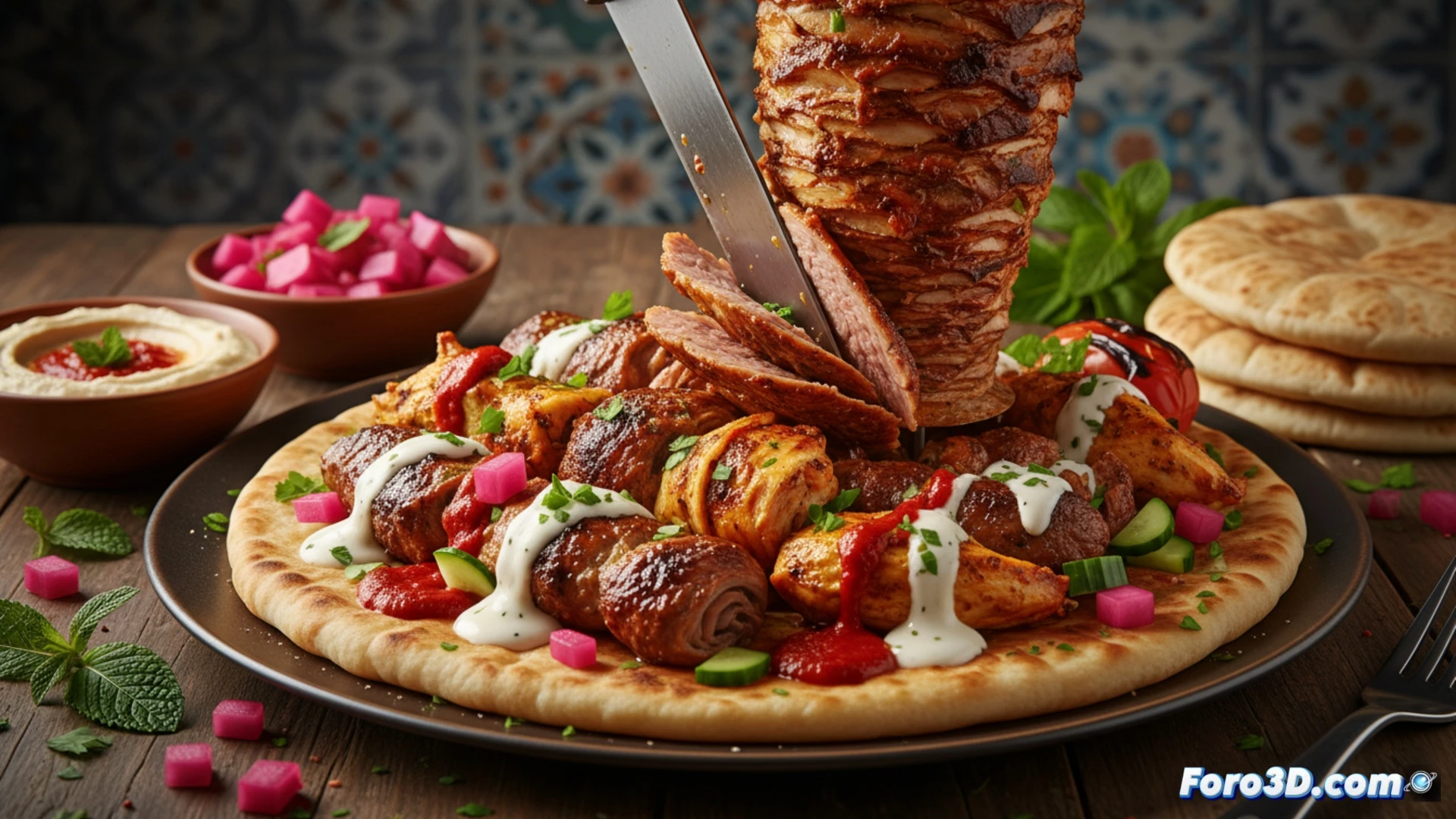
The vertical spit: a layered cooking system 🔥
Technically, shawarma functions as a cooking system using radiation and convection. The heat from the spit, often infrared, browns the outer layer while the interior remains raw to retain moisture. The process of thin slicing exposes new surfaces to the heat, creating a continuous cycle. The marinade, with oil and yogurt, acts as a medium for heat transfer and liquid retention. Each rotation of the cylinder is a step in a controlled cooking process that prevents dehydration.
The bread dilemma: wrap or plate? 🥙
The eternal debate among shawarma purists is whether it should be eaten wrapped in pita bread or served on a plate with rice. The answer, as with any good culinary controversy, depends on how much time you want to spend cleaning garlic sauce off your shirt. The bread is practical, but the plate allows you to build little mountains of meat and pickles without your lunch falling apart. In the end, shawarma always wins, even if your clothes lose the battle.