At the intersection of high fantasy and visual activism, Seven to Eternity emerges as a technical masterpiece that transcends mere entertainment. Under the script of Rick Remender and the pencil of Jerome Opeña, this comic presents a fallen knight facing an extreme moral dilemma: accept the offer of the tyrant who destroyed his family to save his daughter, or resist until the end. What sets this work apart is not only its narrative of oppression, but how the hyperrealistic detail of its worlds, creatures, and textured armor becomes a tool for political denunciation.
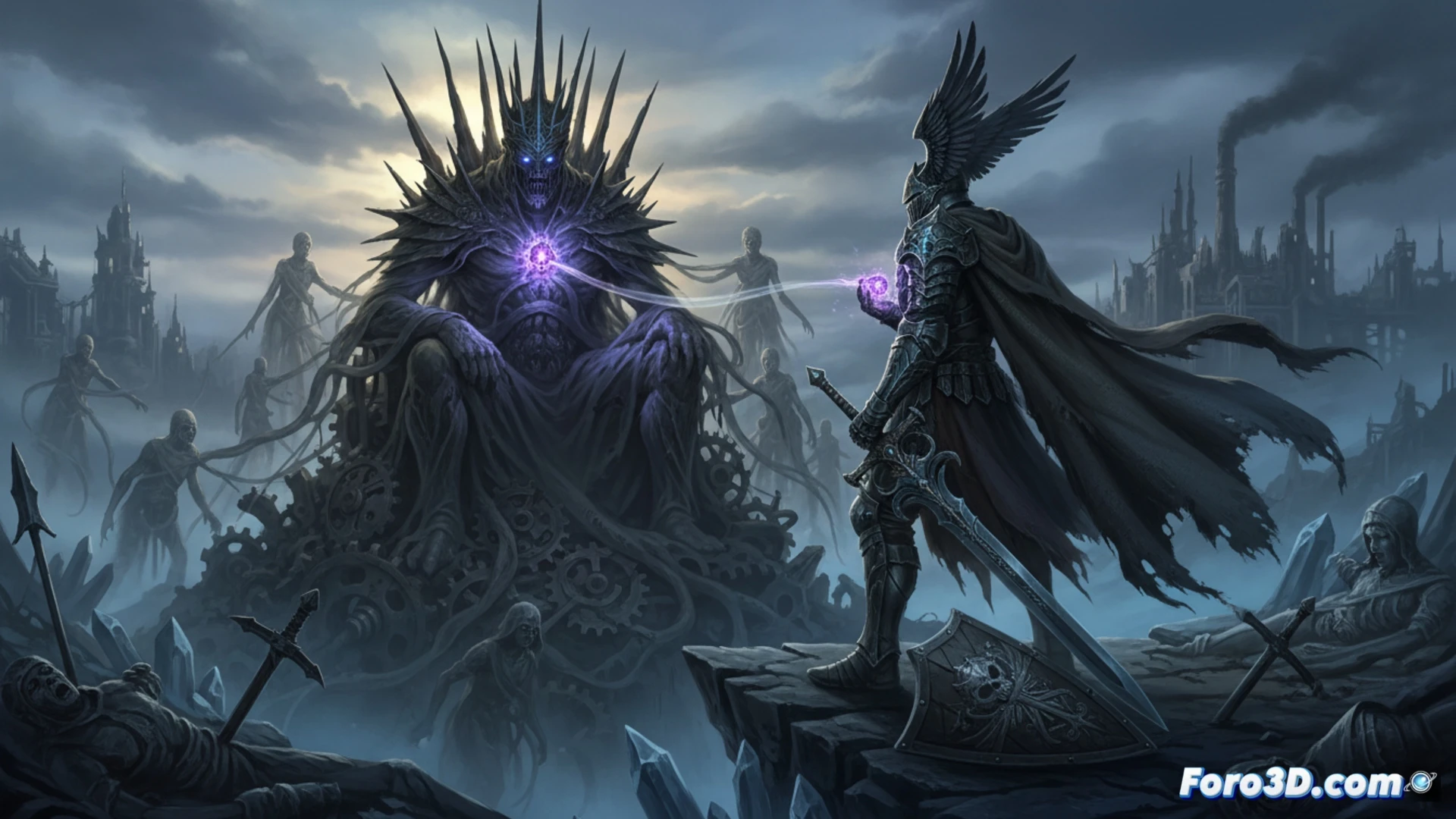
Visual anatomy of resistance: textures and worlds as political discourse 🎨
Jerome Opeña does not draw simple panels; he builds visual ecosystems where every texture tells a story of submission or rebellion. The characters' armor is not mere accessories: they present a level of wear and 3D detail that reflects the weight of oppression. The settings, from calcified ruins to biomechanical palaces, act as psychological maps of tyranny. This approach to contemporary digital art, where three-dimensional modeling is transferred to paper with precise shadows and material volumes, allows the reader to feel the suffocation of the tyrannical regime. Each grotesque creature, designed with a twisted yet coherent anatomy, symbolizes the deformities of absolute power. The art does not just illustrate the story: it reinforces it as a visual manifesto against any form of authoritarianism.
Adam's choice: between digital submission and pixelated resistance ⚔️
The protagonist, Adam, does not just choose between saving his daughter or fighting; he chooses between two forms of visual representation. Accepting the tyrant's offer would mean integrating into a clean and orderly aesthetic system, while resistance immerses him in a chaotic world of rough textures and fractured landscapes. Opeña uses this visual dichotomy to connect with digital art movements that denounce the aesthetic homogenization of oppressive regimes. The extreme detail of the ruins and broken armor is not gratuitous: it is a visual cry that reminds us that, in art as in politics, the beauty of detail lies in the imperfection of those who refuse to bend.
How can the 3D modeling of Seven to Eternity transform the aesthetics of high fantasy into a visual language of resistance against tyranny without falling into simple political allegory?
(PS: if your virtual reality installation doesn't change the world, at least let it not lag)