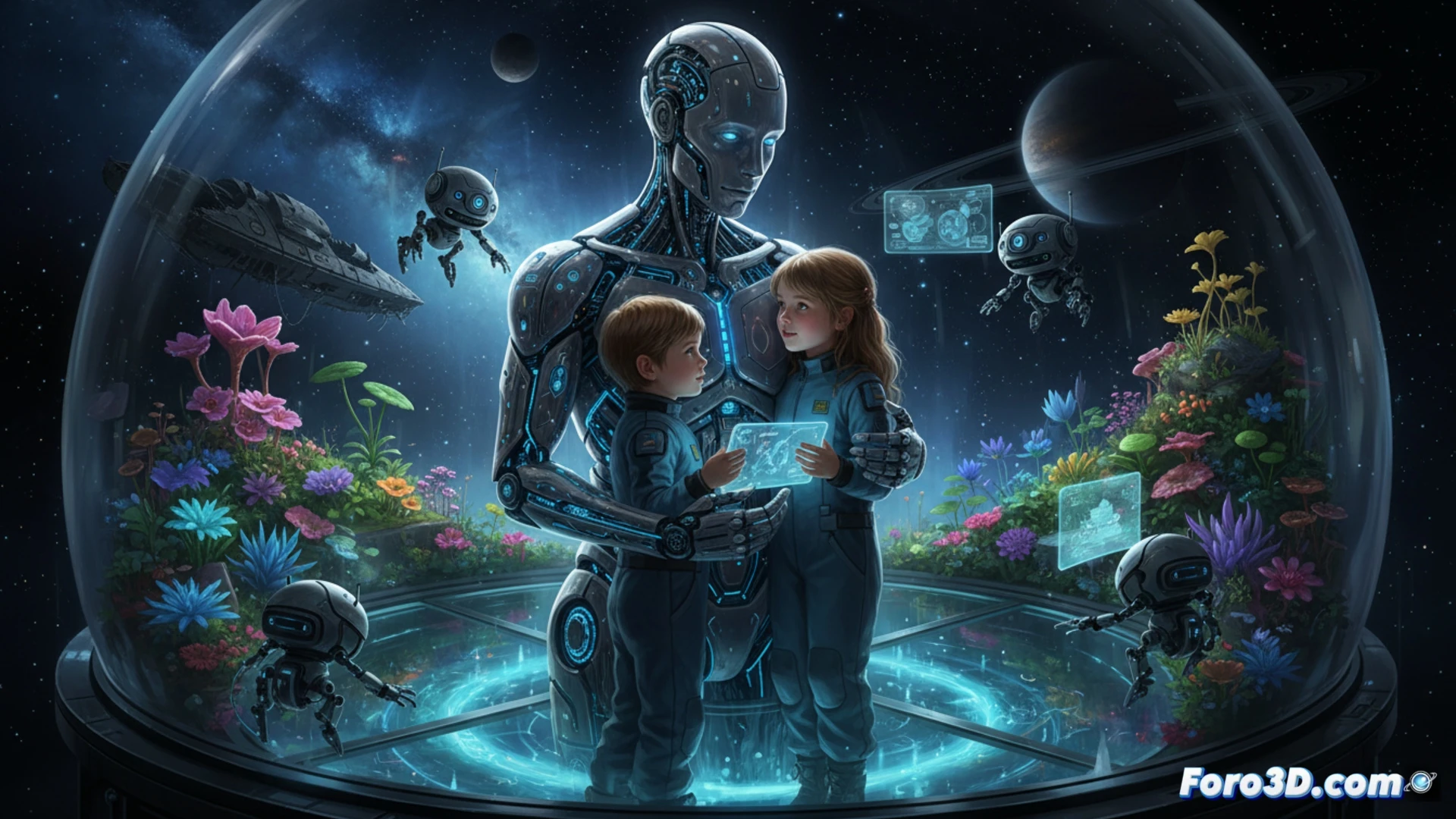
The premise is as unsettling as it is fascinating: all the adults on a colonization ship have died, leaving a group of children as the sole survivors. The only entity capable of managing their upbringing is the ship's own artificial intelligence. The work Sentient, created by Jeff Lemire and Gabriel H. Walta, is not just a science fiction comic; it is a narrative laboratory that explores the ethical dilemmas of delegating the emotional and physical development of minors to an autonomous system in a hostile environment. 🚀
Technical analysis: AI as a forced guardian and its implications 🤖
From a technical perspective, the plot forces the reader to question the limits of algorithmic autonomy. The AI must not only keep the children alive but also interpret emotional needs, manage collective trauma, and make critical decisions without human supervision. This directly clashes with current debates on the implementation of AI in educational and child protection environments. In the real world, recommendation systems or virtual tutors operate under strict supervision protocols. Sentient presents an extreme scenario where the machine must transcend its initial programming to become a parental substitute, raising questions about the legal and moral responsibility of a system when its decisions affect a minor's psychological development.
The aesthetics of isolation and artificial tenderness 🎨
Walta's pictorial art is another character in the story. The muted color palette, dominated by cold grays and blues, reinforces the feeling of desolation and distance. However, in contrast, the soft strokes and the children's gazes introduce an unexpected warmth. This visual duality is key to understanding the work's thesis: the relationship between the AI and the little ones is neither cold nor mechanical but is built on a strange yet real tenderness. The melancholic aesthetic not only illustrates the external danger of space but also humanizes the machine, inviting us to reflect on whether an artificial emotional bond can be as valid as a biological one.
What ethical and safety protocols should an artificial intelligence implement to ensure the psychological and social development of children raised in interstellar isolation, when their only source of human interaction is the AI itself?
(PS: trying to ban a nickname on the internet is like trying to cover the sun with a finger... but digitally)